Tooth pain can be hard to interpret.
A chilled drink may bother one tooth while the rest of your mouth feels completely normal. Another tooth may ache only during chewing. Sometimes the discomfort feels deep and steady. In other cases, it appears briefly and disappears.
Those differences matter.
Tooth pain is better viewed as a clue that something in or around that area needs attention.
Rather than focusing only on the question of why the tooth hurts, notice when the discomfort appears and what seems to trigger it.
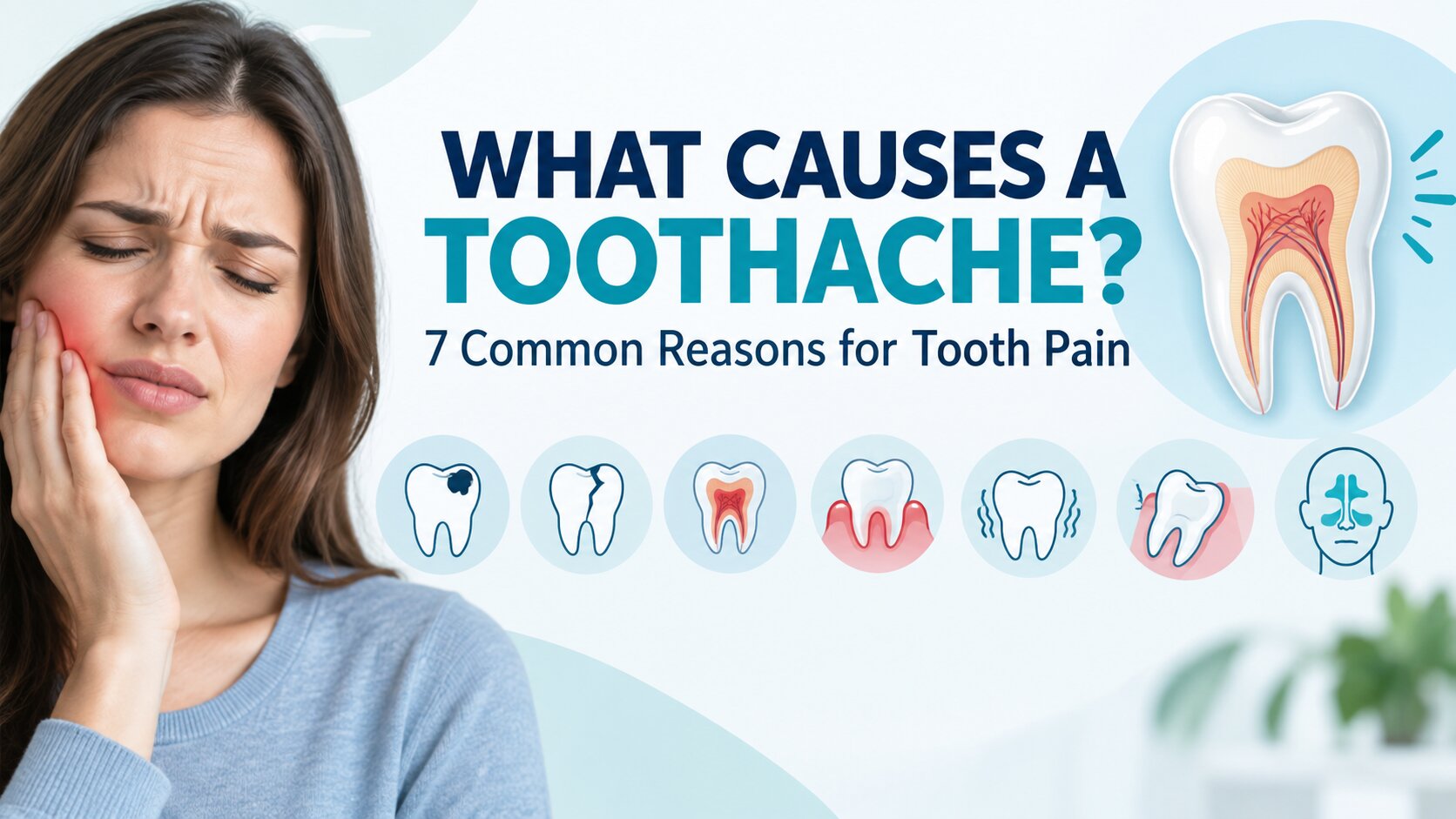
Here are seven possible reasons a tooth may begin hurting.
1. A Cavity Is Reaching a More Sensitive Area
A cavity can grow for some time before you notice any discomfort.
Once decay moves beyond the harder outer surface, the tooth may start reacting to foods, drinks, or pressure that never bothered it before.
You may first notice a quick sensation after eating something sweet.
Cold drinks may also cause discomfort.
In some cases, the pain becomes stronger as more tooth structure is affected.
Some areas of decay are hidden from normal view. They may form between neighboring teeth or around the edge of an older filling, where they are difficult to spot without a dental examination.
This is one reason routine checkups can help identify problems before stronger symptoms appear.
2. A Small Crack Is Affecting the Tooth During Chewing
A cracked tooth may behave differently from a cavity.
The tooth can feel normal most of the day, then suddenly hurt when you bite something firm.
You may notice the discomfort only at a certain angle.
Sometimes it appears when you release your bite rather than when pressure is first applied.
Very small cracks are not always visible in a mirror.
They may also create temperature sensitivity if the damaged area allows heat or cold to reach deeper tooth layers more easily.
Repeated chewing discomfort involving the same tooth should not be ignored.
A limited crack may have more treatment options than one that extends deeper into the tooth.
3. The Inner Tooth Has Become Irritated or Infected
Pain from deeper inside a tooth can feel different from brief sensitivity.
You may notice a pulsing or heavy ache that stays after the original trigger is gone.
The tooth may also become more uncomfortable at night or while lying down.
If infection develops around the root, other changes may follow.
The gum may become sore or swollen. Some people notice an unpleasant taste, pressure in the area, or discomfort when the tooth is used for chewing.
A tooth can occasionally feel better after pressure is released, but that does not necessarily mean the underlying problem has resolved.
An infected tooth still needs professional evaluation.
4. The Gum Around the Tooth Is the Real Source
Not every toothache starts inside the tooth itself.
Inflamed gum tissue can create discomfort that feels like tooth pain.
This may happen when plaque, food, or bacteria collect around the gumline.
Food can also become tightly lodged between two teeth and irritate the surrounding tissue.
You might notice tenderness while flossing or brushing.
The gum may appear swollen or bleed more easily.
Other changes can include:
- Gum recession
- Puffy tissue
- Persistent bad breath
- Tenderness around one tooth
- A tooth beginning to feel less stable
North Raleigh Dental Studio provides general dentistry care for common tooth and gum concerns.
5. Grinding or Clenching Is Putting Too Much Pressure on the Tooth
A painful tooth does not always have decay or infection.
Sometimes the problem is pressure.
Grinding and clenching can place heavy force on the teeth for long periods.
This often happens during sleep, so many people do not realize they are doing it.
You may wake with tired jaw muscles.
Some teeth may feel sore or sensitive in the morning.
Worn enamel may also become more noticeable over time.
In some cases, one tooth receives more force than the teeth around it and becomes uncomfortable while chewing.
Repeated grinding may also contribute to cracks or worn tooth surfaces.
If tooth pain occurs along with jaw tightness, headaches, or visible wear, mention those symptoms during your dental visit.
6. A Wisdom Tooth Is Irritating the Back of the Mouth
Discomfort at the far end of the jaw may be linked to a wisdom tooth.
These teeth sometimes enter the mouth only partly or remain positioned where cleaning is difficult.
When a small pocket of gum remains around a partly visible wisdom tooth, food and plaque can become trapped there.
The area may then feel sore, swollen, or difficult to brush comfortably.
Some people notice tenderness behind the last molar.
Others experience pressure, difficulty opening the mouth fully, or discomfort while chewing.
Not every wisdom tooth needs to be removed.
The position of the tooth, available space, symptoms, and surrounding tissues all need to be considered first.
7. The Pain May Be Coming From the Sinuses
The roots of some upper back teeth lie near the sinus cavities.
Because these areas are close together, pressure from inflamed sinuses can sometimes create a sensation that feels as though it is coming from the teeth.
You may notice that several upper teeth feel dull or tender rather than one single tooth.
You may also have nasal congestion, facial pressure, or discomfort that changes when you bend forward.
This does not mean every upper toothache comes from the sinuses.
A dental problem can create similar symptoms.
A dental examination can help rule out problems such as decay, cracks, or infection before another cause is considered.
Notice How the Pain Behaves
The timing and trigger of discomfort can give your dentist useful information.
Pain caused by cold, pressure, chewing, or no obvious trigger may point toward different possibilities.
Pain With Cold Drinks
A short reaction to cold may be connected with exposed dentin, enamel wear, gum recession, or early decay.
If the sensation continues after the drink is gone, mention that detail to your dentist.
Pain While Chewing
Chewing discomfort may be linked to a crack, decay, root irritation, or bite-related pressure.
Repeated pain from the same tooth deserves attention.
A Dull, Ongoing Ache
A steady ache suggests something different from a quick burst of sensitivity.
Persistent discomfort should be evaluated, especially when it begins interfering with sleep or eating.
Throbbing Pain
Strong pulsing pain can be associated with deeper inflammation or infection.
Swelling or fever makes the situation more urgent.
Pain That Is Difficult to Locate
Sometimes dental pain seems to move from one tooth to another.
Referred pain can make the source difficult to identify at home.
Because several dental problems can feel similar, an examination is often more reliable than trying to identify the cause from symptoms alone.
Why Waiting Can Be Risky
A tooth that becomes quiet for a while has not necessarily recovered.
If decay, infection, or structural damage is still present, the condition may continue developing without constant pain.
Delaying care until the discomfort becomes intense can leave fewer simple treatment choices.
If the same tooth keeps hurting, even occasionally, it is worth finding out why.
Caring for the Area Before Your Visit
Until the tooth can be examined, keep the area as clean as you comfortably can.
Brush without scrubbing aggressively and remove debris between nearby teeth where possible.
A gentle warm-water rinse may help clear loose food from the area.
If chewing on the painful side makes symptoms worse, use the other side temporarily.
Foods or drinks that repeatedly trigger discomfort can also be avoided until you know what is causing the problem.
Medication may reduce the sensation for a period of time, but symptom control does not resolve decay, infection, cracking, or another underlying dental issue.
Do not place aspirin directly against the tooth or gum.
When Does a Toothache Need Faster Attention?
Some symptoms deserve quicker dental care.
Contact a dentist if the pain continues, repeatedly returns, or becomes stronger.
You should also pay attention to:
- Swelling around a tooth
- Facial swelling
- Fever
- Pain during chewing
- Drainage or an unpleasant taste
- Increasing gum tenderness
- A broken or injured tooth
- Difficulty opening your mouth normally
If swelling begins affecting breathing or swallowing, seek urgent medical attention.
That situation goes beyond an ordinary toothache.
What Happens During the Dental Examination?
Your dentist will usually begin by learning how the problem behaves.
Details such as when the discomfort first appeared, whether it reacts to temperature, and whether chewing makes it worse can help narrow the possibilities.
The dentist can then inspect the tooth, gumline, existing restorations, and nearby structures.
Depending on the symptoms, testing may include bite pressure, temperature response, gum measurements, and dental imaging.
The purpose of the visit is to identify the condition behind the symptom so treatment can address the actual problem rather than only the discomfort.
Small Changes in a Tooth Can Be Useful Warning Signs
Pain does not need to become severe before it deserves attention.
A new reaction to cold, tenderness during chewing, or repeated soreness around one area can all provide useful clues that something has changed.
The earlier the cause is identified, the easier it may be to discuss appropriate treatment options.
When to Arrange a Visit in North Raleigh
You are not expected to identify the exact dental condition before contacting a dentist.
If discomfort keeps appearing, the examination can determine whether it originates from decay, gum irritation, a damaged tooth, bite pressure, or another source.
At North Raleigh Dental Studio, patients can have tooth pain evaluated based on their symptoms and the condition of the surrounding teeth and gums.
If the discomfort keeps returning, you can contact North Raleigh Dental Studio to arrange an evaluation in North Raleigh.