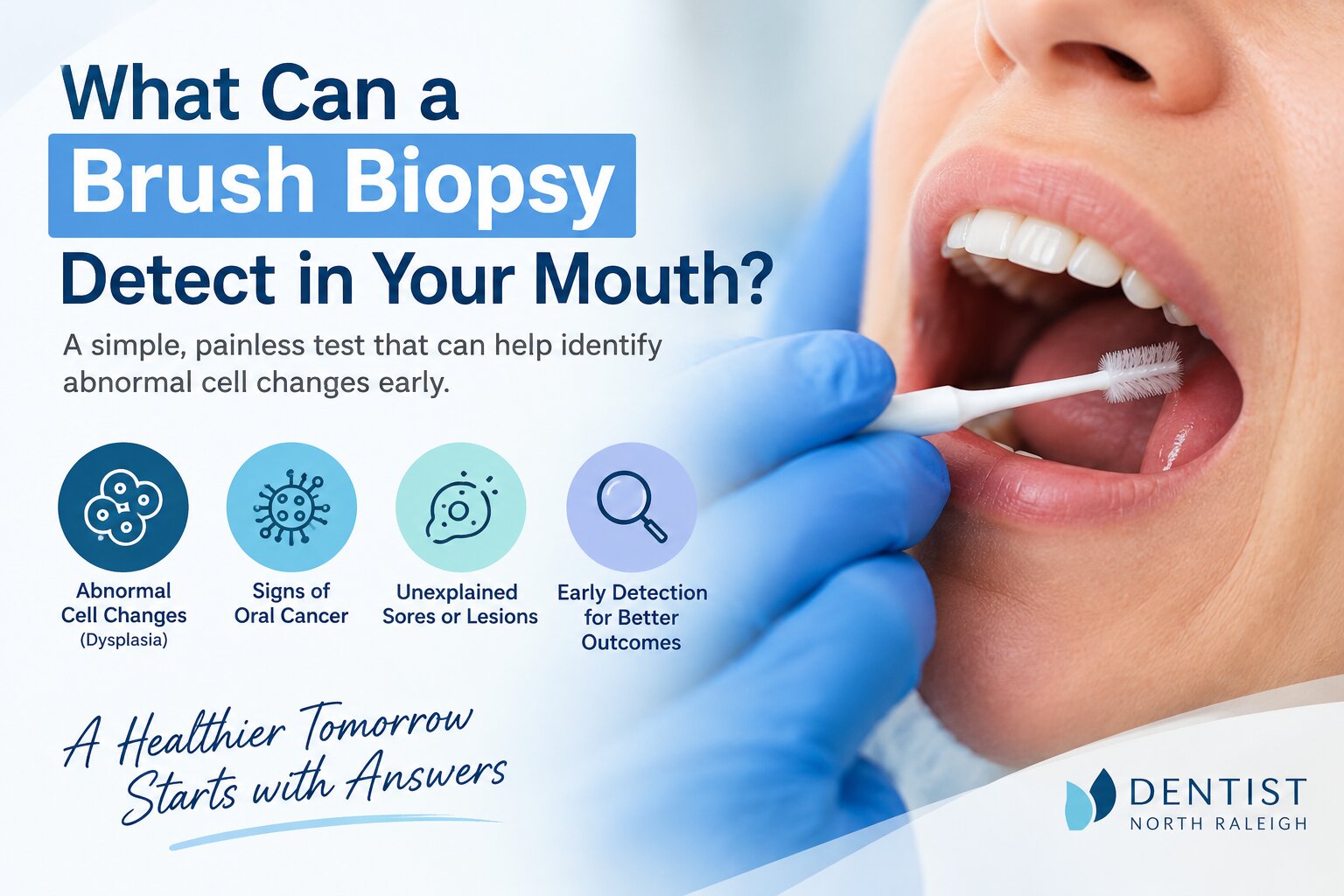
Changes inside your mouth are common and often harmless. A cheek bite, hot food, or irritation may cause soreness. Most minor areas improve once the cause goes away. However, some changes remain longer or look unusual. These areas deserve attention instead of being ignored.
A brush biopsy North Raleigh evaluation may help assess unusual oral tissue. The test collects surface cells from an area needing closer review. Laboratory analysis may show whether those cells appear normal or unusual. This information can help your dentist decide whether further testing is appropriate. However, it does not replace a full clinical examination. Current dental guidance considers brush cytology an additional assessment method.
Why Changes Inside Your Mouth Matter
Your mouth contains soft tissues that can change quickly. These tissues include your tongue, gums, cheeks, and lips. Changes can also appear on your palate or mouth floor. Many problems heal naturally within a short period.
Some changes may remain for more than two weeks. These include sores, lumps, thick areas, or unusual patches. Red or white patches also deserve professional evaluation when persistent. NIDCR advises seeing a dentist or doctor for such symptoms.
An oral cancer screening Raleigh NC examination checks these areas carefully. The dentist looks for changes that may need closer evaluation. Screening does not mean something serious has already been found. It simply helps identify areas that need proper attention.
What Is a Brush Biopsy?
A brush biopsy is a form of oral cell sampling. It collects cells from an area that looks different from nearby tissue. Those cells are examined for changes that may need further attention. Unlike a tissue biopsy, it does not remove a tissue section.
This approach differs from removing a full tissue sample. A traditional biopsy examines actual tissue for a confirmed diagnosis. The ADA still considers tissue biopsy the diagnostic reference standard.
Anyone researching an oral biopsy Raleigh NC should understand this difference. Brush sampling may provide added information in selected clinical situations. Your dentist decides whether observation, referral, or biopsy is appropriate.
You can learn more about a brush biopsy in North Raleigh and the local service.
When Might a Dentist Consider a Brush Biopsy?
Dentists consider several details before recommending additional testing. They look at the area’s color, shape, texture, and location. How long the change has remained also provides useful information. A dentist may ask about pain, bleeding, or recent irritation. Your medical history and tobacco or alcohol use may also matter. These details help determine whether monitoring or further testing makes sense.
A brush biopsy dentist Raleigh NC may discuss cell sampling selectively. Current ADA guidance says cytology may be considered when tissue biopsy is not possible, advisable, or indicated.
A brush biopsy North Raleigh assessment is therefore one possible tool. Careful examination remains essential when unusual mouth changes do not improve.
What Oral Changes Can a Brush Biopsy Help Identify?
A brush biopsy North Raleigh evaluation can examine unusual oral cells. The collected cells are reviewed for changes in their appearance. These findings can help guide decisions about further evaluation. However, brush cytology does not provide every final diagnosis. A tissue biopsy remains the standard for confirming serious disease.
Understanding what this test can reveal helps reduce unnecessary worry. Many mouth changes are harmless and have simple causes. Others may need closer attention because their cells look unusual.
Abnormal or Precancerous Cell Changes
Healthy oral cells follow normal patterns as they grow and renew. Sometimes a laboratory may identify cells that look different. These changes can vary in type and level of concern. Some may reflect irritation, while others need closer assessment. Certain abnormal cell patterns may be linked with precancerous changes. However, brush cytology alone cannot confirm a cancer diagnosis.
A brush sample can help identify cells that look abnormal. Some abnormal changes may be described as atypical or suspicious. These findings do not automatically mean someone has oral cancer. Instead, they show that the area may need further assessment.
Patients considering an oral biopsy Raleigh NC should understand this distinction. Cell changes can have different causes and levels of concern. A dentist uses laboratory findings together with the clinical examination.
Suspicious Oral Lesions
An oral lesion means an area that differs from nearby tissue. Its surface may look smoother, rougher, raised, or discolored. Many lesions come from harmless causes, including repeated irritation. Others remain present even after the likely cause disappears. Persistent lesions may need closer examination to understand their nature.
However, lesions that remain present deserve a closer dental examination. White patches and red patches can also require professional attention. NIDCR recommends evaluation when concerning changes last over two weeks.
During an oral cancer screening Raleigh NC, dentists examine these areas. A brush biopsy may sometimes provide added information about cell changes.
Possible Changes Linked With Oral Cancer
Brush cytology may identify cells that appear abnormal or suspicious. Such findings can show that an area needs further investigation. They do not confirm that oral cancer is present. A dentist may recommend tissue biopsy when findings remain concerning. Tissue examination provides more detailed information needed for diagnosis. Current ADA guidance states that biopsy remains the diagnostic reference standard.
Oral cancer can appear in several areas of the mouth. These include the tongue, gums, mouth lining, and throat area. Warning signs may include persistent sores, lumps, or thick patches. Red or white patches can also require further evaluation.
A brush biopsy dentist Raleigh NC considers the complete clinical picture. The dentist may recommend additional testing when findings appear concerning.
What Happens During and After a Brush Biopsy?
Knowing what to expect can make dental testing feel less stressful. A brush biopsy North Raleigh visit usually begins with examination. Your dentist first looks closely at the unusual mouth area. Its size, color, location, and surface may be noted carefully.
What Happens During a Brush Biopsy?
During cell collection, a small brush touches the unusual tissue. The dentist gently moves the brush across the selected area. This process collects cells that can be reviewed by specialists.
The appointment itself is generally simple and does not take long. Your dentist may also examine nearby areas for other changes. These findings provide important context for any laboratory information received later.
Patients considering an oral biopsy Raleigh NC may have questions. It helps to remember that brush sampling differs from tissue removal. You can learn more about a brush biopsy in North Raleigh before discussing testing with your dentist.
Does a Brush Biopsy Hurt?
People often worry about discomfort before having any mouth test. Brush sampling collects cells instead of removing a tissue section. Patients may notice pressure or scraping during cell collection. Individual comfort can vary based on the area being examined.
Your brush biopsy dentist Raleigh NC can explain what to expect. Tell your dentist if the area is already tender beforehand.
Understanding Brush Biopsy Results
Laboratory findings may show normal, atypical, or concerning cell patterns. Your dentist interprets those findings alongside the mouth examination. A normal result may still require monitoring if the area remains. An unusual result may lead to closer examination or further testing. This is why laboratory findings should never be considered alone. A result should never be interpreted without proper professional guidance.
A negative cytology result cannot always rule out disease. If an area persists or changes, further evaluation may be needed. Current ADA guidance specifically supports follow-up for persistent abnormalities.
When Is a Traditional Biopsy Still Needed?
A brush biopsy does not provide every final diagnosis. Suspicious or persistent tissue may require a traditional tissue biopsy. This allows a laboratory to examine the actual tissue structure.
During oral cancer screening Raleigh NC, concerning findings need careful assessment. Your dentist may perform a biopsy or recommend specialist evaluation. A brush biopsy North Raleigh assessment can provide useful information. However, complete diagnosis depends on the most suitable clinical testing.
Why Early Detection Matters With Brush Biopsy North Raleigh
Early attention to unusual mouth changes can make a difference. Some concerning conditions may develop without causing strong pain. This makes regular dental examinations an important part of prevention. A brush biopsy North Raleigh assessment may support further evaluation when needed.
Regular dental visits also create a useful record over time. Your dentist can compare new changes with earlier oral examinations. This helps identify areas that look different or remain persistent.
Who May Have a Higher Risk of Oral Cancer?
Certain factors can increase a person’s risk of oral cancer. Tobacco use remains one of the most important known risk factors. Heavy alcohol use can also raise the risk over time. Using tobacco and alcohol together can increase risk even further.
Age can also play a role in oral cancer risk. Long-term sun exposure may increase the risk of lip cancer. HPV infection is strongly linked with many cancers of the throat.
People with higher risks should discuss screening with their dentist. An oral cancer screening Raleigh NC visit provides that opportunity. Your dentist can consider your habits, history, and current symptoms together.
Regular Dental Exams Support Early Detection
Dental exams involve more than checking teeth for cavities. Dentists also examine your gums, tongue, cheeks, and other tissues. This can reveal changes that are difficult to notice yourself.
A brush biopsy dentist Raleigh NC can explain available testing options. The appropriate next step depends on the clinical findings. Regular dental examinations also create a record of tissue changes. That history can help dentists notice changes developing over time.
Conclusion
Unusual mouth changes should not be ignored when they persist. A brush biopsy North Raleigh evaluation may help examine certain cell changes. It can support further assessment when a dentist notices a concern. Regular dental exams also help identify changes you may miss. If you notice sores, patches, lumps, or lasting irritation, seek professional advice. North Raleigh Dental Studio provides brush biopsy and oral health evaluations in Raleigh, NC. You can learn more by visiting North Raleigh Dental Studio or the brush biopsy service . To schedule a visit, call (919) 847-3899.