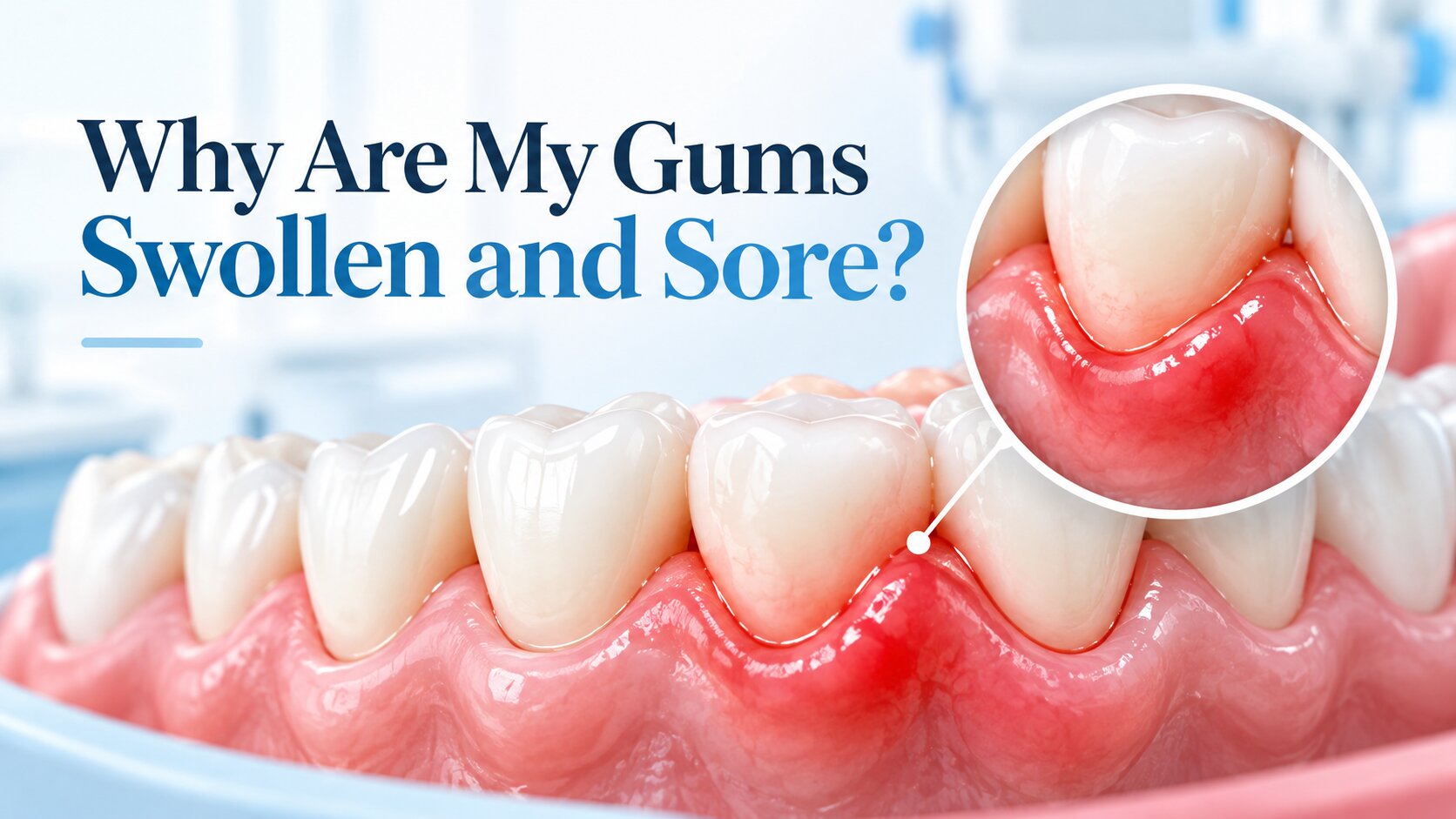
Noticing sore or puffy gums can make you feel concerned. You may see changes while brushing, flossing, or eating meals. Sometimes, your gums may feel tender without an obvious reason. In other cases, the discomfort may slowly become more noticeable.
Swollen gums can occur for several different reasons. Some causes are mild and improve with better daily care. Some causes may require care from a dental professional. Understanding your symptoms can help you decide what happens next.
You should also notice how long the swelling has lasted. Pay attention to bleeding, redness, tenderness, or changes near teeth. These details can help explain why your gums feel different
What Do Swollen and Sore Gums Look or Feel Like?
Healthy gums usually feel firm and fit closely around teeth. When irritation develops, their appearance and texture may begin changing. Swollen and sore gums can look puffy, red, or enlarged. They may also feel tender when touched or brushed.
Some people notice bleeding while brushing or using dental floss. Others feel soreness while chewing firm or crunchy foods. Your gums may become sensitive around one specific tooth. In some cases, several areas can become uncomfortable together.
You might also notice ongoing bad breath or unpleasant taste. The gumline may appear darker or more red than usual. Some people notice their gums pulling away from their teeth. These changes deserve attention, especially when they keep returning.
Occasional mild tenderness does not always mean something serious. However, frequent swelling should not become part of your routine. Persistent changes may signal inflammation or another oral health concern.
Why Are My Gums Swollen and Sore?
There is not one single reason gums become painful or swollen. Good daily oral care habits can help protect your gum health. Plaque around the gumline may irritate sensitive gum tissue. Food trapped between teeth can also cause local discomfort.
Sometimes, brushing too hard can make gums feel tender. Changes in hormone levels can also influence your gum health. Certain medicines and dry mouth can influence gum health too. Infections can cause deeper swelling that needs professional dental care.
Gingivitis is another common reason for swollen gums. It can begin when plaque remains near the gumline. Early changes may include redness, tenderness, or bleeding during brushing. These symptoms should not simply be ignored for several months.
More advanced gum problems can develop when inflammation continues untreated. However, swelling does not automatically mean severe gum disease. A dentist can check your mouth and determine the underlying cause.
Common Causes of Swollen and Sore Gums
Swollen and sore gums can develop for several different reasons. Some causes are linked with daily habits and oral care. Others may involve infection, health changes, or certain medicines. Knowing the possible cause can make the problem easier to understand.
Plaque Buildup and Gingivitis
Plaque is a soft layer that forms around teeth daily. When plaque stays near gums, it can cause irritation. Your gums may look red, feel sore, swell, or bleed easily. Gingivitis is an early form of gum inflammation. Brushing and flossing every day can help control plaque buildup.
Brushing or Flossing Too Hard
Cleaning your teeth is important, but pressure also matters. Hard brushing can irritate the delicate tissue around teeth. Incorrect flossing can also make gums feel sore afterward. Using a soft toothbrush with gentle brushing can help prevent irritation.
Food Trapped Around the Gumline
Small food particles can become stuck between nearby teeth. Seeds, meat fibers, and popcorn pieces may cause irritation. This may cause the gum around one tooth to become swollen. Gentle flossing may help remove trapped food from that area.
Gum Disease
Long-lasting inflammation may sometimes develop into deeper gum problems. Periodontitis can affect the tissues supporting your natural teeth. Common signs can include bleeding gums, bad breath, and receding gums. Some people may also notice loose or sensitive teeth.
Ongoing gum symptoms may need a professional dental evaluation. The examination can help determine how much inflammation is present.
Dental or Gum Infection
An infection near a tooth can cause strong gum swelling. You may notice pain, pressure, or a small gum bump. Some infections can also cause an unpleasant taste or odor. These symptoms should be checked by a dental professional.
Hormonal Changes, Dry Mouth, and Medicines
Changes in hormone levels can sometimes increase gum sensitivity. Dry mouth may also allow more bacteria to collect. Certain medicines can affect saliva levels or gum tissue. Always tell your dentist about medicines you currently take.
Other Factors That Can Affect Gum Health
Smoking, an unhealthy diet, and some medical conditions can harm gum health. These factors may also slow healing or increase irritation. Persistent gum changes deserve attention when symptoms keep returning.
What Should You Do When Your Gums Are Swollen and Sore?
Noticing swollen and sore gums can make daily routines uncomfortable. Eating, brushing, and flossing may suddenly feel more difficult. The best next step depends on what is causing the problem. Mild gum irritation may improve with proper care at home. Ongoing swelling may need a professional dental evaluation.
How Can You Help Swollen Gums at Home?
Keep your mouth clean with a consistent daily routine. Brush gently twice a day with a soft-bristled toothbrush. Avoid pressing too hard against sensitive gum tissue. Gentle brushing removes plaque without causing extra irritation.
Floss carefully between teeth at least once daily. This helps remove food and plaque near the gumline. A warm salt water rinse may help calm mild gum irritation. Add a small amount of salt to warm water and rinse gently. Spit out the mixture after rinsing instead of swallowing it.
Drink plenty of water during the day to stay hydrated. Water supports saliva production and helps keep your mouth moist. Avoid tobacco because it can slow gum healing. Very spicy or hard foods may also increase discomfort.
Home care can support healthy gums, but it has limits. Persistent swollen gums should still receive professional attention.
What Should You Avoid Doing?
Do not scrub painful gums with a hard toothbrush. Aggressive brushing can increase tenderness and gum irritation. Avoid picking swollen areas with fingers or sharp objects. This can irritate the gums and allow more bacteria to enter.
Never try to drain a gum abscess yourself. A painful bump may contain an active dental infection. Home treatment cannot always remove the infection source safely.
You should also avoid ignoring repeated gum bleeding. Frequent bleeding can point toward ongoing gum inflammation. Symptoms that return often deserve a closer dental examination.
How Long Should Swollen Gums Last?
Minor irritation may improve after a few days. However, symptoms should gradually become less noticeable over time. Swelling that continues or worsens needs more attention.
If one area stays swollen, trapped food may be involved. Infection or gum disease may also cause lasting swelling. The exact cause cannot always be identified at home.
If the swelling lasts several days or returns often, schedule a dental checkup. A dentist can look for irritation, infection, or gum disease.
When Should You See a Dentist?
Schedule a dental visit if swelling keeps returning frequently. Pain, bleeding, bad breath, or gum recession need attention. You should also watch for pus near the gumline. Loose teeth or pain while chewing are other warning signs.
A professional gum treatment Raleigh NC evaluation can help identify the cause. The dentist can examine nearby teeth, gum tissue, and signs of infection
When Is Gum Swelling an Emergency?
Some symptoms require faster medical or dental attention. Facial swelling may suggest an infection is spreading nearby. Fever with dental swelling should also be taken seriously. Difficulty swallowing or breathing needs urgent medical care.
Do not delay care when these symptoms develop suddenly. Severe facial swelling or breathing problems need urgent medical attention
How Does a Dentist Check Swollen and Sore Gums?
A dentist first looks closely at your gums and teeth. They may ask when the swelling first started. They may also ask about pain, bleeding, or bad breath.
The gumline is checked for redness, plaque, and tenderness. Dentists may also measure spaces between gums and teeth. These spaces can become deeper when gum disease develops.
Dental X-rays may be recommended in some cases. X-rays can show bone changes around affected teeth. They may also help identify hidden tooth infections.
A careful examination helps explain why swollen and sore gums developed. It also helps guide the right treatment plan.
How Are Swollen Gums Treated?
Treatment depends on what is causing your gum problem. Mild irritation may improve after better daily oral care. Plaque buildup may require a professional dental cleaning.
Gingivitis may improve once plaque and tartar are professionally removed. More serious gum disease may require a deeper dental cleaning. The goal is to control bacteria around the gumline.
A dental infection may require different treatment. The dentist will focus on removing the infection source. Antibiotics may sometimes be used when clinically needed.
People searching for swollen gums treatment Raleigh NC may need different care. One treatment does not work for every gum problem.
People searching for swollen gums treatment Raleigh NC may need different care. One treatment does not work for every gum problem.
How Can You Prevent Swollen and Sore Gums?
Healthy daily habits can help protect your gums. Brush twice a day using light, gentle pressure. Choose a soft-bristled toothbrush to avoid irritating sensitive gum tissue.
Floss once daily to clean spaces between your teeth. Regular flossing removes plaque that brushing may leave behind. Replace your toothbrush when the bristles become worn.
Regular dental visits are also important for prevention. Professional cleanings remove hardened deposits that home brushing cannot remove.
Drink enough water and avoid tobacco products when possible. A balanced diet can also support healthy gum tissue.
Pay attention to recurring bleeding, swelling, or tenderness. Gum problems can sometimes develop before severe pain appears.
Final Thoughts
Swollen and sore gums can happen for many reasons, from plaque buildup to infection. Mild symptoms may improve with better daily oral care. However, ongoing swelling, bleeding, pain, or tenderness should receive proper attention. Early dental care can help find the cause and prevent further problems. If your gum symptoms continue, contact North Raleigh Dental Studio for professional guidance. Call (919) 847-3899 to discuss your concerns and schedule a dental visit in Raleigh, NC.