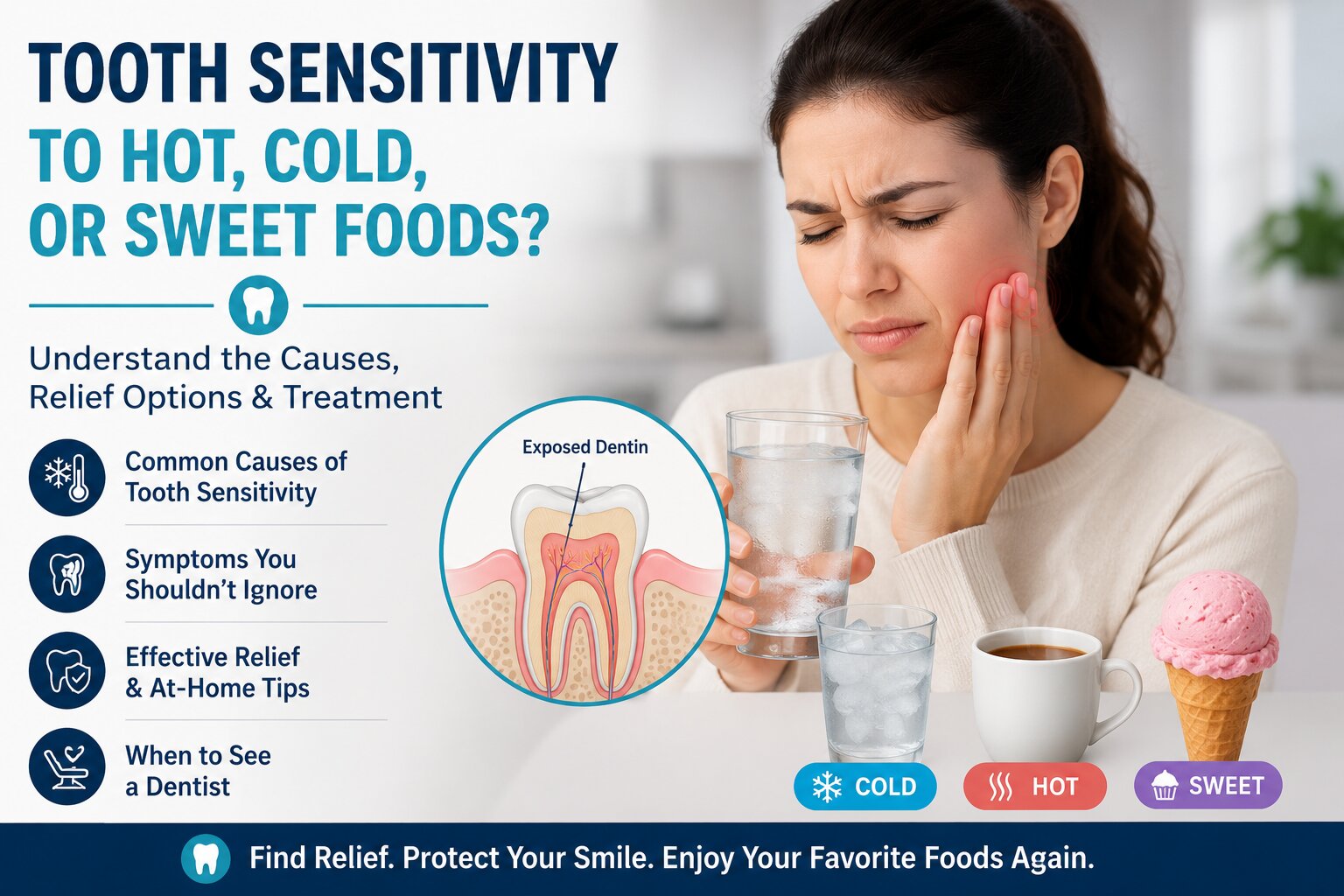
Foods and everyday activities can unexpectedly trigger sensitive teeth. A spoonful of ice cream, warm soup, chilled water, something sugary, or even normal brushing can sometimes produce a sudden uncomfortable sensation.
Sensitivity does not always behave the same way for everyone. Some people notice it around a single tooth, while others experience it across several teeth. It may appear only occasionally or return frequently enough to interfere with eating and drinking.
Why Can Temperature Changes Cause Tooth Pain?
Enamel forms the tough outer covering of the visible portion of each tooth. It protects the softer and more responsive structures underneath.
When this protective surface becomes thinner or an unprotected area of dentin is exposed, heat and cold can reach the tooth’s sensitive structures more easily. This can result in a quick, noticeable jolt of discomfort.
Cold temperatures are a frequent complaint, but sensitivity is not limited to cold foods. Warm meals, sugary products, acidic drinks, and even cool air may sometimes produce a similar reaction.
What Can Make Teeth Sensitive?
There is no single reason why teeth become sensitive. Changes involving enamel, gums, restorations, or the tooth itself can all contribute.
1. Gradual Enamel Wear
Tooth enamel can lose some of its strength and thickness over time.
Repeated contact with acidic beverages and foods may slowly affect the enamel surface. As that outer protection decreases, the tooth underneath may become easier to irritate.
Soda, citrus-based drinks, sports beverages, and other acidic products can be particularly challenging when consumed frequently.
Brushing technique also matters. Scrubbing teeth forcefully does not provide better cleaning and may place unnecessary stress on the tooth and gum surfaces.
A soft toothbrush combined with controlled, gentle movements is generally a better choice for everyday oral care.
2. Receding Gums
Gums normally cover and protect areas around the roots of your teeth.
If the gumline begins moving away from a tooth, part of its root surface can become uncovered. Roots are naturally more vulnerable because they do not have the same thick enamel layer found on the visible crowns of teeth.
This may explain why a particular area suddenly reacts strongly to cold water or brushing.
Because gum recession has several possible causes, your dentist can examine the area and determine what may be contributing to the change.
3. Developing Tooth Decay
New sensitivity can sometimes be an early warning sign of decay.
As a cavity damages the tooth’s outer structure, the tooth can gradually become more responsive to temperature, sugary foods, or pressure.
A cavity does not always begin with constant or severe pain. For some patients, the first noticeable change is a brief sensation while eating or drinking.
Having the tooth examined early may help determine whether decay is responsible before the problem becomes more extensive.
4. Cracks or Chips in a Tooth
Not every tooth crack is obvious when looking in the mirror.
A damaged area can create a pathway for pressure and temperature changes to irritate the tooth. You might notice a sharp feeling while chewing certain foods or when drinking something particularly hot or cold.
Symptoms from a cracked tooth may also be inconsistent. The tooth might feel normal at one moment and uncomfortable during the next meal.
Because cracks can develop further, repeated discomfort from one tooth should be investigated instead of ignored.
5. Older or Damaged Dental Fillings
A filling that previously protected a tooth can change with years of normal use.
Wear, small fractures, loosened edges, or deterioration around a restoration may expose areas that were previously sealed. The affected tooth may then begin reacting to temperature.
Your dentist can inspect the existing filling and decide whether it remains secure or requires repair.
6. Changes in Gum Health
Problems involving the gums may indirectly increase sensitivity.
When the gums become unhealthy or recede, more of the tooth’s root may be exposed. That newly uncovered surface can respond strongly to brushing, temperature, and certain foods.
Sensitivity accompanied by bleeding gums, swelling, tenderness, or noticeable recession deserves additional attention.
7. Sensitivity Following Teeth Whitening
Whitening treatment can temporarily make teeth feel more reactive in some people.
The experience varies considerably. One person may notice very little change, while another may find cold beverages uncomfortable for a short period. The whitening method, product strength, treatment frequency, and condition of the teeth can all influence the experience.
People who already struggle with sensitivity should discuss whitening with their dentist beforehand. This provides an opportunity to check the teeth first and select an approach that is appropriate for their situation.
Does Sensitive Tooth Pain Mean Something Is Wrong?
Not every brief sensation signals a serious dental condition.
However, the way the discomfort develops can provide valuable information. A momentary reaction involving several teeth is different from increasing pain that repeatedly comes from the same tooth.
It is worth arranging a dental examination when:
- One particular tooth repeatedly causes discomfort.
- Sensitivity starts without an obvious explanation.
- Symptoms become more intense over time.
- The sensation remains after the temperature trigger disappears.
- Chewing or biting also becomes uncomfortable.
- You notice visible damage to a tooth.
- Your gums become swollen, tender, or frequently bleed.
An examination allows the dentist to investigate the source rather than treating every case of sensitivity in the same way.
Can Products for Sensitive Teeth Make a Difference?
Toothpaste formulated for sensitivity may be useful when exposed dentin is responsible for the discomfort.
These products generally require continued use rather than providing immediate relief after one brushing.
However, sensitivity toothpaste cannot correct structural problems such as decay, fractured teeth, loose restorations, or advanced gum problems.
Depending on what the examination reveals, treatment could involve fluoride, dental bonding, restoration repair, a filling, a crown, or another appropriate procedure.
The most useful first step is understanding why the sensitivity developed.
Ways to Care for Sensitive Teeth at Home
Daily habits can make a meaningful difference when protecting vulnerable tooth surfaces.
Use a Gentle Brushing Technique
Choose a toothbrush with soft bristles and brush using controlled movements rather than forceful scrubbing.
Applying additional pressure does not automatically remove more plaque. Consistent technique and thorough coverage are more important than brushing aggressively.
Choose Fluoride Toothpaste
Fluoride plays an important role in protecting enamel against tooth decay.
Someone who regularly experiences sensitivity may also benefit from toothpaste specifically formulated for sensitive teeth. Your dentist can recommend an appropriate option based on the condition of your teeth.
Reduce Frequent Acid Exposure
Regular exposure to highly acidic foods and beverages may gradually weaken enamel.
Try limiting how often acidic drinks contact your teeth. Avoid slowly sipping them for long periods or deliberately moving the liquid around your mouth.
After consuming something strongly acidic, giving your mouth some time before brushing can also help avoid unnecessary abrasion of temporarily softened enamel.
Pay Attention to Your Gums
Changes around the gumline are easy to overlook.
Bleeding, tenderness, or visible recession can indicate that the gums need attention. Getting these changes evaluated early may prevent additional problems from developing around the tooth roots.
How Can a Dentist Treat Tooth Sensitivity?
The appropriate treatment depends on the source of the discomfort.
Because sensitivity can develop for several different reasons, two patients with similar symptoms may require completely different care.
Possible approaches may include:
- Toothpaste created for sensitive teeth
- Professional fluoride applications
- Tooth-colored bonding
- Placement of a new filling
- Repairing an older dental restoration
- Protecting a weakened tooth with a crown
- Managing problems involving the gums
- Treating cracked or otherwise damaged teeth
In certain situations, additional treatment may be necessary when irritation or damage extends deeper inside the tooth.
The objective is not only to make the symptom quieter. Whenever possible, treatment should correct or manage the condition responsible for causing it.
When Is It Time to Have Sensitive Teeth Checked?
An occasional quick reaction may not require urgent treatment. Repeated or increasing discomfort, however, should not become something you simply learn to tolerate.
Pay particular attention when sensitivity changes how you eat or drink, occurs mainly in one tooth, or begins lasting longer than before.
Tooth discomfort can provide an early indication that the condition of a tooth or surrounding tissue has changed. Finding the cause early gives your dentist a better opportunity to recommend appropriate care before the problem becomes more complicated.