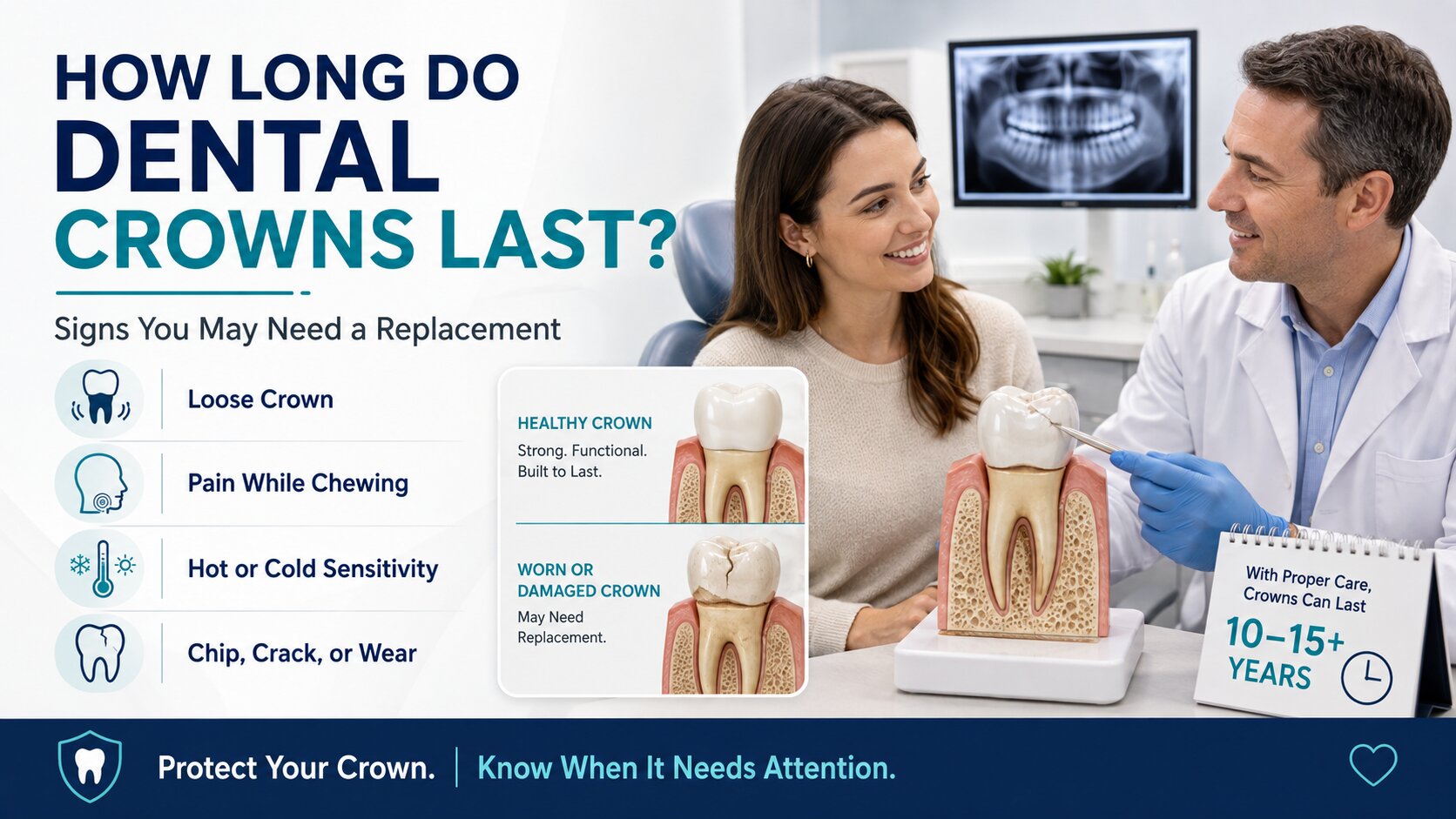
A dental crown can stay in place for many years, but it is not a lifetime fixture.
Some crowns remain comfortable and functional well beyond a decade. Others need attention sooner because of wear, damage, decay around the tooth, or changes in the way the teeth come together.
There is no calendar date when every crown automatically needs replacement.
What matters more is how the crown, the tooth underneath it, and the surrounding gum are holding up.
If you already have one or more crowns, knowing what affects their condition can help you recognize when it is time for a dental check.
How Many Years Can a Dental Crown Last?
There is no single lifespan that applies to every crown.
A well-maintained crown can often serve for many years. Its actual lifespan depends on several details, including the material used, where the crown is located, how much chewing pressure it receives, and the health of the tooth underneath.
A crown on a back molar handles different forces from one placed on a front tooth.
Daily habits matter as well.
Someone who frequently grinds their teeth, chews ice, or bites very hard objects may place considerably more stress on a restoration than someone who does not.
Instead of viewing a crown as something that must be replaced after a fixed number of years, it is more useful to have its condition checked during routine dental visits.
What Exactly Does a Crown Protect?
A crown covers the visible portion of a tooth.
Dentists may recommend one when a tooth no longer has enough natural strength to function reliably without additional protection.
For example, a crown may be used for a tooth that has:
- A large existing filling
- Significant decay
- A fracture or weakened area
- Received root canal treatment
- Lost part of its original shape
- Become heavily worn
- Required rebuilding after damage
North Raleigh Dental Studio includes dental crowns among its restorative dentistry options for strengthening and restoring damaged teeth.
Although the crown becomes the new outer surface, the natural tooth underneath still matters.
That tooth can develop problems even when the crown itself looks fine.
Why Do Some Crowns Last Longer Than Others?
A crown is only one part of the final restoration.
Its longevity depends on the crown material, the prepared tooth below it, the bond between them, and the environment in which the tooth functions every day.
Several factors can influence how long it remains successful.
The Amount of Pressure on the Tooth
Back teeth do most of the heavy chewing.
A crown on a molar regularly handles considerable pressure from food and from contact with the opposing teeth.
If someone clenches or grinds, those forces may become much stronger.
Repeated stress can contribute to chipping, cracking, loosening, or wear over time.
The Crown Material
Crowns can be made from different dental materials.
Ceramic, zirconia, porcelain fused to metal, metal alloys, and other materials have different strengths and characteristics.
The right material is chosen according to factors such as tooth location, appearance, available space, bite forces, and individual dental needs.
There is therefore no useful rule saying that every crown should last exactly the same length of time.
The Condition of the Tooth Beneath It
A crown may be artificial, but it usually sits over natural tooth structure.
That remaining tooth still needs protection from decay.
If bacteria reach the edge where the crown and natural tooth meet, a new cavity can develop underneath or beside the restoration.
When this happens, the crown may eventually need to be removed so the tooth can be evaluated and treated.
Your Daily Habits
Small habits repeated over many years can influence a crown.
Examples include:
- Chewing ice
- Biting very hard candy
- Opening packaging with your teeth
- Chewing pens or other objects
- Grinding or clenching
- Poor cleaning around the gumline
A crown is designed for normal biting and chewing, not for using the tooth as a tool.
How Can You Tell If a Crown Is Starting to Fail?
An older crown does not necessarily need replacement simply because of its age.
A ten-year-old crown that is secure, comfortable, and protecting a healthy tooth may be functioning better than a newer restoration that has developed a problem.
Changes in symptoms are often more important than the number of years.
Here are some signs worth paying attention to.
- The Crown Feels Loose
A crown should feel stable.
You should not notice movement when eating or touching the tooth.
If it begins to feel loose, the cement holding it may have weakened, the crown may have become damaged, or something may have changed in the tooth underneath.
Do not repeatedly wiggle a loose crown to test it.
Having it examined early may help prevent additional damage.
- You Feel Pain When Chewing
A crowned tooth should allow you to bite comfortably once treatment and normal healing are complete.
New discomfort during chewing deserves attention.
Pain may come from several sources. The bite may have changed, the crown could be damaged, the underlying tooth may have developed a problem, or the tissues around the tooth may be irritated.
Pain does not automatically mean that the crown has failed.
It does mean the reason should be identified.
- The Tooth Becomes Sensitive
A previously comfortable crowned tooth may sometimes begin reacting to hot or cold foods.
New sensitivity can occur for different reasons.
An exposed area near the crown margin, gum recession, decay, or another problem with the tooth may be responsible.
Sensitivity that repeatedly affects one crowned tooth is worth mentioning during an examination.
- Part of the Crown Chips or Cracks
Dental materials are strong, but they are not impossible to damage.
A small piece of porcelain may chip away. In other cases, a larger fracture can affect the shape or strength of the restoration.
You may first notice a rough edge with your tongue.
Even if the tooth does not hurt, a visible or noticeable defect should be assessed.
The dentist can determine whether the area can be repaired or whether replacing the crown would provide a better result.
- Food Keeps Catching Around the Crown
Food trapping in the same area may indicate that the shape, contact, gum position, or crown margin has changed.
Occasional food between teeth is normal.
Repeated trapping around one particular restoration is different.
It may make the area harder to keep clean and can irritate nearby gum tissue.
If floss constantly catches, tears, or becomes difficult to move around a crowned tooth, mention it at your next visit.
- The Gum Around the Crown Looks Different
Pay attention to the tissue surrounding crowned teeth.
You may notice redness, puffiness, tenderness, bleeding, or recession around the edge of a restoration.
Sometimes the problem relates to plaque buildup rather than the crown itself.
In other cases, the crown margin or another dental issue may be contributing.
Healthy gum tissue plays an important role in the long-term success of a restored tooth.
- There Is a Dark Area Near the Crown Edge
Changes in appearance around the gumline can have several explanations.
With certain crown types, part of the underlying material may become more noticeable as gums recede.
A dark spot can also occasionally indicate changes involving the natural tooth.
Because appearance alone cannot reliably identify the cause, the area should be checked rather than assuming the crown simply looks older.
- Your Bite No Longer Feels Normal
Your teeth should meet in a comfortable, familiar way.
If a crowned tooth suddenly feels higher, different, or uncomfortable when you close your mouth, something may have changed.
A crown that no longer feels right can place unwanted pressure on the tooth or surrounding structures.
Your dentist can check the bite and determine whether the crown is still properly positioned.
Does an Old Crown Automatically Need Replacing?
No.
Age alone is not enough reason to remove a functioning restoration.
Dentists generally consider several questions:
Is the crown still secure?
Is the tooth underneath healthy?
Does the edge of the restoration remain acceptable?
Can the patient chew comfortably?
Is there evidence of cracking, decay, or another problem?
If everything remains healthy, an older crown may continue functioning.
Replacing restorations unnecessarily can remove additional natural tooth structure, so the condition of the crown and tooth should guide the decision.
Can a Damaged Crown Be Repaired?
Sometimes.
A minor defect does not always require an entirely new crown.
Whether repair is practical depends on what has happened.
A limited surface chip may be different from a crown that has fractured extensively or become loose because the tooth underneath has decayed.
The dentist must examine both the restoration and the supporting tooth before deciding.
When the crown cannot provide dependable protection anymore, replacement may be the safer choice.
What If the Crown Comes Off Completely?
A crown that falls out should be evaluated promptly.
Keep the crown if you can find it and avoid trying to permanently glue it back yourself with household adhesive.
The tooth underneath may be more vulnerable while it is uncovered.
A dentist needs to determine why the restoration came off.
In some situations, the crown may still be usable. In others, changes to the crown or tooth may mean a new restoration is necessary.
Until you are seen, avoid chewing hard foods on that side.
How Can You Help a Crown Last Longer?
Caring for a crowned tooth is not dramatically different from caring for your natural teeth.
Clean Around It Every Day
Brush thoroughly and clean between your teeth.
Pay particular attention to the area where the crown meets the gum.
The crown itself cannot develop a cavity, but the natural tooth supporting it can.
Avoid Using Teeth as Tools
Do not use crowned teeth to open plastic packaging, crack shells, hold objects, or perform similar tasks.
Those habits expose the restoration to forces it was not designed to handle.
Be Careful With Extremely Hard Foods
You do not have to avoid normal chewing.
However, repeatedly biting ice or very hard objects can increase the chance of damaging both crowns and natural teeth.
Address Grinding or Clenching
If you grind your teeth during sleep, you may be placing heavy force on crowns without realizing it.
Tell your dentist if you wake with jaw fatigue, notice tooth wear, or have previously been told that you grind.
Keep Up With Dental Examinations
A crown can appear normal to you while small changes are developing around its margins or underneath it.
Routine examinations give your dentist an opportunity to monitor these areas before they create larger problems.
When Should You Have a Crown Checked?
You do not need to wait until a crown falls out.
Arrange an evaluation when you notice:
- New pain around the crowned tooth
- Movement or looseness
- A visible chip
- A rough or broken edge
- New temperature sensitivity
- Gum swelling or repeated bleeding
- Food constantly collecting around the crown
- A change in your bite
- An unusual taste or odor around one tooth
Sudden or increasing pain deserves particular attention.
Do You Need a Crown Replacement in North Raleigh?
A dental crown does not have a universal expiration date.
Some continue doing their job for many years. Others develop problems earlier because of tooth decay, biting forces, fractures, gum changes, or wear.
The most useful question is not simply, “How old is my crown?”
It is, “Is my crown still protecting a healthy, functional tooth?”
If a crowned tooth has started hurting, feels loose, looks damaged, or simply feels different, North Raleigh Dental Studio can examine the restoration and the tooth beneath it.
You can contact North Raleigh Dental Studio to arrange an appointment and determine whether the crown is still performing well or whether repair or replacement should be considered.