Introduction
Changes inside the mouth can feel small at first. A sore, patch, lump, or rough area may seem harmless. Still, some oral changes need careful dental review. This is why early screening matters so much. A dentist can check the area and decide the next step.
Many patients hear the words biopsy and feel worried. That reaction is very normal. A biopsy simply means collecting cells or tissue for lab testing. It helps the dentist understand what is happening inside the mouth. It also helps guide the right care plan.
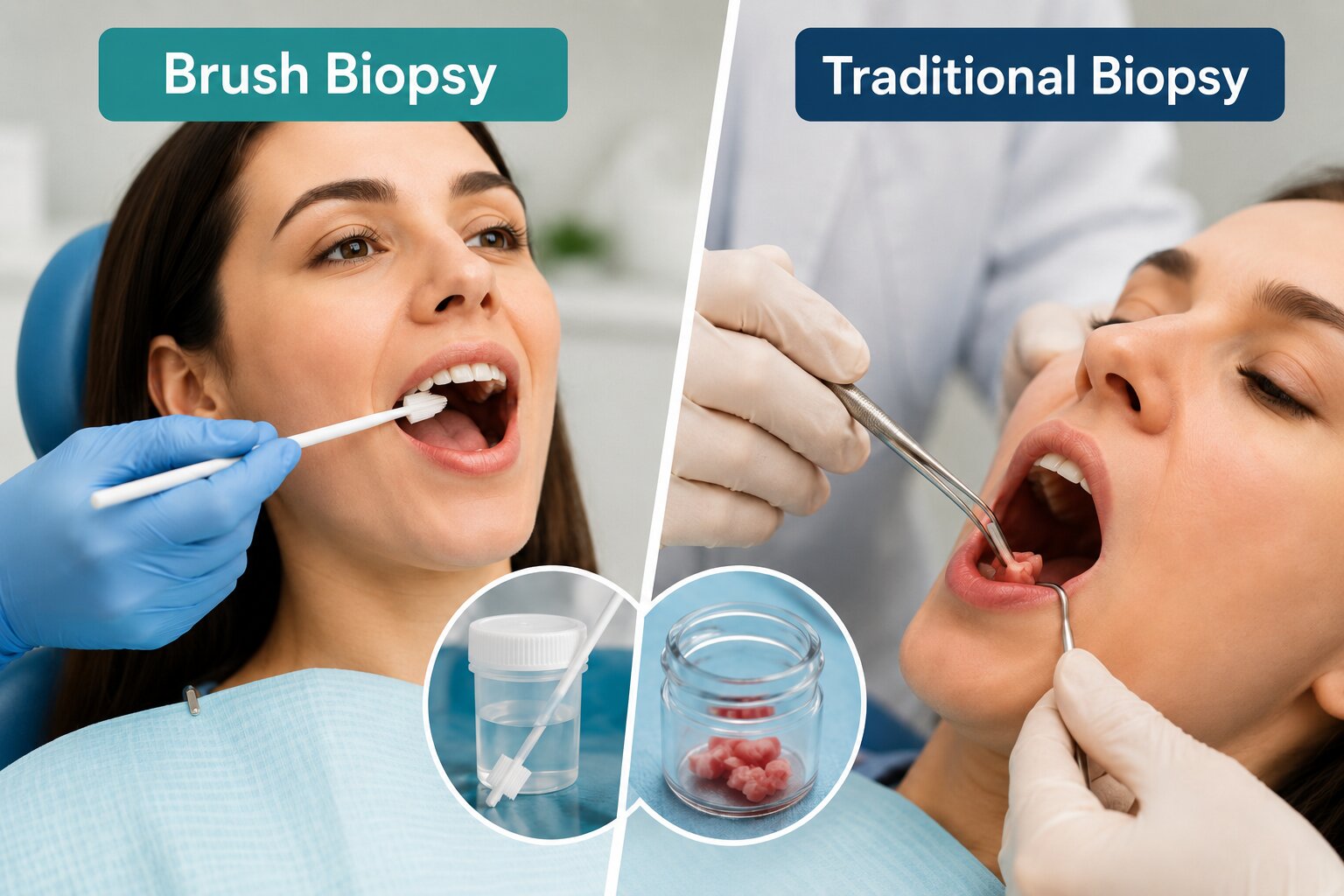
This blog explains Brush Biopsy vs Traditional Biopsy in simple words. Both tests help check suspicious oral areas. However, they are not exactly the same. A brush biopsy is usually a gentle screening method. A traditional biopsy collects a small tissue sample for deeper review.
Patients in Raleigh may need this information during dental visits. It helps them ask better questions and feel more prepared. Good information can also reduce fear before treatment. When patients understand the process, they can make better choices. A trusted dental team can explain each option clearly.
Oral health changes should never be ignored for too long. Some changes may come from irritation or injury. Others may need lab testing for a clear answer. Regular dental visits help find these changes early. Early review often makes care easier and more effective.
What Is a Brush Biopsy?
A brush biopsy is a simple oral screening test. The dentist uses a small brush on the suspicious area. The brush collects cells from the surface of the mouth. It may also collect cells from slightly deeper layers. These cells are then sent to a lab for testing.
A brush biopsy does not usually involve cutting tissue. It also does not usually need stitches. Many patients find the process quick and easy. The dentist gently rubs the brush over the area. This may feel slightly rough for a short time. However, it is usually not very painful.
Dentists may suggest this test for certain mouth changes. These may include white patches, red patches, or rough spots. It may also help check sores that do not heal. A brush biopsy can support early oral screening. It helps the dentist decide whether more testing is needed.
This test is useful when an area looks unusual. It gives the dentist more information than only looking. Still, it is important to understand its role. A brush biopsy is often used as a screening tool. It may not replace a traditional biopsy in every case.
If the lab finds abnormal cells, the dentist explains results. The next step may include further testing or referral. Patients should not panic before the final review. Many oral changes are not cancer. Still, checking them early is always a smart step.
What Is a Traditional Biopsy?
A traditional biopsy is a more detailed diagnostic test. The dentist or oral specialist removes a small tissue sample. This sample comes from the suspicious area inside the mouth. A lab then checks the tissue under a microscope. This helps confirm what type of change is present.
A traditional biopsy may need local anesthesia first. This helps numb the area during the procedure. The patient usually feels pressure, not sharp pain. In some cases, the dentist may place small stitches. Healing instructions may also be given after the visit.
This type of biopsy can provide deeper tissue details. It helps the dental provider understand the full condition. A traditional biopsy may be needed for serious-looking areas. It may also follow unclear or abnormal screening results. The goal is to get a clear and reliable diagnosis.
Traditional biopsy is more involved than brush biopsy. However, it plays a very important role. It can help confirm conditions that need treatment. It can also help rule out more serious problems. This makes it an important part of oral diagnosis.
Some patients worry about discomfort or recovery time. These concerns are completely understandable. The dental team should explain the process before starting. They should also review aftercare steps clearly. Good communication helps patients feel calm and prepared.
Understanding both options helps patients feel more confident. A brush biopsy may be useful for early screening. A traditional biopsy may be needed for deeper diagnosis. The dentist chooses the right option after an oral exam. The best choice depends on the area, symptoms, and findings.
Brush Biopsy vs Traditional Biopsy: Main Differences
1. Procedure Method
Brush Biopsy:
A brush biopsy uses a small brush to collect oral cells. The dentist gently rubs it over the suspicious area. It does not remove a tissue piece. This method is simple, quick, and useful for early oral screening.
Traditional Biopsy:
A traditional biopsy removes a small tissue sample from the mouth. The dentist may use special tools for this step. The sample goes to a lab for deeper review. This method gives more detailed tissue information.
2. Comfort Level
Brush Biopsy:
A brush biopsy is usually more comfortable for patients. It may feel like firm brushing on the mouth tissue. Most patients feel only mild pressure. This makes it easier for nervous patients during oral screening.
Traditional Biopsy:
A traditional biopsy may feel more involved for patients. The dentist usually numbs the area before starting. Patients may feel pressure during the procedure. Mild soreness can happen after the numbness wears off.
3. Need for Cutting
Brush Biopsy:
A brush biopsy usually does not need cutting. The dentist only collects cells using a brush. There is no tissue removal in most cases. This makes the process less stressful for many patients.
Traditional Biopsy:
A traditional biopsy usually needs a small cut. The dentist removes tissue from the suspicious area. Some cases may also need stitches. This helps the lab study the tissue more clearly.
4. Healing Time
Brush Biopsy:
A brush biopsy usually has little healing time. Since no tissue is removed, recovery is simple. Patients can often return to normal activities quickly. Mild tenderness may happen, but it usually fades soon.
Traditional Biopsy:
A traditional biopsy may need more healing time. The removed tissue area needs time to close. The dentist may give aftercare instructions. Patients may need to avoid hard or spicy foods for some days.
5. Purpose of the Test
Brush Biopsy:
A brush biopsy is often used for early screening. It helps check if oral cells look abnormal. It can guide the next step in care. Dentists may use it before deeper testing is needed.
Traditional Biopsy:
A traditional biopsy is often used for final diagnosis. It gives a full tissue sample for lab testing. This helps confirm serious oral conditions. It also helps dentists plan the right treatment.
6. Level of Detail
Brush Biopsy:
A brush biopsy gives useful cell-level information. It helps identify whether cells need closer review. However, it may not show full tissue depth. That is why further testing may sometimes be required.
Traditional Biopsy:
A traditional biopsy gives deeper and fuller information. The lab can study tissue layers more clearly. This helps find the exact nature of the problem. It is helpful when detailed diagnosis is needed.
7. Best Use Case
Brush Biopsy:
A brush biopsy works well for early suspicious changes. It may be used for patches, rough spots, or small sores. It helps dentists decide if more testing is needed. It supports early oral health awareness.
Traditional Biopsy:
A traditional biopsy works well for more serious-looking areas. It may be used when deeper testing is important. Dentists may recommend it for larger or changing lesions. It helps confirm the condition with better detail.
Which Biopsy Is More Comfortable for Patients?
A brush biopsy is usually more comfortable for most patients. It does not usually need cutting, stitches, or numbing medicine. The dentist uses a small brush on the mouth tissue. Patients may feel light pressure or mild scraping. The process is quick and usually easy to manage.
A traditional biopsy may feel more involved for some patients. The dentist may need to numb the area first. A small tissue sample is then removed for testing. Patients should not feel sharp pain during the process. However, mild soreness may happen after the visit.
Comfort also depends on the size and location. Some mouth areas are more sensitive than others. Patient fear can also affect comfort during treatment. A gentle dental team can explain every step clearly. This helps patients feel calm, safe, and prepared.
In simple words, brush biopsy is often easier. Traditional biopsy may need more care and healing time. Still, both tests have an important purpose. The dentist recommends the best option after examination. The right choice depends on the oral tissue change.
When May a Dentist Recommend a Brush Biopsy?
A dentist may recommend a brush biopsy during an oral exam. This test helps check unusual changes inside the mouth. It is often used when the area looks mildly suspicious. It may also help when symptoms are not clear. The goal is to collect cells for early screening.
A brush biopsy may be suggested for white patches. It may also help check red patches. These patches can appear on the tongue, gums, cheeks, or lips. Some patches may come from irritation or injury. Others may need further review through lab testing.
Dentists may also use a brush biopsy for mouth sores. A sore that does not heal should be checked. Most small sores heal within one or two weeks. If a sore stays longer, dental review becomes important. Early testing can help find the cause.
Rough, thick, or raised tissue may also need screening. These changes can feel different from nearby tissue. Patients may notice them while eating or brushing. Sometimes, the dentist finds them during a routine visit. A brush biopsy can help check these early signs.
This test may also help patients with ongoing oral irritation. Pain, burning, numbness, or tenderness should not be ignored. These signs do not always mean something serious. Still, they should be checked by a trained dentist. Early care gives patients better peace of mind.
When May a Traditional Biopsy Be Needed?
A traditional biopsy may be needed for deeper testing. It is often used when the area looks more concerning. The dentist may see changes in color, shape, or size. A traditional biopsy gives the lab a tissue sample. This helps confirm what is happening inside the tissue.
This test may be recommended for larger oral lesions. It may also be used when a spot keeps changing. Growth, bleeding, or hard tissue can need closer review. The dentist may also check how long symptoms have lasted. Long-lasting changes often need more detailed testing.
A traditional biopsy may also follow a brush biopsy result. If abnormal cells are found, more testing may be required. This does not always mean a serious condition. It only means the dentist needs clearer information. A tissue sample can provide more complete results.
Some oral areas need direct tissue review from the start. These may include hard lumps or deep ulcers. They may also include thick patches that do not heal. In such cases, a traditional biopsy may be the safer choice. It helps support a more accurate diagnosis.
Patients should not fear this recommendation. A traditional biopsy is a common dental procedure. The area is usually numbed before the tissue is taken. The dental team explains each step before starting. Clear guidance helps patients feel safe and prepared.
Is Brush Biopsy a Replacement for Traditional Biopsy?
A brush biopsy is helpful, but it has limits. It is often used as an early screening tool. It can show whether cells look normal or abnormal. However, it may not show the full tissue depth. That is why it may not replace traditional biopsy.
A traditional biopsy gives deeper tissue information. It allows the lab to study tissue layers. This can help confirm the exact condition. It can also help plan proper treatment. For serious-looking areas, this detail is very important.
The right test depends on the oral finding. A small patch may first need a brush biopsy. A deeper or changing lesion may need tissue removal. The dentist checks color, size, texture, and symptoms. These details help guide the best testing choice.
Patients should avoid guessing about oral changes. Online information can help with basic awareness. Still, it cannot replace a dental exam. A dentist can check the mouth directly and carefully. This makes the recommendation more accurate and safe.
In simple terms, both tests have different roles. Brush biopsy can support early oral screening. Traditional biopsy can support a clear diagnosis. One test may lead to another when needed. The main goal is always better oral health.
Regular dental visits help detect changes early. Patients should report sores, patches, or lumps quickly. Early review can reduce worry and prevent delays. It also helps the dentist choose proper care. Timely action is always better than waiting too long.
Benefits of Brush Biopsy for Early Oral Screening
1. Quick and Simple Screening
A brush biopsy is usually quick and simple. The dentist uses a small brush on the tissue. It helps collect oral cells for lab review. This makes early screening easier for patients during routine dental visits.
2. Usually More Comfortable
A brush biopsy is usually comfortable for most patients. It does not often need cutting or stitches. Patients may feel light pressure during the process. This makes it less stressful for people with dental fear.
3. Helps Detect Changes Early
Early screening can help find abnormal oral cell changes. These changes may not always cause pain first. A brush biopsy helps dentists check suspicious areas sooner. Early review can support better care decisions.
4. Supports Better Dental Decisions
A brush biopsy gives the dentist helpful cell information. This helps decide whether more testing is needed. It can also prevent unnecessary delay in care. Patients get clearer guidance after lab results are reviewed.
5. Useful for Suspicious Mouth Spots
Dentists may use brush biopsy for unusual oral spots. These may include red patches, white patches, or sores. It may also help check rough tissue areas. This supports safer oral health monitoring.
6. Minimal Healing Time
A brush biopsy usually needs little healing time. Since no tissue piece is removed, recovery is simple. Most patients return to normal activities quickly. Mild tenderness may happen, but it usually fades soon.
7. Reduces Patient Worry
Many patients feel worried about oral changes. A brush biopsy can provide helpful answers early. It helps patients understand whether further care is needed. This can reduce fear and improve peace of mind.
8. Supports Preventive Oral Care
A brush biopsy supports preventive oral health care. It helps dentists check changes before they become worse. Regular screening can protect long-term oral health. It also encourages patients to report mouth changes early
Benefits of Traditional Biopsy for Detailed Diagnosis
1. Gives a Complete Tissue Sample
A traditional biopsy gives a full tissue sample for lab testing. The dentist removes a small part of the affected area. This helps the lab study the tissue closely. It gives clearer details than surface cell testing alone.
2. Helps Confirm the Exact Condition
A traditional biopsy can help confirm the exact oral condition. The lab checks the tissue under a microscope. This helps identify abnormal changes more clearly. It also helps the dentist avoid guessing during diagnosis.
3. Checks Deeper Tissue Layers
Some oral changes may start below the surface. A traditional biopsy helps check deeper tissue layers. This is useful when the area looks serious. It gives more complete information for safe dental care.
4. Supports Better Treatment Planning
Clear biopsy results help dentists plan better treatment. The result shows what type of condition is present. This helps decide the next care step. It also helps avoid delays in important dental treatment.
5. Useful for Serious-Looking Oral Changes
A traditional biopsy is helpful for suspicious oral spots. It may be needed for lumps, ulcers, or thick patches. These changes need careful testing and review. A tissue sample gives stronger information for diagnosis.
6. Helps Rule Out Serious Problems
Not every mouth change is dangerous or serious. A traditional biopsy can help rule out serious issues. This gives patients clearer answers and peace of mind. It also helps dentists give the right advice.
7. Provides Reliable Lab Information
A traditional biopsy gives the lab enough tissue to study. This can make the findings more reliable. The lab can check tissue structure and cell changes. These details help support a trusted diagnosis.
How to Choose the Right Biopsy Option
Patients should not choose a biopsy type alone. The dentist should guide this decision after examination. A brush biopsy may suit early screening needs. A traditional biopsy may suit deeper diagnostic needs. The best option depends on the oral finding.
The dentist checks many things before recommending a test. These include size, shape, color, and symptoms. They also consider the patient’s medical history. This careful approach supports safe and trusted care.
Why Early Oral Cancer Screening Matters
Early oral cancer screening helps find mouth changes before they grow. Many signs may look small or harmless at first. A sore, patch, lump, or rough area needs attention. Regular dental visits help dentists check these signs early. Early review can support faster care and better planning. It may also reduce stress for patients and families. Screening does not mean something serious is always present. It simply helps find answers at the right time. Timely dental care protects oral health and supports peace of mind.
Conclusion
Brush biopsy and traditional biopsy both help check unusual mouth changes. A brush biopsy is often simple, quick, and comfortable. It can help dentists screen suspicious areas early. A traditional biopsy gives deeper tissue details for diagnosis. It may be needed when the area looks more serious. The right option depends on the oral exam findings. Patients should not ignore sores, patches, lumps, or rough areas. Early dental screening can help protect long-term oral health. If you notice any unusual mouth change, contact North Raleigh Dental Studio today. Visit https://dentistnorthraleigh.com/ or call (919) 847-3899 to schedule your appointment.