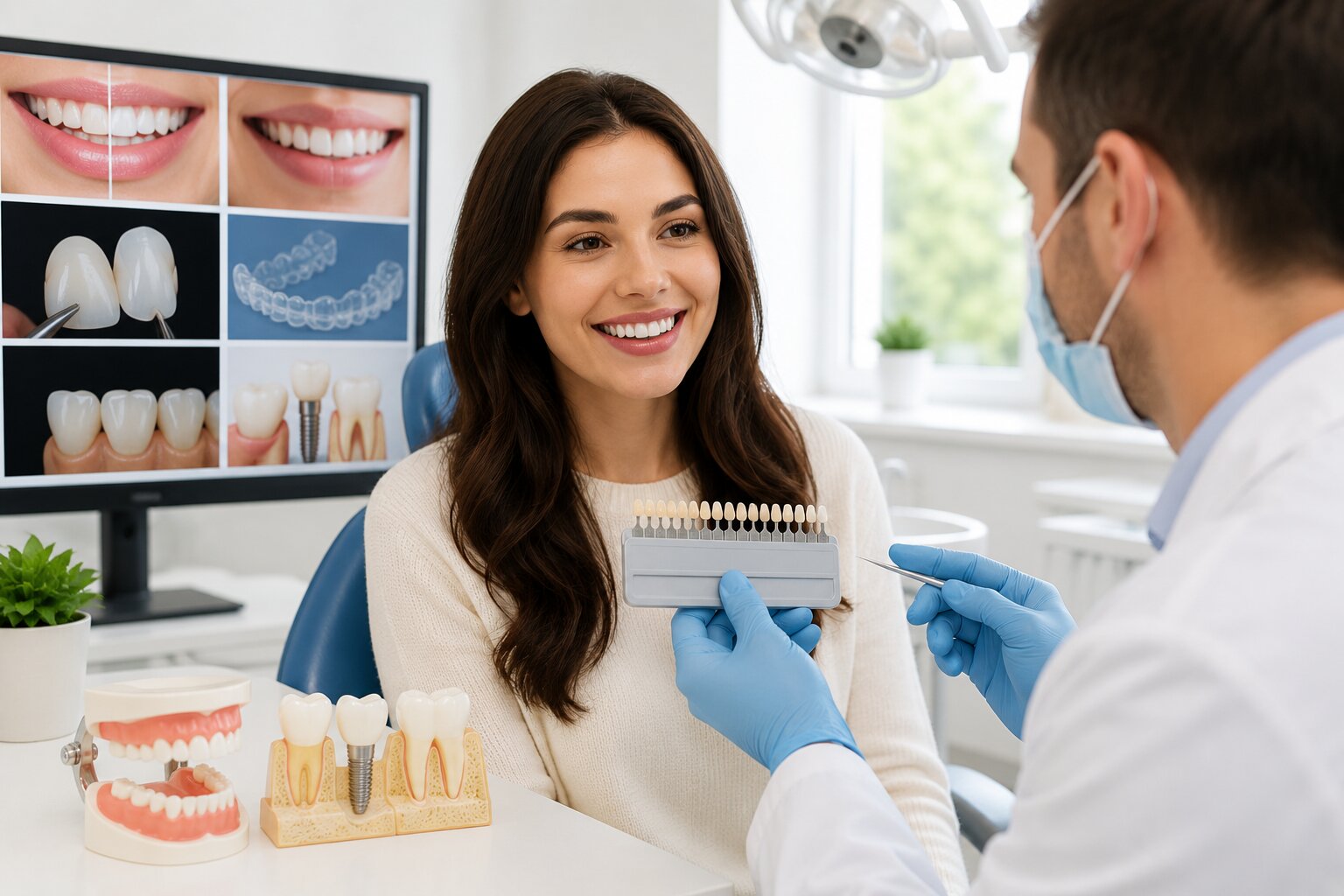
A bright and healthy smile can change how people feel. Many adults want to improve their teeth for personal reasons. Some want whiter teeth before a big event. Others want to fix chips, gaps, or uneven teeth. This is where cosmetic dentistry can help.
Cosmetic dentistry focuses on improving the look of your smile. It may include treatments like teeth whitening, veneers, bonding, crowns, and more. Some cosmetic dental treatments also support tooth strength and function. This makes them useful for both beauty and dental restoration needs.
Many patients ask an important question before treatment. What are the types of cosmetic dentistry, and are they safe? The answer depends on your oral health and treatment plan. In most cases, cosmetic dentistry is safe when done by a licensed dentist. A proper dental exam should always come first.
Good cosmetic dental care is not only about appearance. It should also protect your teeth, gums, and bite. A trusted dentist will check your mouth first. Then they will suggest options that match your needs. This helps you get natural-looking results with better long-term comfort.
What Is Cosmetic Dentistry?
Cosmetic dentistry is a branch of dental care. It helps improve the appearance of teeth and gums. The main goal is to create a cleaner, brighter, and balanced smile. It can help with stains, chips, cracks, gaps, and worn teeth.
Cosmetic dentistry can be simple or more detailed. Some patients only need professional teeth whitening. Others may need veneers, bonding, crowns, or dental implants. The right choice depends on the patient’s smile goals and dental health.
This type of care should always include proper planning. A dentist must check the condition of your teeth first. Healthy teeth and gums are important for lasting results. If there is decay or gum disease, it should be treated first.
Cosmetic dentistry is not just about making teeth look perfect. It is also about creating a smile that feels natural. The best results should match your face, mouth, and bite. A good dentist will avoid treatments that look fake or overdone.
Simple Meaning of Cosmetic Dentistry
In simple words, cosmetic dentistry improves your smile’s appearance. It can make teeth look whiter, straighter, and more even. It can also repair small flaws that affect confidence.
For example, dental bonding can fix a small chip. Teeth whitening can reduce stains from coffee or tea. Veneers can cover deeper stains, gaps, or uneven tooth shapes. Crowns can restore teeth that look worn or broken.
Many people think cosmetic dentistry is only for beauty. That is not always true. Some treatments also help restore damaged teeth. A crown, for example, can improve both looks and strength. Tooth-colored fillings can repair decay and still look natural.
This is why patient education is important. Before choosing any treatment, patients should understand their options. They should know the benefits, limits, and care needs. This helps them make better dental decisions.
Cosmetic Dentistry vs. General Dentistry
General dentistry focuses on keeping your mouth healthy. It includes cleanings, exams, fillings, gum care, and cavity treatment. These services help prevent pain, infection, and tooth loss.
Cosmetic dentistry focuses more on smile appearance. It helps improve tooth color, shape, size, and alignment. However, both areas often work together. A healthy smile should also look and feel good.
For example, a tooth-colored filling is both general and cosmetic. It repairs a cavity and blends with natural teeth. A dental crown can protect a weak tooth. It can also improve the tooth’s shape and color.
This connection is very important for patient safety. A dentist should not place cosmetic work over unhealthy teeth. If gum disease or decay is present, treatment should come first. This protects your long-term oral health.
Why Do People Choose Cosmetic Dentistry?
People choose cosmetic dentistry for many personal reasons. Some feel embarrassed by stained or uneven teeth. Others hide their smile because of chips or gaps. These concerns can affect daily life and confidence.
Cosmetic dentistry can help patients feel more comfortable smiling. It may also help them feel better in photos. Many adults also consider treatment for work or social events. A healthy-looking smile can support a more polished appearance.
Another reason is dental restoration awareness. Some patients have old fillings, worn teeth, or damaged teeth. They want repairs that also look natural. Modern cosmetic dental treatments can often support this goal.
The best approach starts with a personal consultation. Every smile is different. A dentist should listen to the patient’s goals first. Then they can explain safe and realistic treatment choices.
Common Smile Problems Cosmetic Dentistry Can Fix
- Stained or Yellow Teeth
Teeth can become stained from coffee, tea, wine, smoking, or aging. Cosmetic dentistry can help brighten dull teeth with professional whitening. A dentist can suggest a safe whitening option based on your enamel, sensitivity, and smile goals. - Chipped Teeth
Small chips can affect the look of your smile. They may also feel rough or uneven. Dental bonding or veneers can help repair chipped teeth. These treatments restore shape and create a more balanced, natural-looking smile. - Gaps Between Teeth
Small gaps between teeth can make some people feel less confident. Cosmetic dentistry may close these spaces with bonding, veneers, or clear aligners. The right choice depends on gap size, tooth shape, and overall bite condition. - Uneven Tooth Shape
Some teeth may look shorter, longer, or uneven compared to others. Cosmetic treatments can improve tooth shape and balance. Bonding, veneers, or contouring may help create a smoother and more even smile appearance. - Old Metal Fillings
Old silver fillings can make teeth look dark when smiling. Tooth-colored fillings can replace them in many cases. These fillings blend with natural teeth and restore the tooth while keeping the smile cleaner and more attractive. - Cracked or Worn Teeth
Teeth can become cracked or worn from grinding, aging, or injury. Cosmetic dentistry can restore their look and strength. Crowns, veneers, or bonding may help protect damaged teeth and improve the smile’s appearance. - Crooked or Crowded Teeth
Crooked or crowded teeth can affect both appearance and cleaning. Clear aligners may help move teeth into better positions. A straighter smile can look better and may also make daily brushing and flossing easier. - Missing Teeth
Missing teeth can change your smile and affect chewing. Cosmetic dentistry can replace missing teeth with implants, bridges, or dentures. These options help restore appearance, improve function, and support better confidence while speaking or smiling.
How Cosmetic Dentistry Can Improve Confidence
- Helps You Smile More Freely
Cosmetic dentistry can help people feel better about their smile. When teeth look clean, bright, and balanced, smiling feels easier. Many patients stop hiding their teeth in photos. This can improve comfort in daily life. - Improves First Impressions
A healthy-looking smile can create a strong first impression. It may help people feel more prepared during meetings, interviews, or social events. Cosmetic dentistry can support a neat and confident appearance without changing your natural look. - Reduces Worry About Smile Flaws
Chips, stains, gaps, or uneven teeth can cause stress. Some people think about these flaws while talking. Cosmetic dental treatments can reduce these concerns. This allows patients to focus more on conversations and less on their teeth. - Supports Confidence in Photos
Many people feel nervous while taking photos. They may smile less or cover their mouth. Cosmetic dentistry can improve tooth color, shape, and balance. This can help patients feel more relaxed and natural in pictures. - Makes Daily Communication Easier
A confident smile can make communication feel smoother. People may feel more open while speaking with others. Cosmetic dentistry can help remove smile-related hesitation. This may improve comfort at work, school, and social gatherings. - Encourages Better Oral Care Habits
After cosmetic treatment, many patients care more about their teeth. They brush, floss, and visit the dentist regularly. This helps protect their new smile. Better oral care can also support long-term dental health.
What Are the Most Common Types of Cosmetic Dentistry?
Cosmetic dentistry includes many treatments for different smile concerns. Each treatment works in a different way. Some options brighten teeth, while others repair visible damage. Some treatments also support dental restoration and better tooth function.
The right choice depends on your oral health and smile goals. A licensed dentist should check your teeth first. This helps make sure the treatment is safe and suitable. It also helps protect your natural teeth and gums.
Cosmetic dentistry should never be a rushed decision. Patients should understand each option before starting care. When you know the benefits and limits, choices become easier. This also helps you expect natural and lasting results.
1. Professional Teeth Whitening
Professional teeth whitening is a common cosmetic dentistry treatment. It helps reduce stains and brighten dull teeth. Many people choose it before weddings, events, or photos. It can also refresh a smile that looks tired.
Teeth can stain from coffee, tea, wine, or tobacco. Aging can also make teeth look darker over time. Professional whitening uses safe materials under dental guidance. This makes it safer than many store-bought options.
A dentist can check your teeth before whitening treatment. This is important because stains may have different causes. Some stains respond well to whitening. Others may need veneers, bonding, or another treatment.
Some patients may feel temporary tooth sensitivity after whitening. This is usually short-term and manageable. A dentist can suggest the right whitening strength. They can also guide patients with sensitive teeth.
2. Porcelain Veneers
Porcelain veneers are thin covers for front teeth. They are placed on the visible tooth surface. Veneers can improve color, shape, size, and balance. They are often used for smile makeover cases.
This cosmetic dentistry option can help many smile concerns. It may cover deep stains, chips, gaps, or uneven teeth. Porcelain veneers can look natural when planned carefully. They also resist stains better than some other materials.
A dentist may remove a small amount of enamel. This helps the veneer fit well and look natural. Because of this step, porcelain veneers are usually not reversible. Patients should understand this before choosing treatment.
Porcelain veneers need healthy teeth and gums. They are not meant to hide active dental problems. If there is decay or gum disease, treatment should happen first. This protects both safety and long-term results.
3. Composite Veneers
Composite veneers use tooth-colored resin material. The dentist shapes this material directly on the teeth. This option can improve chips, gaps, stains, or uneven edges. It may be completed faster than porcelain veneers.
Composite veneers often need less tooth preparation. In some cases, little or no enamel is removed. This can make them a more conservative choice. They may also cost less than porcelain veneers.
However, composite veneers may not last as long. They can stain or chip more easily over time. Patients may need polishing, repair, or replacement later. Good daily care helps extend their appearance and strength.
This treatment is best for mild to moderate smile concerns. A dentist can explain whether it fits your case. If teeth need major changes, porcelain veneers may be better. The safest choice depends on your full dental exam.
4. Dental Bonding
Dental bonding is a simple cosmetic dental treatment. It uses tooth-colored resin to repair small flaws. The resin is placed, shaped, and hardened on the tooth. It can blend well with the natural tooth color.
Bonding can fix small chips, cracks, or gaps. It may also improve minor stains or uneven edges. Many patients like bonding because it is quick. In many cases, treatment can finish in one visit.
This treatment can support dental restoration awareness too. A chipped tooth may become weaker if ignored. Bonding can help protect the damaged area. It can also improve how the tooth looks.
Dental bonding is not as strong as natural enamel. It may stain, wear, or chip with time. Patients should avoid biting hard objects with bonded teeth. Regular dental visits help keep bonding in good condition.
5. Tooth-Colored Fillings
Tooth-colored fillings repair cavities using natural-looking material. They can also replace some old metal fillings. This makes them both restorative and cosmetic. They help treat decay while keeping the smile natural.
These fillings are matched to your tooth shade. This helps them blend with nearby teeth. They are often used on visible teeth. Many patients prefer them because they look clean and subtle.
Tooth-colored fillings also help protect tooth structure. A cavity should not be left untreated. If decay grows, it can cause pain or infection. Early treatment helps save more natural tooth material.
This cosmetic dentistry option is safe when placed properly. The dentist must remove decay before filling the tooth. Then the filling is shaped for comfort and bite balance. This helps the tooth work and look better.
More Cosmetic Dentistry Treatments for Smile Improvement
Some cosmetic dentistry treatments do more than improve appearance. They can also support tooth strength, bite comfort, and dental restoration. These options are helpful when teeth are weak, missing, crowded, or badly worn.
Advanced cosmetic dentistry often needs careful planning. A dentist must check your teeth, gums, jaw, and bite. This helps create a safe and natural-looking treatment plan. It also helps protect your long-term oral health.
The right treatment depends on your smile concern. Some patients need a single crown or implant. Others may need clear aligners or a full smile makeover. A dental exam helps decide the best option.
1. Dental Crowns
Dental crowns are used to cover damaged or weak teeth. A crown fits over the visible part of the tooth. It can improve the tooth’s shape, color, size, and strength. This makes crowns both cosmetic and restorative.
Crowns are often used when a tooth has major damage. A large cavity, crack, or old filling may weaken it. A crown can protect the remaining tooth structure. It can also help the tooth work better while chewing.
Many patients choose crowns for front or back teeth. Front crowns can improve smile appearance. Back crowns can restore chewing strength. A dentist will match the crown shade to nearby teeth.
Dental crowns must be planned with care. The tooth and gums should be healthy first. If decay or gum problems are present, treatment comes first. This helps the crown last longer and feel comfortable.
2. Dental Implants
Dental implants are used to replace missing teeth. They act like artificial tooth roots in the jawbone. A crown, bridge, or denture can attach to implants. This helps restore both smile appearance and chewing function.
Missing teeth can affect more than your smile. They may change how you chew and speak. Nearby teeth may also shift over time. Dental implants can help support a stable bite.
Implants are one of the advanced types of cosmetic dentistry. They also play an important role in dental restoration. They can look natural when placed and restored correctly. They may also feel more stable than removable options.
Not every patient is ready for implants right away. Healthy gums and enough bone are important. A dentist may also check medical history and habits. Good daily care is needed after implant treatment.
3. Clear Aligners or Cosmetic Orthodontics
Clear aligners help move teeth into better positions. They are often used for crowded, crooked, or spaced teeth. Straighter teeth can improve the way a smile looks. They may also make daily cleaning easier.
This treatment is popular because aligners are removable. Patients can take them out while eating. They can also brush and floss more easily. This makes aligners a simple option for many adults.
Clear aligners are not only about appearance. Poor tooth position can affect the bite. It may also make some areas harder to clean. Better alignment can support both beauty and oral health.
A dentist must check if aligners fit your case. Some bite issues may need other treatment. Patients must also wear aligners as directed. Good results depend on proper planning and daily use.
4. Smile Makeover
A smile makeover combines different cosmetic dentistry treatments. It is planned for patients with several smile concerns. A dentist may suggest whitening, veneers, bonding, crowns, or implants. The plan depends on each patient’s needs.
For example, stained teeth may need whitening first. Chipped teeth may need bonding or veneers. Missing teeth may need implants or bridges. Worn teeth may need crowns for better protection.
A smile makeover should never be the same for everyone. Each smile has a different shape, color, and bite. A good treatment plan should look natural. It should also support healthy teeth and gums.
Patient education is very important before a smile makeover. Patients should understand the process, timeline, and care needs. They should also know what results are realistic. This helps create trust and better treatment choices.
Is Cosmetic Dentistry Safe?
Yes, cosmetic dentistry is generally safe when it is done by a licensed dentist. These treatments should always begin with a proper dental exam. The dentist checks your teeth, gums, bite, and overall oral health first. This helps make sure the treatment is right for you.
Cosmetic dentistry is not only about improving your smile. It should also protect your natural teeth and gums. A safe treatment plan focuses on both appearance and dental health. This is why professional care is very important.
Before starting treatment, the dentist looks for dental problems. These may include cavities, gum disease, weak teeth, or tooth grinding. If these problems are present, they should be treated first. Cosmetic work should never hide serious dental issues.
For example, teeth whitening may be safe for many patients. But it may not be right for people with untreated cavities. Veneers can improve tooth shape and color. But they need healthy teeth and careful planning. Crowns can restore weak teeth, but the tooth must be checked first.
Some cosmetic dentistry treatments may have mild side effects. Teeth whitening can cause short-term sensitivity. Veneers or crowns may feel different at first. Bonding can stain or chip over time. These risks are usually lower with proper dental care.
The safety of cosmetic dentistry also depends on the treatment choice. Every patient has different teeth and smile goals. A treatment that works well for one person may not suit another. A dentist can guide you based on your oral health.
Aftercare also plays a major role in safety. Patients should brush twice daily and floss every day. They should also visit the dentist for regular checkups. Good care helps cosmetic dental work last longer.
Patients should avoid unlicensed or unsafe providers. Poor cosmetic dental work can damage teeth and gums. It may also cause pain, sensitivity, or unnatural results. A licensed dentist uses safe methods and trusted materials.
In simple terms, cosmetic dentistry is safe when planned correctly. It should be done after a full dental checkup. The goal is to improve your smile without harming your oral health. With the right dentist, cosmetic dentistry can support both confidence and dental wellness.
Why a Dental Exam Comes First
A dental exam should always come before cosmetic treatment. The dentist checks for cavities, gum disease, and tooth damage. They also check bite problems and old dental work. This helps create a safer treatment plan.
If decay is present, it should be treated first. If gums are unhealthy, gum care may be needed. Cosmetic treatment over dental disease can cause bigger problems. It may also reduce the life of the treatment.
A dental exam also helps set clear goals. The dentist can explain what each treatment can do. They can also explain what it cannot do. This helps patients make informed and confident choices.
This step supports dental restoration awareness. Some teeth may need repair before cosmetic work. A crown, filling, or implant may be needed first. Healthy foundations lead to better cosmetic results.
How to Choose the Right Cosmetic Dentistry Treatment
Choosing the right cosmetic dentistry treatment starts with oral health. A healthy smile creates a stronger base for cosmetic results. Before treatment, a dentist should check your teeth, gums, jaw, and bite. This helps find decay, gum problems, or weak teeth early.
Your smile concern also guides the treatment choice. Teeth whitening may help if your teeth look stained. Dental bonding may work for small chips or gaps. Porcelain veneers may suit deeper stains or uneven teeth. Crowns may help when teeth are weak or damaged.
You should also think about time, cost, and care needs. Some treatments take one visit. Others may need several appointments. Long-term care is also important for lasting results.
A good dentist will not suggest the same option for every patient. They will explain the benefits, limits, and safety points. This helps you make a clear and informed decision. The best treatment should improve your smile while protecting your dental health.
How Long Do Cosmetic Dentistry Results Last?
Cosmetic dentistry results can last for many years. The exact time depends on the treatment type. It also depends on your oral care and daily habits. Some treatments need touch-ups sooner than others.
Teeth whitening results may last several months or longer. Coffee, tea, wine, and smoking can stain teeth again. Regular brushing and dental cleanings can help keep teeth brighter.
Dental bonding may last for a few years with good care. However, it can stain or chip over time. Porcelain veneers and dental crowns often last longer. They may stay in good shape for many years when cared for properly.
Dental implants can also last a long time. They need healthy gums and regular dental visits. Poor oral care can affect the implant and nearby gums.
To protect cosmetic dentistry results, brush twice daily. Floss every day and avoid biting hard objects. Visit your dentist for regular checkups. Good care helps your smile stay healthy, bright, and natural-looking.
Why Choose North Raleigh Dental Studio for Cosmetic Dentistry?
North Raleigh Dental Studio focuses on patient-centered dental care. The team helps patients understand their treatment options clearly. This supports safe choices and better confidence before care begins.
Patients can discuss cosmetic goals during a consultation. The dentist can check oral health and smile needs. Then they can suggest suitable treatment options. This may include whitening, veneers, crowns, implants, or bonding.
The goal is a smile that looks natural and healthy. Cosmetic dentistry should improve confidence without harming oral health. With proper planning, patients can enjoy safer and lasting results.
Conclusion
Cosmetic dentistry can help improve your smile, confidence, and dental health. It can treat stains, chips, gaps, worn teeth, and missing teeth. Many treatments also support dental restoration and better mouth function.
The safest results begin with a complete dental exam. A licensed dentist can check your teeth, gums, and bite first. Then they can suggest the right treatment for your needs.
For cosmetic dentistry services, visit North Raleigh Dental Studio at https://dentistnorthraleigh.com/ or call (919) 847-3899 to schedule a consultation. Their team can help you choose a safe and natural-looking option for your smile.