Introduction
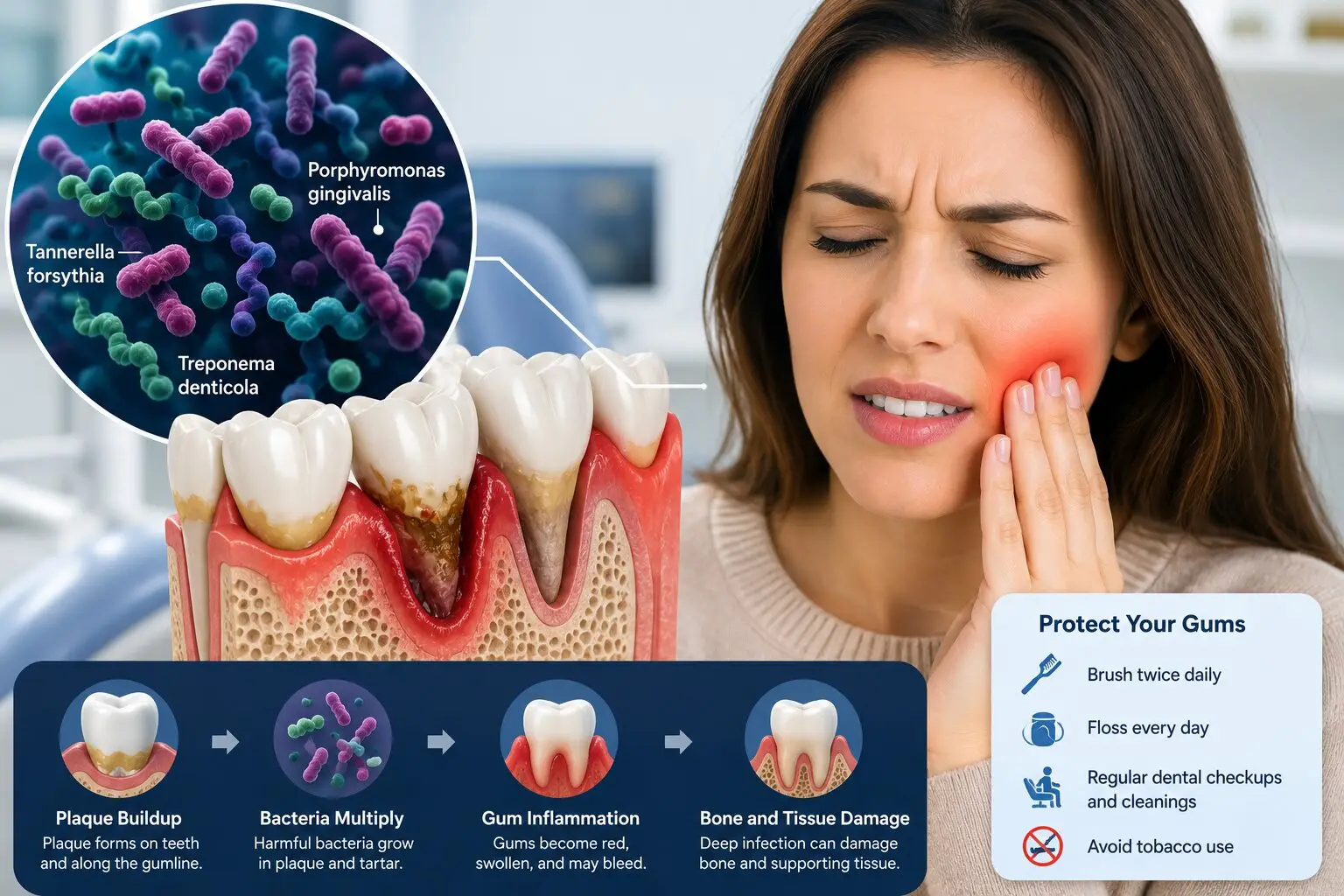
Many patients ask, “What bacteria causes gum disease?” The answer is not one simple germ. Gum disease usually starts when plaque builds around teeth. Plaque is a sticky film filled with oral bacteria. Some bacteria are harmless in small amounts. Others can harm the gums when they grow too much.
When plaque stays near the gumline, it can irritate gum tissue. This may lead to redness, swelling, and bleeding. Many people first notice bleeding while brushing or flossing. This early stage may not cause pain at first. So, many patients ignore the signs for too long.
Gum disease is common, but it is also manageable. Good home care and regular dental visits can help. Healthy gums also support crowns, bridges, fillings, and implants. So, gum care is important for natural and restored teeth.
What Is Gum Disease and How Does It Develop?
Gum disease is an infection and swelling of the tissues around teeth. These tissues help hold teeth firmly in place. The problem often starts with poor plaque control. When plaque is not removed, it can harden into tartar. Tartar gives harmful bacteria a rough place to grow.
Once tartar forms, brushing cannot remove it completely. A dentist or hygienist must clean it with special tools. If tartar stays under the gumline, bacteria can spread deeper. This can slowly damage the gums and supporting bone.
Gum disease does not always look serious in the beginning. Some people only see mild bleeding or slight swelling. Others may notice bad breath that keeps coming back. These signs can point to bacterial activity below the gumline.
Gingivitis as the Early Stage of Gum Disease
Gingivitis is the first and mildest stage of gum disease. It usually happens when plaque bacteria irritate the gums. The gums may look red, soft, or swollen. They may also bleed during brushing or flossing.
The good news is gingivitis can often be reversed. Better brushing, daily flossing, and dental cleanings can help. At this stage, the bone around the teeth is not damaged. That is why early care is very important.
Patients should not wait for pain before seeking help. Gum inflammation can be active without strong discomfort. A dental exam can show what is happening below the surface. Early treatment helps stop the problem before it becomes serious.
Periodontitis as the Advanced Stage of Gum Disease
Periodontitis is a more serious form of gum disease. It can develop when gingivitis is not treated early. In this stage, bacteria can move below the gumline. The gums may pull away from the teeth. This creates small spaces called gum pockets.
These pockets can trap more plaque, tartar, and bacteria. As pockets deepen, cleaning them becomes harder at home. The body also reacts to the infection with inflammation. Over time, this response can harm gum tissue and bone.
Periodontitis may cause gum recession, loose teeth, and chewing pain. Some patients may also notice lasting bad breath. Treatment can help control the infection and protect teeth. However, early care usually gives better results.
Which Bacteria Are Commonly Linked to Gum Disease?
Several bacteria are linked to gum disease and periodontitis. The main bacteria often include Porphyromonas gingivalis, Tannerella forsythia, and Treponema denticola. These bacteria are often found in deeper gum pockets. They can work together and make gum inflammation worse.
These germs do not act alone in every patient. Gum disease usually involves a mixed bacterial biofilm. This means many bacteria live together in plaque. When the balance changes, harmful bacteria can grow faster.
Porphyromonas Gingivalis
Porphyromonas gingivalis is one of the most studied gum disease bacteria. It is often linked with deeper gum infection. This bacteria can survive in low-oxygen areas under the gumline. That makes gum pockets a good place for it to grow.
This bacteria may also affect the body’s immune response. It can help create an environment where inflammation lasts longer. When inflammation continues, gum tissue can become weaker. This may allow the disease to progress over time.
Tannerella Forsythia
Tannerella forsythia is another bacteria linked with periodontitis. It is often found along with other harmful bacteria. This bacteria may support gum tissue irritation and deeper infection. It is usually seen more often in advanced gum disease.
Like many gum disease bacteria, it grows well in plaque. It can become more active when oral hygiene is poor. Regular cleaning helps reduce the plaque that supports its growth.
Treponema Denticola
Treponema denticola is often found in deeper gum pockets. It can move through sticky plaque and gum fluid. This movement may help it spread in infected areas. It is commonly linked with advanced gum inflammation.
This bacteria may also work with Porphyromonas gingivalis and Tannerella forsythia. Together, they can make gum disease harder to control. That is why professional dental care is so important. Early diagnosis can help stop deeper bacterial damage.
Is Gum Disease Caused by One Bacteria or Many Bacteria?
Many people think one bacteria causes gum disease. The truth is different. Gum disease usually happens because many bacteria work together. These bacteria live inside plaque around teeth and gums. Some are normal in a healthy mouth. Others become harmful when plaque is not removed.
This is why the answer to what bacteria causes gum disease is not simple. Porphyromonas gingivalis, Tannerella forsythia, and Treponema denticola are common examples. Still, gum disease is usually a group problem. Many oral bacteria create an unhealthy gum environment together.
When plaque stays near the gumline, bacteria grow faster. They can move below the gums over time. This can lead to deeper infection and gum damage. Early care helps control these bacteria before serious damage starts.
Gum Disease Usually Comes From a Bacterial Biofilm
A bacterial biofilm is a sticky layer on teeth. Plaque is the most common biofilm in the mouth. It forms when bacteria mix with saliva and food particles. This layer can collect along the gumline every day.
At first, plaque may feel soft and easy to remove. Regular brushing and flossing can help remove it. But when plaque stays too long, it hardens into tartar. Tartar cannot be removed with a regular toothbrush.
This hardened layer gives bacteria a safe place to grow. It also makes the tooth surface rough. More plaque can stick to that rough surface easily. Over time, this can increase gum irritation and swelling.
This bacterial biofilm can affect dental restorations too. Crowns, bridges, fillings, and implants need healthy gums. If bacteria collect around them, gum problems may develop. Clean gums help restorations last longer and work better.
Why Bacterial Balance Matters for Gum Health
Your mouth contains many types of bacteria every day. Not all oral bacteria are bad for your health. Some bacteria are part of a normal mouth environment. Problems begin when harmful bacteria become too strong.
Good oral care helps keep this balance under control. Brushing removes plaque from tooth surfaces. Flossing cleans spaces where toothbrush bristles cannot reach. Dental cleanings remove tartar from harder areas.
When plaque remains, the balance can change quickly. Harmful bacteria can grow in deeper gum areas. These areas often have less oxygen and more trapped debris. This creates a better space for gum disease bacteria.
Diet, dry mouth, smoking, and health conditions may also matter. These factors can change how bacteria grow inside the mouth. A dentist can check these risks during an exam. This helps patients understand their gum health clearly.
How Do Harmful Bacteria Damage the Gums?
Harmful bacteria can damage gums in several ways. They collect around the gumline and irritate soft tissue. This irritation can cause redness, swelling, and bleeding. These signs often appear before pain begins.
The gums may slowly pull away from the teeth. This creates pockets where bacteria can hide. Once pockets form, home cleaning becomes more difficult. More bacteria can collect below the gumline.
If not treated, damage can reach deeper support areas. The bone around the teeth may begin to weaken. This can affect natural teeth and dental restorations. Healthy gum support is important for a stable smile.
Bacteria Produce Toxins and Irritate Gum Tissue
Some gum disease bacteria release harmful waste products. These waste products can irritate the gum tissue. Many people call these bacterial toxins in simple terms. They can trigger swelling and bleeding around the teeth.
This irritation may not feel painful at first. That is why many patients delay dental care. They may think bleeding gums are normal. But healthy gums should not bleed often.
When toxins stay near the gums, inflammation can continue. The gums may become tender, puffy, or darker red. Bad breath may also become a common concern. These signs can mean bacteria are active below the gumline.
What Allows Gum Disease Bacteria to Grow?
Gum disease bacteria grow when plaque stays near the gumline. Plaque forms every day after eating and drinking. It contains many types of oral bacteria. Some bacteria are harmless when kept under control. Others can become harmful when plaque builds up.
This is why daily mouth care is very important. Brushing and flossing help remove plaque before it hardens. When plaque becomes tartar, it cannot be brushed away. Tartar gives harmful bacteria a stronger place to grow. Over time, this can lead to gum swelling and infection.
Patients often ask what bacteria causes gum disease. The answer depends on the person’s mouth condition. Harmful bacteria grow more easily when gums are already weak. Poor cleaning, dry mouth, smoking, and health issues can increase risk.
Poor Brushing and Flossing Habits
Poor brushing allows plaque to stay on tooth surfaces. Plaque often collects near the gumline and between teeth. These areas are easy to miss during quick brushing. When plaque stays there, bacteria can grow and spread.
Flossing is also important for gum health. A toothbrush cannot fully clean between tight tooth spaces. Food particles and plaque may remain hidden there. These areas can become active spots for gum disease bacteria.
Dental restorations also need careful cleaning every day. Crowns, bridges, fillings, and implants can collect plaque too. If plaque stays around restorations, gums may become irritated. Healthy gums help restorations stay stable and last longer.
Tartar Buildup Below the Gumline
Tartar forms when plaque hardens on teeth. It can develop above and below the gumline. Below the gumline, tartar can cause more serious problems. It creates a rough surface where bacteria can attach.
Once tartar forms, home care cannot remove it fully. Brushing and flossing may clean soft plaque only. A dental professional must remove tartar with proper tools. This is one reason regular cleanings are so important.
Tartar below the gums can deepen gum pockets. These pockets can trap more bacteria and debris. As pockets become deeper, cleaning becomes harder at home. This can allow gum disease bacteria to grow further.
Smoking and Tobacco Use
Smoking can raise the risk of gum disease. Tobacco can affect blood flow in the gum tissue. This may slow healing and weaken gum defense. It can also make gum problems harder to notice.
Some smokers may not see much gum bleeding. This does not always mean the gums are healthy. Gum infection can still progress below the surface. A dental exam can reveal hidden gum damage.
Tobacco can also affect dental restoration success. Implants, crowns, and bridges need healthy gum support. When gum bacteria grow around restorations, problems may develop faster. Quitting tobacco can support better gum and oral health.
Dry Mouth, Diabetes, and Other Risk Factors
Dry mouth can help harmful bacteria grow faster. Saliva helps wash away food particles and plaque. When saliva is low, bacteria may stay longer. This can increase the risk of gum irritation.
Diabetes can also affect gum health. High blood sugar may make infections harder to control. Gum disease can also be harder to manage. Patients with diabetes should schedule regular dental checkups.
Other risk factors may include genetics and certain medicines. Hormonal changes can also affect gum response. Stress may reduce healthy habits and immune strength. A dentist can help identify personal gum disease risks.
What Are the Warning Signs of Bacterial Gum Infection?
Gum disease can develop slowly over time. Early signs may seem small or easy to ignore. However, small signs can point to deeper bacterial activity. Knowing these signs helps patients seek care sooner.
Bleeding gums, bad breath, and gum swelling are common signs. Gum recession and loose teeth may show advanced damage. Pain is not always present in early gum disease. That is why routine dental visits matter.
Bleeding Gums While Brushing or Flossing
Bleeding gums are one common warning sign. Many people notice blood while brushing or flossing. This may happen when plaque bacteria irritate the gums. Healthy gums should not bleed often during daily care.
Bleeding should not be treated as normal. It may be an early sign of gingivitis. When treated early, gingivitis can often improve. Better cleaning and dental care can help restore gum health.
Bad Breath That Keeps Coming Back
Bad breath can happen for many reasons. One possible cause is bacteria below the gumline. Gum disease bacteria can produce unpleasant odors. These odors may return soon after brushing.
Mouthwash may hide the smell for a short time. It may not treat the real gum problem. If bad breath keeps returning, a dental visit helps. The dentist can check for plaque, tartar, and gum pockets.
Gum Recession or Teeth Looking Longer
Gum recession happens when gums pull away from teeth. This can make teeth look longer than before. It may also expose sensitive root areas. Recession can create spaces where bacteria collect.
These spaces can be hard to clean at home. Bacteria may stay hidden near the tooth roots. If ignored, recession may continue and worsen. Early care can help protect gum support.
Loose Teeth or Pain While Chewing
Loose teeth can be a serious warning sign. It may mean gum disease has affected bone support. Pain while chewing can also point to deeper inflammation. These symptoms need a dental checkup as soon as possible.
Dental restorations may also feel different with gum disease. A bridge, crown, or implant needs strong support. If gums and bone weaken, stability may change. Early treatment helps protect natural and restored teeth.
How Dentists Check for Bacteria-Related Gum Disease
1. Visual Gum Examination
Dentists first check the gums with a careful visual exam. They look for redness, swelling, bleeding, and gum recession. These signs may show bacterial activity near the gumline. They also check plaque and tartar buildup. This helps them understand how serious the gum problem may be.
2. Gum Pocket Measurements
Dentists measure gum pockets using a small dental tool. This tool checks the space between teeth and gums. Healthy gums usually have shallow pockets. Deeper pockets may show gum disease. These spaces can hold plaque, tartar, and bacteria. Pocket depth helps dentists plan the right treatment.
3. Checking for Bleeding Gums
Bleeding during a gum exam can show inflammation. Dentists gently check the gumline during the visit. If gums bleed easily, bacteria may be irritating the tissue. Healthy gums should not bleed often. This sign helps dentists find early gum disease before deeper damage starts.
4. Dental X-Rays for Bone Support
Dental X-rays help dentists check bone around the teeth. Gum disease can slowly damage this bone. The damage may not be visible during a normal exam. X-rays show if bone loss has started. This helps dentists protect natural teeth, implants, crowns, and bridges.
5. Plaque and Tartar Evaluation
Dentists check how much plaque and tartar are present. Plaque is soft and filled with bacteria. Tartar is hardened plaque that brushing cannot remove. Tartar below the gumline can worsen gum disease. Finding these deposits helps dentists decide if deep cleaning is needed.
6. Reviewing Symptoms and Health History
Dentists also ask about symptoms and health history. They may ask about bleeding, bad breath, or loose teeth. They may also ask about smoking, diabetes, and dry mouth. These factors can raise gum disease risk. This information helps create a safer treatment plan.
How to Prevent Harmful Gum Disease Bacteria From Returning
1. Brush Twice Daily With Proper Technique
Brush your teeth twice daily using a soft toothbrush. Clean gently along the gumline every time. Do not brush too hard, as gums may hurt. Use small circular movements for better plaque removal. Proper brushing helps stop harmful bacteria from building again around teeth and gums.
2. Floss Once Every Day
Flossing removes plaque between teeth and below the gumline. These areas are hard to clean with brushing alone. Use floss gently to avoid gum injury. Daily flossing helps control bacteria before they grow deeper. It also protects natural teeth, crowns, bridges, and other dental restorations.
3. Schedule Regular Dental Cleanings
Regular dental cleanings help remove hardened tartar from teeth. Tartar cannot be removed with normal brushing at home. It gives harmful bacteria a rough place to grow. Professional cleaning keeps gums healthier and cleaner. Your dentist can also find early gum problems before they become serious.
4. Keep Your Mouth Hydrated
A dry mouth can help harmful bacteria grow faster. Saliva helps wash away food particles and plaque. Drink enough water throughout the day. Avoid too many sugary drinks, as they feed bacteria. Good hydration supports cleaner teeth, fresher breath, and healthier gums every day.
5. Avoid Smoking and Tobacco Products
Smoking can slow gum healing and weaken gum health. It may also hide bleeding, even during gum disease. Tobacco makes it easier for bacteria to stay active. Avoiding tobacco supports better gum repair and cleaner tissues. It also helps dental restorations stay stronger for longer.
6. Visit the Dentist When Symptoms Appear
Do not ignore bleeding, swelling, or lasting bad breath. These signs may show harmful bacteria are returning. Gum disease can grow without strong pain. Early dental care helps stop deeper damage. A dentist can check gum pockets and suggest the right treatment before problems worsen.
Conclusion
Gum disease bacteria can return when plaque stays around teeth and gums. Daily brushing, flossing, hydration, and regular dental cleanings help control harmful bacteria. Early dental care can also protect natural teeth, crowns, bridges, fillings, and implants. Do not ignore bleeding gums, bad breath, swelling, or loose teeth. For trusted gum care and dental support, contact North Raleigh Dental Studio at (919) 847-3899 or visit dentistnorthraleigh.com today.