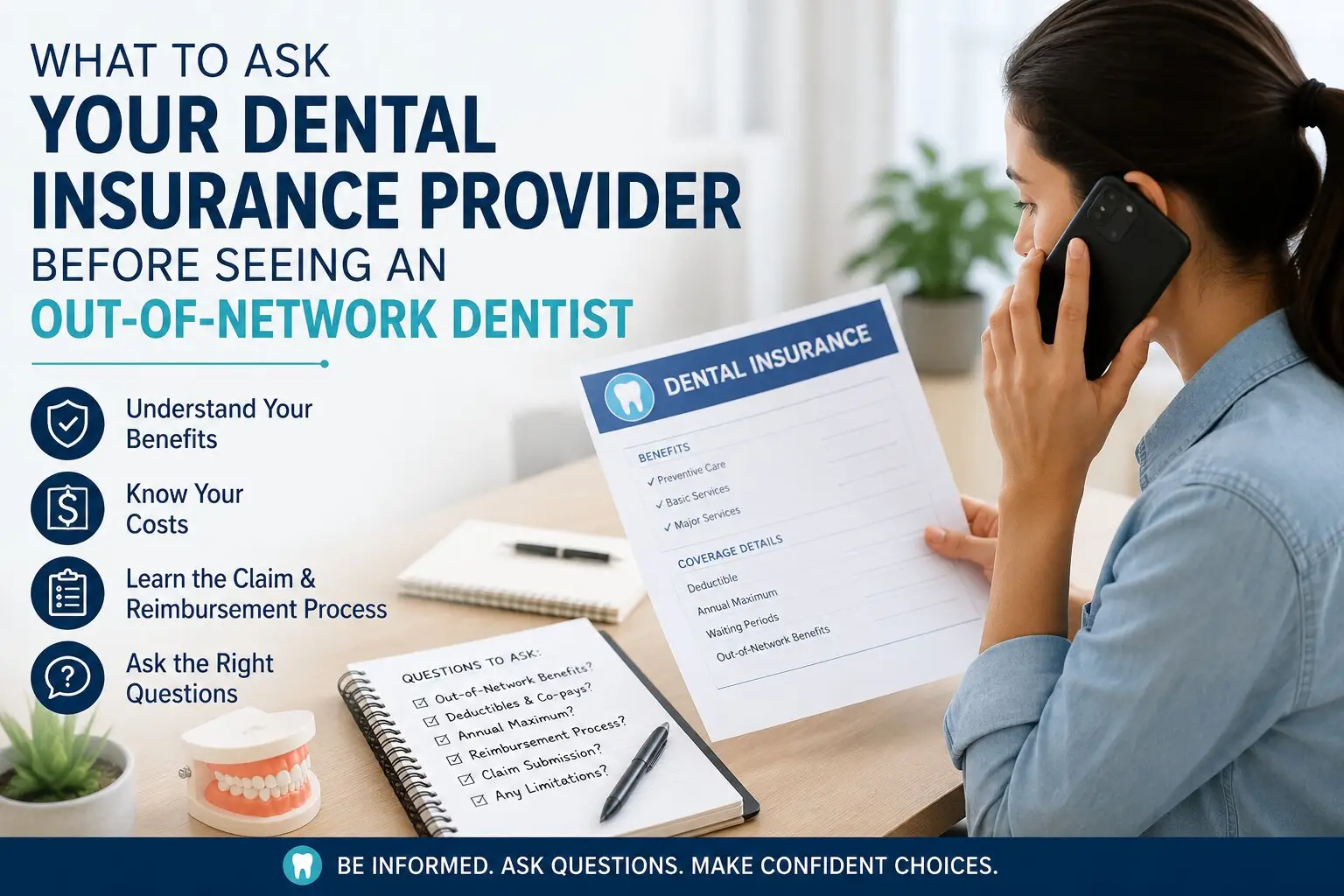
Choosing a dentist is an important decision. Many patients want a dental office where they feel comfortable, heard, and cared for. Sometimes that dentist may be outside the patient’s insurance network.
This does not always mean the patient cannot use insurance. It does mean the patient should ask the right questions before scheduling treatment. Dental insurance policies in the United States can vary widely by company, employer, plan type, and state. The best way to understand your benefits is to contact your insurance provider directly.
This guide explains what “out-of-network” means and what patients should ask their insurance company before visiting an out-of-network dentist.
What Does Out-of-Network Mean?
An out-of-network dentist is a dentist who does not have a contract with your dental insurance company for your specific plan. An in-network dentist has agreed to the insurance company’s contracted fees and rules.
Many dental PPO plans still allow patients to see dentists outside the network. However, the amount covered may be different. The American Dental Association explains that PPO plans combine regular indemnity insurance with a network of contracted dentists. Non-contracted dentists may have fees that are higher or lower than the plan’s allowance.
Dental HMO or DHMO plans may be more limited. These plans often require patients to choose a dentist from the plan’s contracted network to receive benefits. The ADA describes some DHMO plans as “closed panel” plans, where patients must receive care from a contracted dentist to receive benefits.
This is why it is important to know your plan type before your visit.
Why Should You Call Your Insurance Provider First?
Dental offices can often help review general insurance information. However, your insurance company controls your benefits. They decide what is covered, how claims are paid, and what rules apply to your plan.
Calling your insurance provider before treatment can help you understand:
- Whether you have out-of-network benefits
- How much your plan may pay
- What your deductible is
- How much of your annual maximum remains
- Whether claim forms are needed
- Whether payment goes to you or the dental office
- Which services are excluded or limited
This step can help reduce confusion and lower the chance of surprise costs later.
Question 1: What Type of Dental Plan Do I Have?
Start with the basics. Ask your insurance provider:
“Do I have a PPO, DHMO, HMO, indemnity, or another type of dental plan?”
This matters because plan type affects how much freedom you have when choosing a dentist. PPO plans often give patients more flexibility. HMO or DHMO plans usually have stricter network rules. The National Association of Insurance Commissioners explains that PPOs allow covered patients to choose from a wider group of dentists and specialists, while HMOs use specific dentists under contract with the dental insurance company.
If you are buying a new dental insurance plan, ask this question before you enroll. A lower monthly premium may not help if the plan does not allow you to visit the dentist you prefer.
Question 2: Do I Have Out-of-Network Dental Benefits?
This is one of the most important questions to ask.
Ask your insurance provider:
“Does my plan provide benefits if I see an out-of-network dentist?”
Do not assume the answer is yes. Some plans may provide partial coverage. Some may provide no coverage at all. Some may cover preventive visits but offer lower benefits for fillings, crowns, gum treatment, oral surgery, or other services.
You can also ask:
“Are out-of-network benefits different for preventive, basic, and major dental services?”
Many U.S. dental plans group services into categories. Preventive care may include exams, cleanings, and certain X-rays. Basic care may include fillings or simple extractions. Major care may include crowns, dentures, bridges, or other larger treatments. Each plan may define these categories differently.
Question 3: Is This Dentist Out-of-Network for My Exact Plan?
Insurance companies can have many networks. A dentist may be in-network with one plan from the same insurance company but out-of-network with another plan.
Ask:
“Can you confirm whether North Raleigh Dental Studio is in-network or out-of-network for my exact dental plan?”
Give the insurance representative the full practice name, dentist name if needed, address, and tax ID if the office provides it. Also confirm the network name on your insurance card.
This can help avoid a common problem: patients think they have checked coverage, but they checked the wrong network.
Question 4: How Is Out-of-Network Reimbursement Calculated?
When you see an out-of-network dentist, your insurance may base payment on what it calls an allowed amount, maximum plan allowance, usual and customary rate, or similar term.
Ask:
“How does my plan calculate payment for an out-of-network dentist?”
Then ask:
“Is my reimbursement based on the dentist’s full fee, or on the insurance company’s allowed amount?”
This is very important. If your dentist’s fee is higher than the insurance company’s allowed amount, you may be responsible for the difference. This does not always mean something is wrong. It simply means the dentist is not contracted with that plan’s fee schedule.
Question 5: What Will My Estimated Patient Responsibility Be?
Ask your insurance provider:
“Based on my plan, what percentage is covered for out-of-network preventive, basic, and major services?”
Then ask:
“After my deductible, what amount may I still owe?”
Remember, insurance estimates are not always final. The final amount may depend on claim review, plan limitations, remaining benefits, and the specific procedure codes submitted.
It is also helpful to ask for a reference number for the call. This gives you a record of the conversation.
Question 6: What Is My Deductible?
A deductible is the amount you may need to pay before your insurance starts paying for certain services.
Ask:
“What is my dental deductible?”
Also ask:
“Does the deductible apply to out-of-network dental care?”
Some plans may waive the deductible for preventive services. Others may apply the deductible to basic or major care. Your insurance provider can tell you how your specific plan works.
Question 7: What Is My Annual Maximum?
Many dental plans have an annual maximum. This is the total amount the plan will pay during a benefit year. Once that amount is used, the patient is usually responsible for additional costs until the plan resets. Delta Dental describes the annual maximum as the most a dental plan will pay for dental care during one plan year.
Ask:
“What is my annual maximum?”
Then ask:
“How much of my annual maximum is still available?”
This is especially important if you need more than routine care. Crowns, oral surgery, gum treatment, dentures, bridges, or multiple fillings may use more of your yearly benefits.
Question 8: Are There Waiting Periods?
If you are buying a new dental insurance plan, ask about waiting periods before you enroll.
Ask:
“Are there waiting periods for basic or major dental services?”
A waiting period means you must wait a certain amount of time before the plan will cover certain services. Some plans may cover preventive care right away but require a waiting period for fillings, crowns, dentures, or other treatment.
Also ask:
“Do waiting periods apply to out-of-network care?”
This is important if you already know you need dental treatment soon.
Question 9: Are There Frequency Limits?
Many dental plans limit how often they cover certain services.
Ask:
“How often does my plan cover cleanings, exams, X-rays, fluoride, or periodontal maintenance?”
Also ask:
“Are there frequency limits for crowns, dentures, bridges, nightguards, or other dental work?”
For example, a plan may cover certain X-rays only once during a specific time period. Another plan may replace a crown only after a certain number of years. These rules can affect your out-of-pocket cost.
Question 10: Does My Plan Require Preauthorization or a Pre-Treatment Estimate?
Before starting larger treatment, ask:
“Do I need preauthorization or a pre-treatment estimate?”
A pre-treatment estimate is not always a guarantee of payment. However, it can help you understand how the insurance company may process the claim before treatment begins.
This can be helpful for crowns, bridges, dentures, implants, gum treatment, oral surgery, or other higher-cost services.
Question 11: Will the Insurance Pay Me or the Dental Office?
This is another important question for out-of-network care.
Ask:
“If I see an out-of-network dentist, will the insurance payment go to me or directly to the dental office?”
Some insurance companies only send payment directly to participating providers. The ADA notes that some third-party payers only assign benefits to participating providers, even when patients sign an assignment of benefits section on the claim form.
If payment goes to you, the dental office may require payment at the time of service. Then you may receive reimbursement from your insurance company later.
Question 12: Who Submits the Claim?
Ask your insurance company:
“Can the dental office submit the claim for me, or do I need to submit it myself?”
Then ask:
“What forms or documents are required?”
You may need an itemized receipt, procedure codes, dentist information, X-rays, chart notes, or a claim form. If the insurance company requires the patient to submit the claim, ask where to send it and how long reimbursement usually takes.
Question 13: Are Any Services Excluded?
Not every dental service is covered by every plan.
Ask:
“Are any dental services excluded from my plan?”
Also ask about specific treatment if you already know what you need. For example:
- Are crowns covered?
- Are dental implants covered?
- Is gum treatment covered?
- Are nightguards covered?
- Is oral surgery covered?
- Are dentures or bridges covered?
- Is cosmetic dentistry covered?
- Is sedation covered?
- Are TMJ-related services covered?
This helps you understand what the plan may not pay for.
Question 14: Does My Plan Use an Alternate Benefit Clause?
Some dental plans may pay for a less expensive treatment option, even when the patient and dentist choose another appropriate treatment. This is sometimes called an alternate benefit clause or least expensive alternative treatment clause. The ADA explains that plans with this type of clause should make the limitation clear to both the plan purchaser and the dental patient.
Ask:
“Does my plan have an alternate benefit clause or downgrade rule?”
This can affect treatment such as crowns, fillings, dentures, bridges, or implants. The dentist may recommend one treatment based on your oral health needs, but the insurance plan may base payment on a different option.
Questions to Ask When Buying New Dental Insurance
If you are looking for a new dental insurance plan, do not look only at the monthly premium. A plan with a low monthly cost may have limited benefits, a small network, waiting periods, or no out-of-network coverage.
Before choosing a new plan, ask:
- Does this plan allow out-of-network dental visits?
- What type of plan is it?
- Is my preferred dentist in-network or out-of-network?
- What is covered for out-of-network care?
- What is the annual maximum?
- What is the deductible?
- Are there waiting periods?
- Are major services covered?
- Are implants, crowns, dentures, or gum treatment covered?
- Does the plan pay the dentist or reimburse the patient?
- Are there missing tooth clauses or replacement limits?
- Are there frequency limits for cleanings, X-rays, crowns, or dentures?
- Is there a preauthorization process?
- Can I review the full benefit summary before enrolling?
HealthCare.gov also notes that dental coverage may be offered through Marketplace health plans or as separate stand-alone dental plans, depending on the coverage selected. This is another reason to review plan details carefully before enrolling.
Keep a Record of Your Insurance Call
Before ending the call with your insurance provider, write down:
- The date and time of the call
- The representative’s name
- The call reference number
- Your plan type
- Whether out-of-network benefits are available
- Your deductible
- Your annual maximum
- Your remaining benefits
- Any waiting periods
- Any exclusions
- Whether payment goes to you or the dental office
Keeping notes can help you compare plans and understand your financial responsibility before treatment.
How the Dental Office Can Help
A dental office may help you understand general billing steps, provide treatment estimates, submit claims, or give you the information your insurance company requests. However, the insurance company makes the final decision about benefits and payment.
Patients should always confirm benefits directly with their insurance provider. This is especially important for out-of-network care because reimbursement rules can vary.
Final Thoughts
Seeing an out-of-network dentist can still be a good choice for many patients. You may choose a dentist because you trust the provider, like the office, need a specific service, or feel more comfortable with the care team.
Before your visit, take time to call your dental insurance provider. Ask about your plan type, out-of-network benefits, deductible, annual maximum, reimbursement rules, exclusions, and claim process. These questions can help you make a more informed decision and avoid unexpected costs.
At North Raleigh Dental Studio, our team is happy to help patients prepare for their visit and understand the information they may need when speaking with their insurance provider. To schedule an appointment or ask general billing questions, call (919) 847-3899.