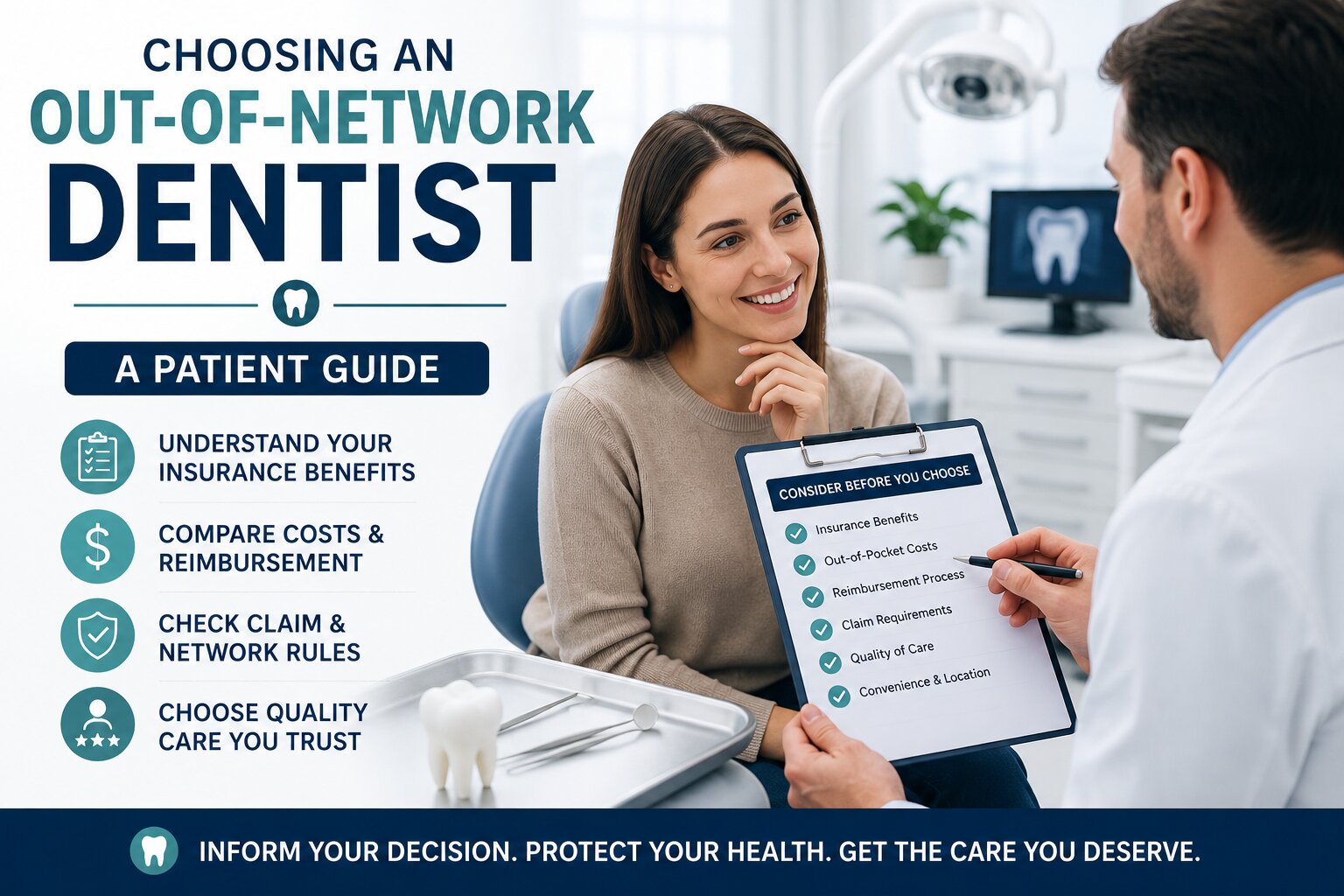
Choosing a dentist is not only about insurance. It is also about trust, comfort, care quality, treatment options, and how well the dental team explains your needs. Many patients in the United States have dental insurance, but sometimes the dentist they prefer may be outside their insurance network.
This can feel confusing at first. You may wonder if your insurance will still help pay. You may also worry about higher costs. The good news is that many patients can still see an out-of-network dentist, depending on their dental plan.
Before making a decision, it is important to understand how your insurance works and what questions to ask. This guide explains what patients should know before choosing a dentist outside their insurance network.
What Does It Mean to Choose an Out-of-Network Dentist?
An out-of-network dentist is a dentist who does not have a direct contract with your dental insurance plan. An in-network dentist has agreed to certain fees and rules set by the insurance company.
In the United States, dental insurance plans are not all the same. Some plans give patients more freedom to choose any licensed dentist. Other plans may limit benefits to dentists inside a specific network.
The American Dental Association explains that PPO dental plans include a network of contracted dentists, but non-contracted dentists may charge fees that are higher or lower than the plan’s allowance. This means your insurance may still help, but your out-of-pocket cost may be different.
Why Patients May Choose a Dentist Outside Their Network
Patients may choose an out-of-network dentist for many personal reasons. Insurance is important, but it is not the only factor in dental care.
A patient may choose an out-of-network dentist because:
- They trust the dentist.
- They feel comfortable with the dental team.
- The office explains treatment clearly.
- The dentist offers services they need.
- The location is convenient.
- The patient wants a second opinion.
- The patient has had a good past experience.
- The office provides a calm and friendly setting.
Dental care can feel personal. Many patients prefer to stay with a dentist who understands their history, fears, goals, and treatment needs.
First, Know What Type of Dental Plan You Have
Before choosing an out-of-network dentist, ask your insurance provider what type of dental plan you have.
Common dental plan types in the United States include:
- Dental PPO or DPPO plans
- Dental HMO or DHMO plans
- Dental indemnity plans
- Dental discount or savings plans
The National Association of Insurance Commissioners lists these as common types of dental coverage. It also explains that PPO plans often offer more dentist options, while HMO-style plans usually use a more limited network.
This matters because your plan type can affect whether you have out-of-network benefits.
PPO Plans May Offer More Flexibility
If you have a dental PPO plan, you may be able to see a dentist outside the network. However, your cost may be higher than it would be with an in-network dentist.
Ask your insurance company:
“Does my PPO plan include out-of-network benefits?”
Also ask:
“How much does my plan cover for out-of-network dental care?”
Some PPO plans pay a percentage of the insurance company’s allowed amount. This allowed amount may be different from the dentist’s full fee. If the dentist’s fee is higher than the allowed amount, you may be responsible for the difference.
HMO or DHMO Plans May Be More Limited
If you have a dental HMO or DHMO plan, your out-of-network options may be limited. These plans often require patients to visit a dentist in the plan’s network to receive benefits.
The ADA explains that some DHMO plans are “closed panel” plans. This means patients may need to receive care from a contracted dentist to receive benefits.
This does not mean you cannot choose another dentist. It means your insurance may not pay, or may pay very little, if you go outside the network.
Before scheduling, ask:
“Will my DHMO or HMO plan pay anything if I choose an out-of-network dentist?”
Compare Cost and Care, Not Only Network Status
Insurance network status is important, but it should not be the only thing you consider. A dentist who is in-network may cost less under your plan. But an out-of-network dentist may still be the right choice if you value the care, communication, and treatment approach.
When comparing dentists, think about:
- Does the dentist listen to your concerns?
- Does the office explain treatment in simple terms?
- Are you comfortable asking questions?
- Does the office provide the services you need?
- Does the dentist discuss different treatment options?
- Do you feel rushed during visits?
- Is the office easy to reach?
- Are fees and payment options explained clearly?
A good dental experience should help you feel informed, respected, and confident about your care.
Ask About Your Out-of-Network Benefits
Before your visit, call your dental insurance provider. Do not guess based on your insurance card alone. Insurance companies may offer many different plans under the same name.
Ask these questions:
- Do I have out-of-network dental benefits?
- Is this dentist out-of-network for my exact plan?
- What percentage does my plan pay for out-of-network care?
- Is coverage different for cleanings, fillings, crowns, gum treatment, or oral surgery?
- Does my deductible apply?
- What is my annual maximum?
- How much of my annual maximum is still available?
- Are there waiting periods?
- Are there services my plan does not cover?
These questions can help you understand your possible cost before treatment begins.
Understand the Annual Maximum
Many U.S. dental insurance plans have an annual maximum. This is the most the plan will pay during a benefit year. After your insurance reaches that limit, you may need to pay for additional treatment yourself.
This is important when choosing an out-of-network dentist. Larger treatments, such as crowns, dentures, gum treatment, oral surgery, or dental implants, may use more of your yearly benefits.
Ask your insurance provider:
“What is my annual maximum, and how much is still available this year?”
Also ask if the annual maximum is the same for in-network and out-of-network care.
Ask How Reimbursement Works
Out-of-network dental benefits often work through reimbursement. This means the insurance company may pay part of the claim after the visit.
Ask your insurance provider:
“Will payment be sent to me or to the dental office?”
This is important because some insurance companies only send payment directly to dentists who are in their network. The ADA notes that some payers assign benefits only to participating providers, even when the patient signs the assignment of benefits section on the claim form.
If the payment goes to you, the dental office may ask you to pay at the time of service. Then your insurance company may reimburse you later, depending on your plan.
Ask Whether the Dental Office Can Submit Claims
Some out-of-network dental offices may still help submit insurance claims for patients. Other offices may give you the paperwork so you can submit the claim yourself.
Before your appointment, ask the dental office:
“Can you submit out-of-network insurance claims for me?”
Then ask your insurance provider:
“What documents are required for an out-of-network claim?”
You may need:
- A completed claim form
- An itemized receipt
- Dental procedure codes
- Dentist information
- X-rays
- Treatment notes
- Proof of payment
Knowing this ahead of time can make the process smoother.
Ask for a Treatment Estimate
If you need more than a routine cleaning, ask for a treatment estimate before starting care. A treatment estimate can help you understand the expected fees, possible insurance payment, and possible patient responsibility.
For larger treatment, you may also ask if your insurance allows a pre-treatment estimate. This is sometimes called a predetermination or preauthorization.
A pre-treatment estimate is not always a promise of payment. Final payment may depend on claim review, plan rules, remaining benefits, and eligibility at the time of service. Still, it can help you make a more informed decision.
Review Waiting Periods and Plan Limits
If you are choosing a dentist while also looking for new dental insurance, be careful with waiting periods. Some plans may cover cleanings right away but make you wait before they cover fillings, crowns, dentures, or other major services.
Ask:
- Are there waiting periods for basic services?
- Are there waiting periods for major services?
- Are crowns, bridges, dentures, or implants covered?
- Are missing teeth covered?
- Are there replacement limits?
- Are there frequency limits for X-rays, cleanings, or crowns?
This is very important if you already know you need dental work soon.
Do Not Choose a Plan Based Only on the Monthly Premium
A low monthly premium may look attractive, but it may come with a smaller network, lower benefits, waiting periods, or no out-of-network coverage.
If you are shopping for a new dental insurance plan, compare:
- Monthly premium
- Deductible
- Annual maximum
- Dentist network
- Out-of-network benefits
- Waiting periods
- Covered services
- Excluded services
- Claim process
- Reimbursement rules
HealthCare.gov explains that dental coverage may be included in some Marketplace health plans or purchased as a separate dental plan when buying Marketplace coverage. Patients should always review the full plan details before enrolling.
Think About Your Dental Needs
Before choosing a dentist outside your network, think about your current oral health. Your needs may affect your cost and your choice.
Ask yourself:
- Do I only need cleanings and exams?
- Do I need fillings or crowns?
- Do I have gum disease?
- Do I need a tooth extraction?
- Am I interested in cosmetic dentistry?
- Do I need dentures, bridges, or implants?
- Do I have jaw pain or TMJ symptoms?
- Do I feel anxious about dental visits?
If you need ongoing or advanced care, it may be worth choosing a dentist who makes you feel comfortable and explains each step clearly.
Keep Notes From Your Insurance Call
When you call your insurance provider, write everything down. This can help you compare your options.
Keep a note of:
- Date and time of the call
- Representative’s name
- Call reference number
- Plan type
- Out-of-network benefit details
- Deductible
- Annual maximum
- Remaining benefits
- Waiting periods
- Exclusions
- Claim filing process
- Whether payment goes to you or the dentist
This simple step can help avoid confusion later.
Remember That Insurance Is Not the Same as Treatment Advice
Dental insurance is a financial benefit. It is not a full treatment plan. Your insurance company may decide what it will pay for, but your dentist helps decide what care is right for your mouth.
Sometimes the treatment your dentist recommends may not be fully covered by insurance. That does not always mean the treatment is unnecessary. It may mean your plan has limits, exclusions, or alternate benefit rules.
A good dental office should explain your treatment options, answer your questions, and help you understand the possible cost before moving forward.
Choosing an Out-of-Network Dentist Can Still Be a Good Choice
Choosing a dentist outside your insurance network is a personal decision. For some patients, staying in-network may be the best choice because it may lower out-of-pocket costs. For others, the right dentist may be worth choosing even if the office is out-of-network.
Before you decide, take time to compare your insurance benefits, estimated costs, comfort level, and treatment needs. Ask questions before your visit. Review your plan. Keep notes. Make sure you understand how claims and reimbursement may work.
This can help you choose your dentist with more confidence.
Final Thoughts
Choosing a dentist outside your insurance network does not have to be stressful. The key is to understand your dental plan before treatment begins. Ask your insurance provider about out-of-network benefits, deductibles, annual maximums, waiting periods, reimbursement, and claim rules.
At North Raleigh Dental Studio, patients can receive gentle, personalized dental care in Raleigh, NC, with services that include general dentistry, cosmetic dentistry, restorative dentistry, gum treatment, oral surgery, Botox treatment, brush biopsy, and red light therapy.
If you are thinking about scheduling a visit, contact North Raleigh Dental Studio to ask general billing questions or book an appointment. The office is located at 8410-A Falls of Neuse Road in Raleigh, NC, and can be reached at (919) 847-3899.