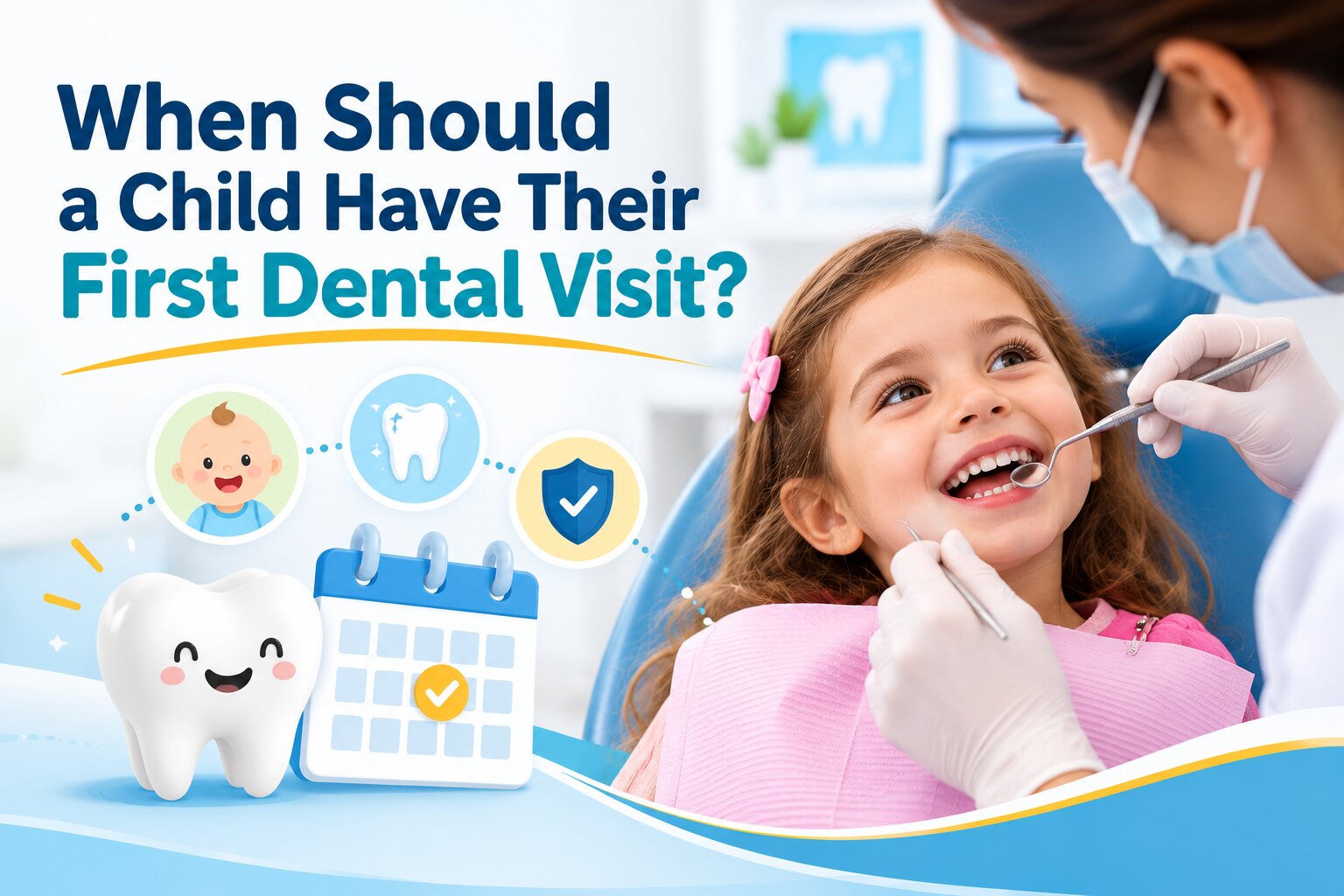
A baby’s first tooth can feel like a small milestone. For dental care, however, it is also the point when parents should begin thinking about a first visit.
The American Academy of Pediatric Dentistry recommends that children see a dentist when the first tooth appears and no later than their first birthday.
That timing often surprises parents. A one-year-old may have only a few teeth, so it is reasonable to wonder what a dentist could possibly need to examine.
The first appointment is less about performing extensive dental work and more about getting an early look at how the mouth is developing. It also gives parents practical guidance before habits and dental problems have had years to develop.
Why Visit When There Are Only a Few Teeth?
Baby teeth begin facing the oral environment as soon as they appear.
Once a tooth is exposed, plaque can collect on it. Feeding patterns, drinks, brushing habits, fluoride exposure, and other everyday factors begin affecting that tooth.
The purpose of an early dental visit is to look at those factors before there is a problem.
A dentist can also show parents where plaque tends to remain and how to clean small teeth comfortably.
This makes the first visit partly about the child and partly about helping the parent.
AAPD guidance supports establishing a child’s “dental home” during the first year so preventive advice and risk assessment can begin early.
Your Child Does Not Need a Full Mouth of Teeth First
Waiting until every baby tooth has appeared is unnecessary.
In fact, the timing of the first visit is connected to the arrival of the first tooth, not to the number of teeth present.
Some children begin teething earlier than others. That is normal.
If a tooth appears before the first birthday, parents can begin planning the visit then. If the first birthday is approaching, the appointment should not keep being postponed simply because only a few teeth are visible.
Starting early also gives the dentist a baseline.
Future visits can then be compared with what was seen before.
What Actually Happens at a First Dental Appointment?
A first dental visit usually looks different from an adult dental appointment.
A young child is not expected to sit through a long series of procedures.
The dentist will usually focus on becoming familiar with the child, examining the mouth, and talking with the parent or caregiver.
The exact visit varies by age and cooperation, but it may involve checking:
- Teeth that have already erupted
- Gum tissue
- The child’s bite and oral development
- Areas where plaque is collecting
- Early signs of decay
- Feeding and drinking habits
- Brushing routines
- Fluoride exposure
- Thumb, finger, or pacifier habits
The dentist can also answer questions about what parents are seeing at home.
The First Visit Can Be Short — and That Is Okay
Parents sometimes worry that their child will not sit still.
That is completely expected with infants and toddlers.
The first visit does not need to resemble an adult examination to be useful.
A young child may be examined while sitting with a parent. The dental team can adapt the visit to the child’s age and comfort level.
The goal is not to force a perfect appointment.
It is to gather useful information, check the child’s mouth, and begin making dental care feel familiar.
A short positive experience can be much more valuable than trying to accomplish too much during the first encounter.
Parents Usually Have More Questions Than Children Do
The first visit is an opportunity to discuss the everyday situations that happen outside the dental office.
For example:
When should toothpaste be introduced?
How much should you use?
What should you do if your child fights brushing?
Is a pacifier affecting the teeth?
Does nighttime feeding matter?
What happens if the child falls and hits a front tooth?
These questions may seem simple, but the answers can influence dental habits for years.
The AAPD recommends beginning fluoride toothpaste when teeth erupt, using only a very small smear for children younger than three.
Your child’s dentist can demonstrate an age-appropriate brushing technique rather than leaving parents to figure it out through trial and error.
Why Baby Teeth Deserve Serious Attention
Baby teeth eventually fall out, but that does not make them disposable.
Children use them for everyday biting and chewing.
They also occupy space while the mouth continues developing.
A painful cavity can affect eating and sleep long before a permanent tooth appears.
Dental infections can also become uncomfortable quickly in young children.
Taking care of baby teeth is therefore about keeping childhood comfortable and healthy, not simply protecting teeth that will eventually be replaced.
What Can Parents Do Before the First Tooth Appears?
Oral care can start even before visible teeth arrive.
Parents can gently clean an infant’s gums with a soft, clean cloth.
Once teeth begin appearing, switch to an age-appropriate soft toothbrush.
You do not need to scrub aggressively.
Young teeth and gums need thorough but gentle cleaning.
Creating a routine early also helps brushing become a normal part of the child’s day rather than a new activity introduced years later.
Feeding Habits Are Worth Discussing
Young children often eat and drink frequently throughout the day.
The pattern can matter to their teeth.
Repeated exposure to sugary drinks or snacks creates more opportunities for acids to affect tooth surfaces.
Nighttime habits deserve attention as well.
If a child falls asleep with a bottle containing something other than water, the teeth can remain exposed to sugars for an extended period. AAPD guidance specifically advises against putting a child to sleep with bottles containing sugary liquids.
The goal is not to make parents anxious about every meal.
It is to understand which repeated habits may be worth adjusting.
What If My Child Is Already Older Than One?
Do not avoid scheduling because you think you missed the ideal age.
A child who is two, three, or older and has never visited a dentist should still begin.
The dentist can evaluate the child’s current oral health and help establish a routine from that point forward.
There is no benefit in delaying longer simply because the recommended first-year visit did not happen.
Parents should also mention any current concerns when scheduling.
Pain, swelling, a broken tooth, dark areas, or visible cavities may require more immediate attention than a routine introductory visit.
What If My Child Seems Afraid of the Dentist?
A child’s first impression of dental care can be influenced by how adults describe it.
Try to keep explanations simple.
You do not need to give a young child a detailed description of dental instruments or possible procedures.
Avoid using the dental visit as a threat when brushing becomes difficult.
Statements such as “If you don’t brush, the dentist will hurt your tooth” can create anxiety before the child has even entered an office.
Instead, explain that the dentist is going to count and look at their teeth.
Keep your own tone relaxed.
Children often notice a parent’s nervousness even when the parent says everything is fine.
Should You Prepare Your Child Before the Visit?
A little preparation can help.
For toddlers and preschool-age children, you might read a simple book about visiting the dentist or practice opening wide while counting teeth at home.
Keep the activity playful.
Try not to rehearse excessively.
For an infant, preparation is mostly practical.
Bring information the dental team may need, including relevant medical history and medications.
It can also help to think about questions beforehand so you do not forget them during the appointment.
How Often Should Children Visit After the First Appointment?
There is not one schedule that fits every child.
Many children are seen at regular intervals, but the appropriate frequency depends on cavity risk, development, oral hygiene, and individual dental needs.
The AAPD notes that dentists may recommend visit frequency based on a child’s personal oral health rather than relying on one schedule for everyone.
A child with a history of cavities or other concerns may need different monitoring from a child with very low dental risk.
Your dentist can recommend a schedule after evaluating your child.
Do Young Children Need Dental X-Rays?
Not automatically.
Dental X-rays are used when the information they provide is needed.
Whether a child needs them depends on factors such as age, development, spacing between teeth, symptoms, dental history, and cavity risk.
A first visit does not mean every child immediately receives X-rays.
The dentist decides based on what can be seen clinically and what additional information would be useful.
Parents can always ask why an X-ray is being recommended.
When Should You Call Before the Planned First Visit?
Some dental problems should not wait for the routine appointment date.
Contact a dentist if you notice:
- A tooth that appears broken
- Swelling around the mouth or gum
- Ongoing tooth pain
- A dark or suspicious area on a tooth
- Bleeding after a dental injury
- A bump on the gum
- Difficulty eating because of dental discomfort
- An injury that loosens or moves a tooth
If your child suffers a significant mouth injury, explain what happened when you call so the dental office can advise you appropriately.
Early Visits Can Make Future Visits Feel More Normal
There is another benefit to starting dental visits early.
The child gets to experience the dental environment before every visit is connected with a problem.
They begin recognizing the office, chair, lights, and people involved in their care.
That familiarity can help dental visits become part of a normal health routine.
Waiting until a child has a painful tooth creates a very different first experience.
The child may already be uncomfortable and frightened before the appointment begins.
Preventive visits offer an opportunity to build familiarity under calmer circumstances.
Building Healthy Dental Habits in North Raleigh
For parents in North Raleigh, the first dental visit is a useful point to establish a routine that can grow with the child.
North Raleigh Dental Studio provides general dentistry care for families and can help parents understand age-appropriate brushing, preventive care, and changes to watch as children’s teeth develop.
The simplest rule to remember is this: begin planning dental care when the first tooth arrives, rather than waiting for a mouthful of teeth or a painful problem.
If your child’s first birthday is approaching, teeth have begun appearing, or you have questions about their dental development, you can contact North Raleigh Dental Studio to discuss an appropriate first visit.