Introduction
Many people compare Botox and fillers before choosing treatment. Both are popular options for facial care. Both can support a smoother and fresher look. Still, they work in very different ways. This is why the topic Botox vs fillers is important. Patients should understand the basic difference before booking any visit.
Botox mainly works on facial muscle movement. Fillers mainly work on facial volume and shape. Botox may help soften lines caused by repeated expressions. Fillers may help restore areas that look flat or hollow. So, the right option depends on the patient’s concern.
Some patients want help with forehead lines or frown lines. Others want fuller cheeks, lips, or smoother smile lines. Some patients also ask about Botox for jaw tension. This is common in dental care settings. A trained provider can explain which option fits your needs.
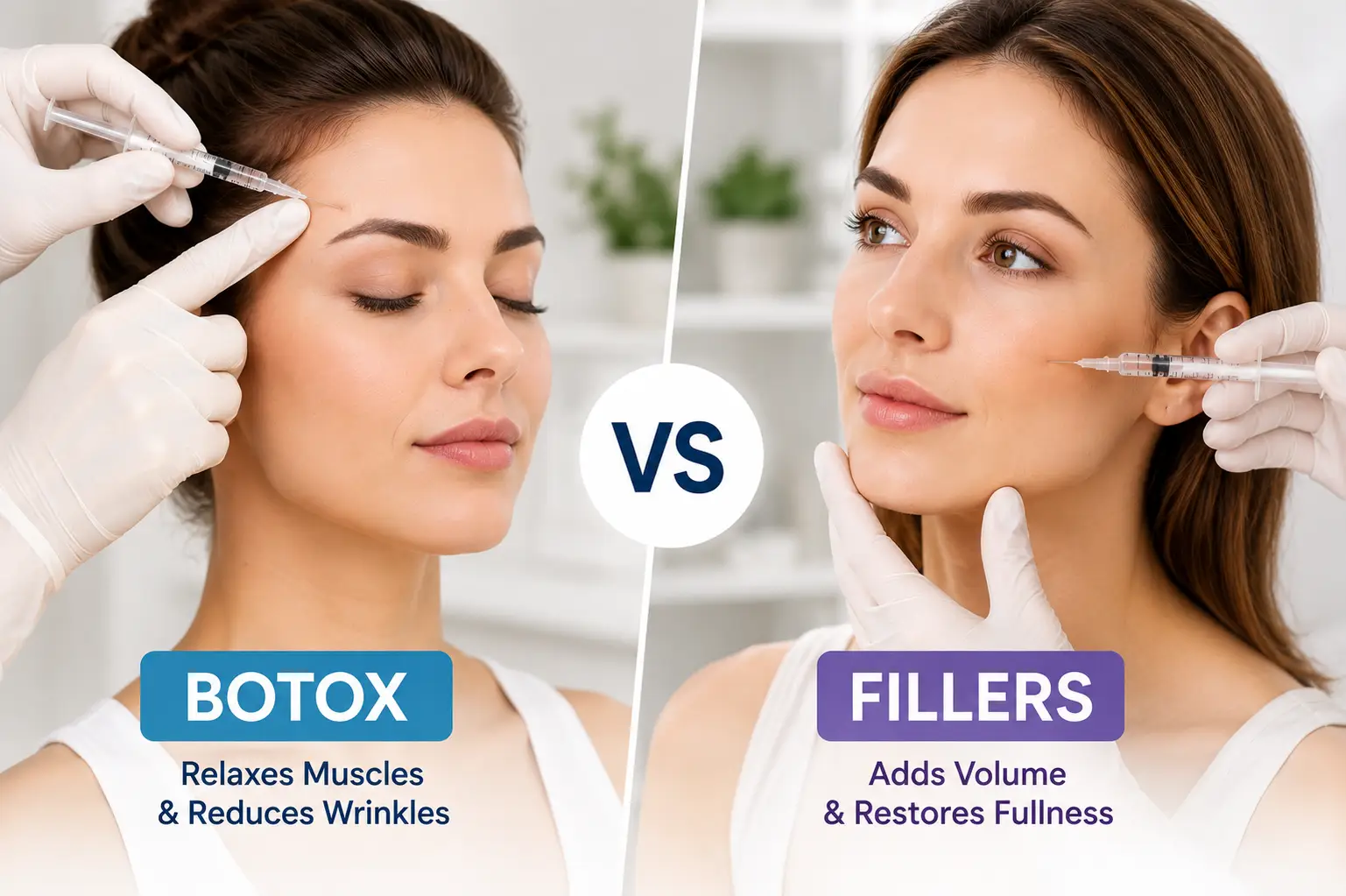
The difference between Botox and fillers becomes clear with one simple idea. Botox relaxes muscles. Fillers add or restore volume. Both treatments can be useful. However, they are not the same treatment. A careful consultation helps avoid wrong choices.
What Is Botox?
Botox is an injectable treatment used in selected muscle areas. It works by relaxing targeted muscles for a temporary time. These muscles often create lines through daily facial movement. Common movements include smiling, frowning, squinting, and raising eyebrows. Over time, these actions may create visible facial lines.
Botox does not fill the skin like dermal fillers. It does not add volume to cheeks or lips. Instead, it helps reduce muscle activity in treated areas. This can make certain lines look softer and smoother. The effect depends on placement, dosage, and muscle strength.
In cosmetic care, Botox is often used for expression lines. These lines appear because the face moves many times daily. Botox may help reduce the repeated pull on the skin. This can support a more rested and natural look. The goal is not to freeze the face. The goal is usually better balance and softer movement.
Botox also has a role in some dental settings. Dentists understand jaw muscles, bite pressure, and facial function. This knowledge can help when treating jaw tension concerns. Some patients ask about Botox for clenching or TMJ-related discomfort. A dental provider can review symptoms before suggesting care
How Botox Works
Botox works by calming muscle signals in a treated area. A trained provider places small injections into selected muscles. These areas are chosen after reviewing the patient’s goals. Facial structure and muscle movement also matter during planning.
After treatment, Botox does not work instantly. Results usually appear slowly over several days. This delay is normal and expected. The full result may take more time to settle. Every patient may respond a little differently.
Botox is often linked with dynamic wrinkles. These wrinkles appear when the face moves. They may show when you smile, frown, or squint. At first, these lines may only appear during movement. Later, they may stay visible when the face rests.
This is where Botox vs dermal fillers becomes easier to understand. Botox is better suited for movement-based lines. Fillers are better suited for volume loss and deeper folds. Both treatments can improve facial concerns. Still, they solve different problems.
Patients should not choose Botox only by trend. A proper exam and honest discussion are important. The provider should understand your medical history and goals. This helps create a safer and more useful plan. It also helps set realistic expectations before treatment.
Common Areas Treated With Botox
Botox is commonly used on the upper face. Common areas include forehead lines, frown lines, and crow’s feet. These lines are often caused by repeated expression. Botox may help soften these areas when used carefully.
Botox may also be used near the jaw muscles. This is more common when patients have jaw tension concerns. Some people feel tightness, soreness, or pressure around the jaw. Others may notice clenching or grinding habits. A dental provider may check bite function and muscle stress.
Botox treatment should always be planned for each person. Every face has different movement and muscle strength. Every patient also has different comfort needs and goals. This is why a custom plan matters. It helps keep the results balanced and natural.
What Are Dermal Fillers?
Dermal fillers are injectable treatments used to restore facial volume. They help improve areas that look hollow, flat, or aged. Many people compare Botox vs fillers because both are injectables. However, they work in different ways. Botox relaxes muscles. Fillers add shape, volume, and soft support.
Fillers are often used when the face loses fullness. This may happen with age, weight changes, or natural facial structure. As volume reduces, folds and lines may appear deeper. The cheeks may look flatter. The lips may look thinner. The lower face may also lose soft balance.
Dermal fillers can help restore a smoother facial look. They may also improve facial contour when used carefully. The goal is usually a natural and balanced result. A trained provider studies your face before planning treatment. This helps avoid an overfilled or uneven appearance.
The difference between Botox and fillers starts with their purpose. Fillers do not relax muscles like Botox. They are placed under the skin to support volume. This makes them useful for deeper folds and hollow areas. They can also help improve facial shape.
How Fillers Work
Fillers work by adding soft volume beneath the skin. A provider places the filler in targeted facial areas. The placement depends on the patient’s goals and facial needs. Some fillers help lift and support the cheeks. Others help define lips, chin, or jawline.
Many dermal fillers are made with gel-like materials. These materials help create shape and support under the skin. The result can make lines appear softer. It can also make hollow areas look fuller. The final look depends on product choice and provider skill.
Unlike Botox, filler results are often visible sooner. Patients may notice changes right after treatment. However, mild swelling may appear in the early days. This can make the area look slightly fuller at first. The final result usually settles after swelling improves.
This is why planning matters in any Botox fillers comparison. Fillers need careful placement and proper volume control. Too much filler may look heavy or unnatural. Too little filler may not give enough change. A balanced plan supports a cleaner, softer result.
Common Areas Treated With Fillers
Fillers are commonly used in areas with volume loss. Many patients choose fillers for cheeks, lips, and smile lines. Cheek filler may help restore natural facial lift. Lip filler may add shape, balance, or soft fullness. Smile line filler may soften folds around the mouth.
Fillers may also support the chin and jawline. Some patients want better facial balance from the side view. Others want a smoother lower face shape. In some cases, fillers may help soften marionette lines. These lines run downward from the mouth corners.
Under-eye hollows are another common filler concern. This area can make the face look tired. However, under-eye filler needs careful evaluation. The skin is thin, and placement must be precise. Not every patient is a good match for this area.
Fillers should never be chosen only by trend. Each face has its own structure and balance. A provider should review facial movement, skin quality, and goals. This helps decide whether fillers are suitable. It also helps decide whether Botox may be better.
Botox vs Fillers: The Main Difference
The main Botox and fillers difference is very simple. Botox treats muscle movement. Fillers treat volume loss. Botox may help lines caused by repeated facial expressions. Fillers may help folds caused by lost support. Both can improve appearance, but in different ways.
Botox is often better for dynamic wrinkles. These are lines created by movement. Common examples include forehead lines and crow’s feet. Fillers are often better for static folds and hollow areas. These concerns may stay visible even when the face rests.
Patients often ask, Botox or fillers which is better? The answer depends on the concern. If the issue comes from muscle movement, Botox may help. If the issue comes from lost volume, fillers may help. Sometimes, both treatments may support different areas.
Botox Relaxes Muscles
Botox works by reducing selected muscle activity. This helps soften lines caused by facial movement. It is commonly used for forehead lines, frown lines, and crow’s feet. It may also support jaw tension concerns in dental care.
Botox does not add fullness to the face. It does not shape lips or lift cheeks. Its main role is to calm active muscles. This makes it useful when lines form from expression. A skilled provider can keep results soft and natural.
Fillers Restore Volume
Fillers work by adding support under the skin. They help restore fullness in areas that look hollow. Fillers may improve cheeks, lips, smile lines, and jawline shape. They can also soften deeper folds around the lower face.
Fillers do not stop muscle movement like Botox. They correct volume loss and facial contour changes. This makes them different from Botox treatment. When patients understand this difference, they make better choices. A consultation helps match the right treatment with personal goals.
Botox vs Fillers: Which Works Best for Wrinkles?
Many patients ask which treatment works better for wrinkles. The answer depends on the wrinkle type. Some wrinkles form because facial muscles move often. Other wrinkles form because the face loses volume. This is why Botox vs fillers is not a one-choice answer. Both treatments work for different concerns.
Botox is often used for movement-based lines. Fillers are often used for deeper folds and volume loss. A trained provider can study the face first. This helps decide which treatment matches the concern. It also helps create a safer and more natural result.
Dynamic Wrinkles
Dynamic wrinkles appear when facial muscles move. These lines may show while smiling, frowning, or squinting. Common examples include forehead lines and crow’s feet. Frown lines between the brows are also common. These wrinkles often become deeper with repeated movement.
Botox may work well for dynamic wrinkles. It relaxes the targeted muscles causing those lines. This helps reduce the pull on the skin. Over time, treated lines may look softer and smoother. The face can still look natural with proper treatment.
This is where the difference between Botox and fillers becomes clear. Botox does not add volume under the skin. It works by calming muscle movement. So, it may be better for expression-related wrinkles. A consultation helps confirm if Botox suits your needs.
Static Wrinkles and Volume Loss
Static wrinkles are visible even when the face rests. These lines may form from lost volume and skin support. They may appear around the mouth, cheeks, and lower face. Smile lines and marionette lines are common examples. Hollow cheeks may also make lines look deeper.
Fillers may work better for these concerns. They add support beneath the skin. This can soften folds and restore smoother facial balance. Fillers may also improve cheeks, lips, and jawline shape. The result depends on careful planning and proper placement.
In a Botox fillers comparison, fillers support structure. Botox supports muscle relaxation. So, each treatment solves a different problem. Some patients may need one treatment only. Others may benefit from both, based on their goals.
Botox vs Fillers: Results and Timeline
Results do not appear the same way for both treatments. Botox usually needs time to show visible change. Fillers often create a faster visible difference. However, swelling can affect early filler results. Patients should understand this timeline before treatment.
Clear expectations help reduce worry after the visit. They also help patients judge results more fairly. A provider should explain what is normal after treatment. This is especially important for first-time patients.
When Botox Results Usually Appear
Botox results usually develop slowly after treatment. Some patients notice changes within a few days. Full results may take more time to appear. The exact timing can vary for each person. Treated muscles need time to relax properly.
Patients should avoid judging results too early. Early changes may be mild at first. The final look often becomes clearer later. Follow-up guidance can help track progress safely. This also helps the provider adjust future treatment plans.
When Filler Results Usually Appear
Filler results are often visible soon after treatment. The treated area may look fuller right away. However, mild swelling can appear during early healing. This swelling can make results look stronger at first. The final result may look softer once swelling settles.
Patients should follow aftercare instructions carefully after fillers. This helps support healing and comfort. It also lowers the chance of avoidable concerns. A trained provider should explain what to expect clearly.
How Long Do Botox and Fillers Last?
Both Botox and fillers offer temporary results. Botox usually needs maintenance sooner than many fillers. Filler duration depends on the product and treated area. Patient metabolism can also affect how long results last. Lifestyle and facial movement may also play a role.
This is why Botox or fillers which is better depends on personal needs. Some patients prefer softer movement control. Others want volume support for longer-lasting shape. The best choice should match the concern and goal.
Botox Result Duration
Botox results do not last forever. The treated muscles slowly regain movement over time. Maintenance visits may help keep results consistent. The needed schedule can vary by patient. A provider can suggest timing after reviewing results.
For dental-related concerns, Botox planning should be careful. Jaw muscles may respond differently than facial lines. Patients with jaw tension should discuss symptoms clearly. This helps the provider plan treatment with better care.
Filler Result Duration
Filler results can last for different time periods. Some fillers last shorter, while others last longer. The treatment area can affect the duration. Areas with more movement may break down filler faster. Product type also matters in the final timeline.
Patients should not choose fillers only for duration. Natural results and safety matter more than long wear. A balanced treatment plan should protect facial harmony. This helps avoid an overfilled or heavy appearance.
Botox vs Fillers: Safety and Side Effects
Botox and fillers are common injectable treatments. Still, both need careful planning and skilled hands. A trained provider should always perform these treatments. This helps reduce risk and supports safer results.
In the Botox vs fillers comparison, safety is very important. Botox relaxes selected muscles in targeted areas. Fillers add volume under the skin. Both treatments need good knowledge of facial anatomy. Poor placement can lead to uneven or unsafe results.
Most side effects are mild and temporary. Patients may notice redness, swelling, bruising, or tenderness. These effects usually appear near the injection area. They often improve within a few days. Some patients may also feel mild discomfort.
Botox may sometimes cause headache or slight muscle weakness. Fillers may sometimes cause swelling, lumps, or firmness. Serious side effects are rare but can happen. This is why provider experience matters so much.
Patients should share their medical history before treatment. They should also mention allergies and current medicines. This helps the provider plan treatment more safely. A proper consultation also sets clear expectations.
Botox and fillers can give helpful results. However, safety should always come before appearance goals. A qualified provider can guide the right choice.
Can Botox and Fillers Be Used Together?
Botox and fillers can sometimes be used together. This depends on the patient’s facial concerns and treatment goals. Some people need help with muscle-based lines. Others need support for lost facial volume. In some cases, both concerns appear at the same time. This is why a custom plan is very important.
In the Botox vs fillers discussion, both treatments have different roles. Botox relaxes selected muscles that create expression lines. Fillers add support where the face has lost volume. When planned carefully, both can support balanced facial results. However, not every patient needs both treatments together.
A provider should first review facial movement and structure. They should also understand the patient’s health history. This helps reduce risks and improve treatment planning. A safe plan should look natural and feel comfortable.
Why Some Patients Choose Both
Some patients choose both treatments for complete facial balance. Botox may help soften forehead lines and frown lines. Fillers may help restore cheeks, lips, or smile lines. This combination may address different signs of facial aging.
For example, Botox may reduce repeated muscle movement. Fillers may improve areas that look hollow or flat. Together, they may help the face look more rested. The goal should not be a changed appearance. The goal should be a fresh and natural look.
This is why the difference between Botox and fillers matters. Botox works on movement. Fillers work on volume. A clear understanding helps patients choose with more confidence.
Why a Custom Plan Is Important
Every face has different shape, movement, and balance. A treatment that helps one patient may not suit another. Some patients need only Botox. Some patients may need only fillers. Others may need a careful mix of both options.
A custom plan also protects natural facial expression. It helps avoid an overdone or uneven look. The provider should explain what each treatment can do. They should also explain what each treatment cannot do. This helps patients set realistic expectations before care.
Good planning also supports dental comfort and facial harmony. This matters when Botox is used near jaw muscles. The provider should consider bite pressure and muscle tension. This helps protect both comfort and function.
Botox in Dentistry: Why Some Dental Offices Offer It
Botox is not only used for cosmetic concerns. Some dental offices also offer Botox for facial comfort needs. Dentists study jaw movement, bite function, and facial muscles. This knowledge can help when patients have jaw tension concerns.
In dental care, Botox may support patients with tight jaw muscles. Some people clench or grind their teeth often. This can place pressure on teeth, gums, and jaw joints. Over time, this pressure may affect comfort and dental health.
Botox may help relax selected jaw muscles in some cases. This may support better comfort when planned correctly. It should always follow a proper dental evaluation. The provider must understand the patient’s symptoms and oral health.
Botox for Jaw Tension and TMJ Support
Jaw tension can affect daily comfort and quality of life. Some patients feel soreness around the jaw or temples. Others may notice headaches, clenching, or grinding habits. These concerns may connect with TMJ-related muscle stress.
Botox may help reduce overactive jaw muscle movement. This can support comfort when used with proper care. However, it is not right for every patient. A dental provider should check the bite and jaw function first.
Patients should also understand the full care plan. Botox may be one part of treatment. Dental restorations, night guards, or bite care may also help. A complete plan often gives better long-term support.
Cosmetic and Comfort-Based Benefits
Botox may support both appearance and comfort goals. It may soften movement lines on the face. It may also help selected jaw tension concerns. This makes it useful in both cosmetic and dental settings.
Fillers focus more on volume and facial shape. They may help cheeks, lips, and deeper folds. Botox focuses more on muscle movement and tension. This makes Botox vs dermal fillers easier to understand.
Patients should choose treatment based on real needs. Trends should not decide the treatment plan. A trained provider can explain safer and better options.
Botox or Fillers: Which One May Be Right for You?
The answer depends on your main concern. Choose Botox if lines appear from facial movement. This may include forehead lines, frown lines, or crow’s feet. Botox may also help jaw tension in selected cases.
Choose fillers if your concern is volume loss. Fillers may help hollow cheeks, thin lips, or smile lines. They may also support facial contour and balance. Fillers are not designed to relax muscles like Botox.
The question Botox or fillers which is better has no single answer. The better choice depends on your face and goals. A consultation helps match treatment with your needs.
Conclusion
Botox and fillers can both support a fresher appearance. However, they work in very different ways. Botox helps relax selected facial muscles. It is often used for movement-based lines. Fillers help restore lost volume and facial shape. They are often used for cheeks, lips, and deeper folds.
The best choice depends on your main concern. If your lines appear during facial movement, Botox may help. If your concern is volume loss, fillers may be better. Some patients may also benefit from both treatments. A trained provider can explain the safest option clearly.
For dental patients, Botox may also support jaw comfort. It may help selected cases of jaw tension or TMJ-related stress. Still, every patient needs a proper consultation first. Your provider should review your goals, health history, and facial structure.
If you are unsure about Botox vs fillers, start with expert guidance. North Raleigh Dental Studio can help you understand your options. A careful plan can support comfort, confidence, and natural-looking results.