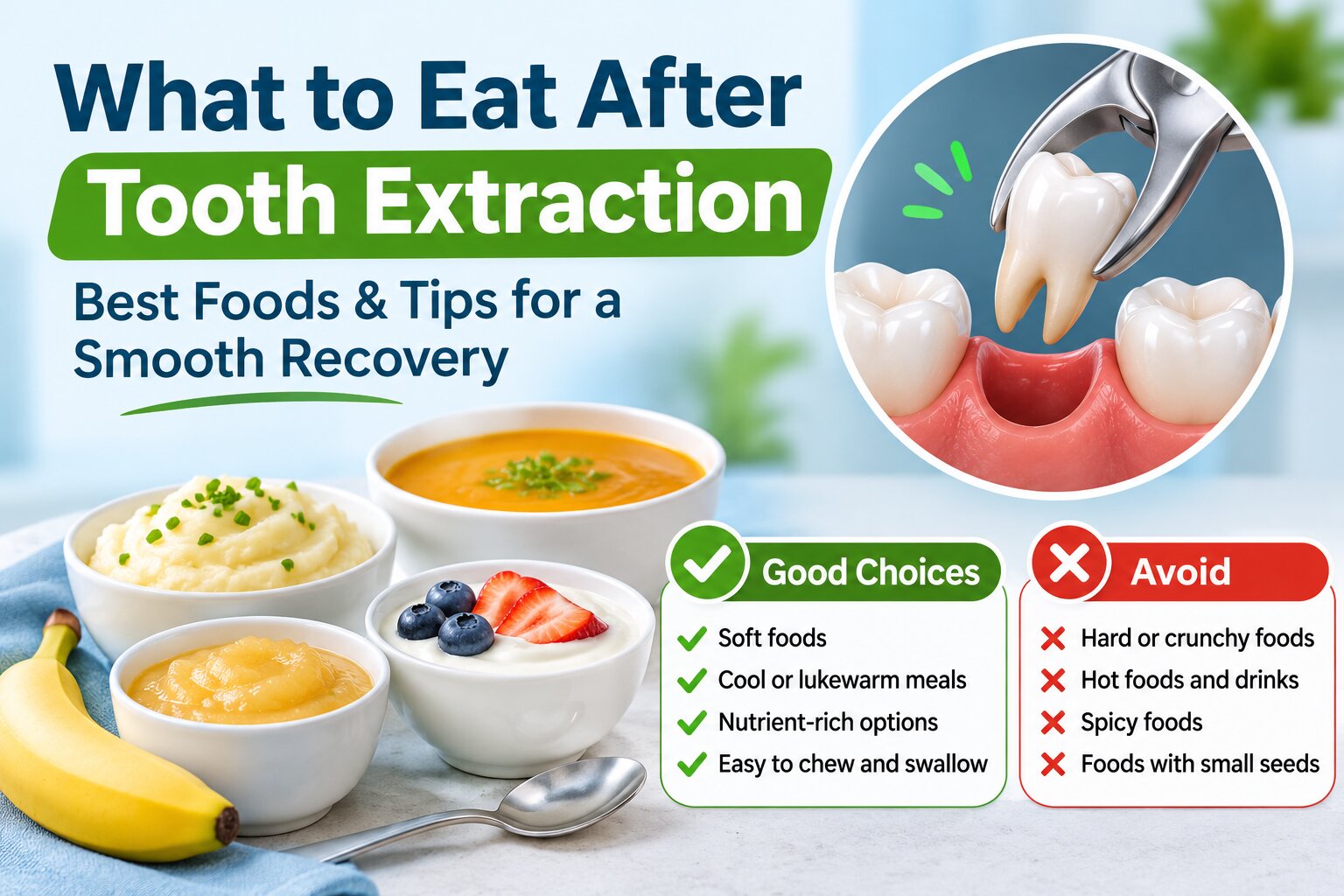
Tooth extraction can leave your mouth sore and sensitive for days. Choosing the right foods helps make your recovery more comfortable. Many patients wonder what to eat after tooth extraction during recovery. Choosing soft, nutritious foods can help protect the healing area. However, hard or crunchy foods may cause pain and irritation. Understanding safe food choices can make daily meals more comfortable.
Your mouth needs time to heal after a tooth removal. Eating soft, nutritious foods can help protect the extraction site. Knowing which foods to avoid after tooth extraction is equally important.
This guide explains safe food choices during the early recovery period. You’ll also learn how to eat without causing unnecessary discomfort. Following your dentist’s advice can help you heal more smoothly.
Why Your Diet Matters After Tooth Extraction
After tooth extraction, your body starts healing the empty tooth socket. A small blood clot forms where the tooth was removed. This clot protects the exposed tissue and supports natural healing.
Hard or crunchy foods may disturb this important blood clot. Losing the clot can cause a painful condition called dry socket. That is why dentists recommend gentle eating habits during recovery.
Choosing the right foods to eat after tooth extraction matters. Soft foods require less chewing and place less pressure on gums. They also make eating easier when your mouth feels sore.
Good nutrition is another important part of your healing process. Your body needs protein, vitamins, and fluids to repair damaged tissue. Foods like yogurt and eggs provide nutrients without difficult chewing.
Patients undergoing oral surgery in Raleigh, NC should follow their dentist’s specific recovery instructions. Food choices may vary depending on the type of extraction. Surgical procedures sometimes require additional care and a longer recovery period.
What Can You Eat During the First 24 Hours After Tooth Extraction?
The first 24 hours after tooth extraction require extra care. A protective blood clot forms inside the empty tooth socket. This clot helps protect the area while healing begins. Choosing the right foods to eat after tooth extraction is important. Smooth, cool foods require little chewing and reduce unnecessary pressure. Avoid anything that could disturb the clot or irritate your gums.
Best Foods to Eat During the First 24 Hours
- Plain Yogurt:
Plain yogurt is smooth, soft, and easy to swallow. It provides protein and calcium without requiring chewing. Choose yogurt without fruit pieces, seeds, or crunchy toppings.
- Applesauce:
Unsweetened applesauce is gentle on sensitive gums and requires no chewing. It provides some nutrients and is easy to eat. Choose smooth applesauce without added chunks or spices.
- Mashed Potatoes:
Smooth mashed potatoes provide energy and are easy to swallow. Allow them to cool before eating. Avoid adding crunchy toppings, strong spices, or ingredients that require extra chewing.
- Pudding:
Soft pudding is easy to eat when chewing feels uncomfortable. Its smooth texture makes it suitable during early recovery. Choose pudding without nuts, cookie pieces, or other hard ingredients.
- Smooth Soups:
Blended vegetable soups provide fluids and nutrients during recovery. Serve them lukewarm or cool to avoid irritation. Make sure the soup contains no hard vegetables, chunks, or sharp ingredients.
- Banana Smoothies:
Smooth banana drinks provide energy and nutrients without much chewing. Blend them until completely smooth. Drink directly from a cup or use a spoon, never a straw.
Important Eating Precautions During the First Day
- Avoid Hot Foods:
Very hot foods and drinks may irritate sensitive gums and increase bleeding. Allow soups and beverages to cool before eating. Choose cool or lukewarm meals during early recovery.
- Wait Until Numbness Fades:
Eating while your mouth remains numb increases accidental biting risks. Wait until you can safely feel your lips, tongue, and cheeks before chewing or eating solid foods.
- Avoid Using Straws:
Drinking through a straw creates suction inside your mouth. This pressure may disturb the protective blood clot. Drink directly from a cup to help protect the healing area.
- Chew Away From the Extraction Site:
Chewing near the extraction area may cause discomfort or disturb healing tissue. Take small bites, eat slowly, and use the opposite side of your mouth when possible.
- Stay Hydrated:
Drinking enough water supports your body’s normal healing process. Take small, gentle sips throughout the day. Avoid alcohol and follow your dentist’s instructions regarding other beverages.
- Follow Your Dentist’s Instructions:
Recovery needs vary depending on the type of extraction performed. Follow your dentist’s specific dietary advice, especially after Oral Surgery Raleigh NC procedures or more complex tooth removals.
What Can You Drink After Tooth Extraction?
Staying hydrated supports your body’s natural healing process after extraction. Water is usually the safest drink during the early recovery period. Take small, gentle sips directly from a drinking cup.
Cool milk and smooth, non-acidic drinks may also be suitable. Avoid beverages containing seeds, hard pieces, or irritating ingredients. Always choose drinks that feel comfortable against your sensitive gums.
Avoid drinking through straws because suction may disturb the blood clot. Very hot beverages can also irritate the healing extraction area. Alcohol should be avoided during early recovery, especially with certain medications.
Follow your dentist’s advice before returning to your usual drinks.
Simple Meal Ideas for the First Few Days After Tooth Extraction
Planning simple meals can make eating easier after tooth extraction. Choose foods that provide nutrients without placing pressure on gums. Your tooth extraction diet should include soft, easy-to-swallow meals. As healing improves, introduce more food choices based on comfort.
Breakfast Ideas
Start your morning with scrambled eggs or smooth, plain yogurt. Soft oatmeal with mashed banana also makes a gentle breakfast. Keep meals lukewarm and avoid crunchy toppings or small seeds.
Lunch Ideas
Try blended vegetable soup with smooth mashed potatoes for lunch. Soft pasta with a mild sauce offers another filling choice. Choose meals that require minimal chewing and feel comfortable swallowing.
Dinner Ideas
Soft tofu, mashed sweet potatoes, and tender fish provide useful nutrients. Make sure fish contains no bones or hard, crispy pieces. Eat slowly and chew away from the healing area.
Snacks and Desserts
Applesauce, pudding, and smooth yogurt make easy snack choices. A seedless smoothie can also provide nutrients between regular meals. Always use a spoon or cup instead of a straw.
How to Support Comfortable Healing After Tooth Extraction
Good daily habits help protect your mouth during the healing process. Getting enough rest allows your body to focus on recovery. Avoid heavy exercise during the early stages of healing.
Smoking and vaping can delay healing and increase complication risks. Avoid these habits and follow your dentist’s recovery instructions.
Continue brushing your other teeth gently to maintain oral hygiene. Avoid disturbing the extraction site while cleaning nearby teeth. After the first 24 hours, gentle saltwater rinses may help. Only begin rinsing as directed by your dentist.
Recovery takes time, so avoid rushing back into normal activities. Contact your dental team whenever you have concerns about healing.
When Should You Contact Your Dentist After Tooth Extraction?
Mild pain, swelling, and light bleeding are common after tooth extraction. These symptoms usually improve as your mouth begins to heal. However, some warning signs may require professional dental attention.
Contact North Raleigh Dental Studio if you experience severe or worsening pain. Pain that increases after several days may indicate dry socket. This condition occurs when the protective blood clot becomes dislodged.
Heavy bleeding that continues despite firm pressure also needs urgent attention. Other warning signs include fever, increasing swelling, or unusual discharge. A bad taste combined with worsening pain may signal infection.
If you experience difficulty breathing or swallowing, seek emergency medical care. These symptoms require immediate attention and should never be ignored.
The dental team at North Raleigh Dental Studio can answer questions about recovery concerns. Patients who undergo tooth extraction should follow their personalized aftercare instructions. If pain, swelling, or other symptoms become worse, contact your dentist promptly. Getting timely advice can help identify problems and support recovery.
Conclusion
Understanding what to eat after tooth extraction helps support comfortable healing. Choose soft, nutritious foods like yogurt, eggs, and mashed potatoes. Avoid hard, crunchy, spicy, and sticky foods during early recovery. Drink enough water and protect the healing extraction site.
Remember, every patient heals at a different pace. Follow your dentist’s advice and watch for unusual symptoms.
At North Raleigh Dental Studio, we help patients understand their treatment and recovery needs. If you have questions about tooth extraction or oral surgery, contact our team.
Schedule Your Dental Appointment Today or call (919) 847-3899 for assistance.