Introduction
After having a tooth removed, you may wonder about recovery. How long will your gums feel sore? When can you eat normally or return to work? These questions are common, especially if this is your first extraction. Understanding the healing process can help you prepare for recovery.
Tooth extraction recovery time depends on several personal health factors. Some patients feel better within a few days after treatment. Others need more time, especially after a complex tooth removal. Your dentist can explain what to expect based on your procedure.
Healing begins shortly after the tooth is removed from your mouth. Your body works to protect the area and repair damaged tissue. This process continues even after you start feeling better.
Understanding tooth extraction recovery helps you recognize normal healing changes. It also helps you follow proper care instructions at home. This guide explains the healing stages and expected recovery timeline. You will also learn what happens during each healing stage.
How Long Does It Take to Recover After Tooth Extraction?
Most patients begin feeling better within a few days. Many return to routine activities within 48 to 72 hours. However, feeling comfortable does not mean the area has fully healed. Your gums and jawbone need more time to recover completely.
The tooth extraction healing time depends on the procedure performed. A simple extraction usually involves removing a visible tooth. Surgical removal may require additional work around the gums or bone. More complex procedures can involve a longer recovery period.
Your health and daily habits also affect your healing progress. Following your dentist’s instructions helps protect the area during recovery.
If you need a tooth extraction in Raleigh, NC, discuss your recovery expectations with your dentist. Your dentist can explain the procedure and provide care instructions based on your dental needs.
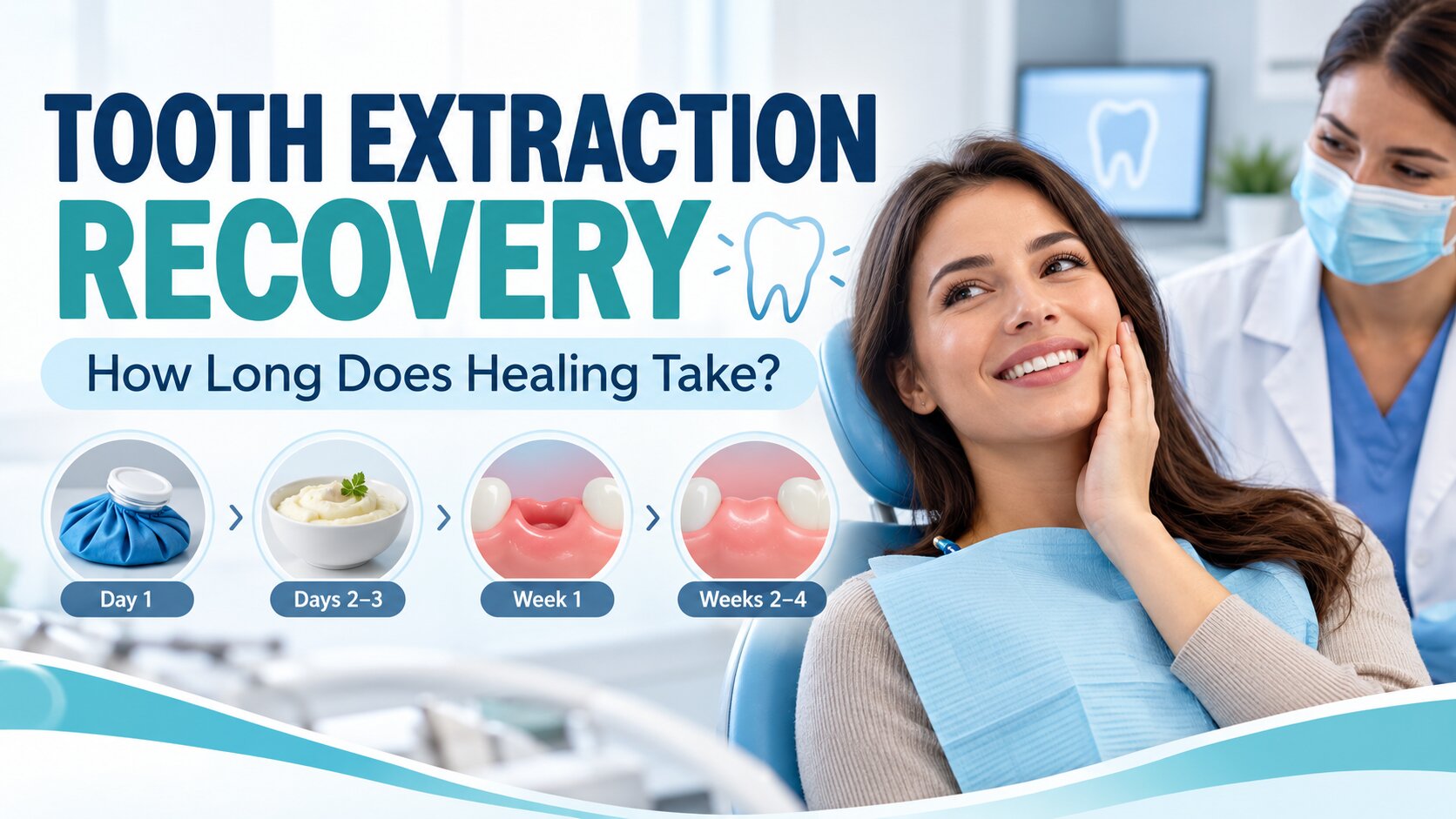
Tooth Extraction Recovery Timeline: What to Expect Day by Day
Your mouth passes through several stages after a tooth extraction. Each stage brings changes as the gums and bone heal. Understanding this timeline helps you know what to expect.
- First 24 Hours After Tooth Extraction
The first day is important for protecting the extraction site. A blood clot begins forming where the tooth was removed. This clot covers the exposed bone and supports early healing.
You may notice slight bleeding and tenderness during this period. Some swelling may also begin around the affected area.
Avoid touching the extraction site with your tongue or fingers. Do not rinse forcefully or drink through a straw. These actions may disturb the clot and delay healing. Follow your dentist’s instructions and allow the area to rest.
- Days 2–3: Managing Swelling and Discomfort
Swelling and discomfort may increase during the next two days. This can be part of the normal healing process. Swelling often reaches its highest level around this time.
You may also experience mild jaw stiffness or tenderness. These symptoms can make chewing and opening your mouth uncomfortable.
Continue eating soft foods and follow your prescribed care instructions. Avoid strenuous activities until your dentist says they are safe. Contact your dentist if pain becomes severe or bleeding continues.
- Days 4–7: Early Gum Healing
During this stage, swelling and discomfort should gradually begin improving. You may find speaking and eating easier than before. The gum tissue also continues repairing the extraction area.
The empty socket may still look different from surrounding gums. This does not always mean something is wrong with healing.
Many patients can resume routine activities during this period. However, avoid placing unnecessary pressure on the healing area.
If pain increases after initial improvement, contact your dental office.
- Weeks 2–4: Continued Tissue Healing
Your gums continue closing over the socket during these weeks. The surface may look healthier as new tissue develops.
Most daily activities become more comfortable as the area heals. However, larger extraction sites may need additional healing time.
Continue following your dentist’s guidance about cleaning and food choices.
- Following Months: Complete Bone Healing
Your jawbone continues healing beneath the gums after tooth removal. This process takes longer than the first stages of recovery.
Bone healing may continue for several months after the procedure. The exact timeline depends on the tooth and extraction complexity.
Your dentist may recommend follow-up visits to review healing progress. These visits are especially important when planning future tooth replacement.
Understanding tooth extraction recovery time helps you set realistic expectations. Remember that complete healing continues after your discomfort has improved.
Simple vs. Surgical Tooth Extraction: Recovery Time Differences
The type of extraction can affect your healing process. Simple extractions usually involve less work around the gums. Surgical extractions may require additional steps to remove a tooth. Understanding these differences helps you prepare for your recovery.
- Recovery After a Simple Tooth Extraction
A simple extraction removes a tooth visible above your gums. Most patients feel better within a few days. However, the empty socket needs several weeks to heal fully.
- Recovery After a Surgical Tooth Extraction
Surgical extraction may involve opening the gums or removing bone. This procedure may be needed when a tooth is difficult to remove. Pain and swelling can last longer after more complex extractions. Some patients may experience soreness for up to two weeks. Your dentist can explain the expected recovery based on your procedure.
Important: Your recovery time depends on your individual dental needs. Your dentist can explain the expected healing process before treatment.
What Factors Affect Tooth Extraction Recovery Time?
Tooth extraction recovery time varies depending on several personal factors. Your health, extraction type, and daily habits influence healing. Understanding these factors helps you prepare for a smoother recovery.
- Type and Complexity of the Extraction
Simple extractions usually involve less tissue damage than surgical procedures. Removing deeply rooted teeth may require additional work around the gums. More complex procedures often need longer healing periods.
- Age and Overall Health
Your age and overall health may influence your recovery. Some patients heal more slowly because of their health conditions. Your dentist will review your medical history before treatment. This helps them plan suitable care for your individual needs.
- Oral Hygiene and Aftercare
Good oral hygiene helps keep the extraction area clean. Follow your dentist’s instructions when brushing near the healing socket. Proper aftercare helps protect blood clots and supports normal healing.
- Smoking, Vaping, and Other Habits
Smoking and vaping can slow healing after tooth extraction. These habits may increase your risk of painful dry socket. Avoid tobacco products during recovery, following your dentist’s specific advice.
- Medications and Existing Health Conditions
Certain health conditions and medications may affect your recovery. Tell your dentist about your medical history and current prescriptions. Never stop taking prescribed medications without consulting your healthcare provider.
How Long Do Pain and Swelling Last After Tooth Extraction?
Mild pain and swelling are common during tooth extraction recovery. Discomfort usually begins when the local anesthesia wears off. Pain may increase during the first two or three days. It should then gradually improve as the extraction site heals.
Swelling often develops within 24 to 48 hours after extraction. It may reach its highest level around 48–72 hours. Most swelling improves within five to seven days. Surgical extractions may cause discomfort lasting up to two weeks.
To manage swelling, apply a cold pack to your cheek. Follow your dentist’s instructions for pain medication and rest. Avoid strenuous activities that may increase bleeding or discomfort.
Severe pain that develops or worsens after several days needs attention. It may indicate dry socket or another healing problem. Contact your dentist if swelling increases, fever develops, or bleeding continues.
Remember, tooth extraction recovery time varies with individual healing needs. Following proper aftercare helps support a safer, more comfortable recovery.
How to Support a Smooth Tooth Extraction Recovery
Proper aftercare helps protect your gums following tooth removal. These simple steps can reduce discomfort and support healthy healing. Follow your dentist’s instructions throughout the tooth extraction recovery process.
- Follow Your Dentist’s Aftercare Instructions
Follow your dentist’s instructions for medication, cleaning, and wound care. Take prescribed medicines exactly as directed to manage discomfort safely. Contact your dentist if unexpected symptoms develop during recovery.
- Protect the Blood Clot
A blood clot forms inside the socket after tooth removal. Avoid straws, forceful spitting, and vigorous rinsing during early healing. These actions may dislodge the clot and cause painful complications.
- Maintain Gentle Oral Hygiene
Keep your mouth clean while protecting the healing extraction site. Brush surrounding teeth gently without disturbing the blood clot. After 24 hours, use gentle saltwater rinses if your dentist recommends them.
- Get Proper Rest and Limit Strenuous Activities
Rest during the first 24 hours following your tooth extraction. Avoid heavy lifting, running, and other demanding physical activities. These activities may increase bleeding and interfere with early healing.
- Avoid Smoking and Vaping During Recovery
Smoking and vaping can slow healing and increase complication risks. These habits may also increase your risk of dry socket. Avoid tobacco and vaping products during recovery as your dentist advises.
What Can You Eat During Tooth Extraction Recovery?
Choosing the right foods supports a comfortable tooth extraction recovery. Soft, nutritious meals help protect your gums during healing. Follow your dentist’s specific dietary instructions after treatment.
- Recommended Foods During the First 24 Hours
Choose soft, cool foods after the numbness has completely worn off. Yogurt, applesauce, pudding, and mashed potatoes are suitable options. Avoid chewing near the extraction site during early healing.
- Foods to Eat During the First Week
Gradually introduce scrambled eggs, soft pasta, and well-cooked vegetables. Choose foods that require little chewing and provide essential nutrients. Return to regular meals as your comfort improves.
- Foods and Drinks to Avoid While Healing
Avoid crunchy foods, nuts, seeds, spicy dishes, and hot drinks. These may irritate your gums or disturb the protective blood clot. Avoid straws and alcohol during early recovery.
Signs of Normal Healing After Tooth Extraction
Recognizing normal healing signs helps you track your tooth extraction recovery. Your gums will change as the extraction site gradually heals. The following signs usually indicate normal healing progress.
- Gradually Decreasing Pain and Swelling
Mild pain and swelling are common after tooth extraction. Discomfort usually improves after the first few days. Your gums should gradually feel less tender as healing continues.
- Reduced Bleeding and Improving Comfort
Light bleeding may occur during the first 24 hours. Blood in your saliva should gradually decrease afterward. Improving comfort while eating and speaking also suggests normal healing.
- Changes in the Appearance of the Extraction Site
Your extraction site may look different as healing progresses. A dark blood clot usually forms during early recovery. You may notice pale or whitish tissue developing afterward. This can be part of the normal healing process. The opening gradually becomes smaller as your gums recover. Contact your dentist if these changes come with severe pain or worsening swelling.
- Continued Gum Healing Over Several Weeks
Your gums gradually close over the empty socket during recovery. The area may still look uneven while new tissue forms. Complete healing takes longer than the initial recovery period.
When Should You Contact Your Dentist During Recovery?
Mild pain, swelling, and slight bleeding are common after tooth extraction. These symptoms should gradually improve as your mouth begins healing. However, certain warning signs may indicate a problem requiring dental attention.
Contact your dentist if pain becomes severe or increases after several days. This may indicate dry socket, especially when pain spreads toward your ear or jaw. Dry socket occurs when the protective blood clot disappears or breaks down.
Contact your dentist if swelling increases instead of improving. Fever, pus, or a persistent unpleasant taste may also signal infection. These symptoms need prompt dental attention. Your dentist can examine the extraction site and recommend appropriate treatment.
Slight bleeding is normal shortly after tooth removal. However, bleeding that continues despite firm gauze pressure needs dental attention. Seek emergency medical care if you experience difficulty breathing or swallowing.
Your tooth extraction recovery time depends on your individual healing process. Contact your dentist whenever symptoms worsen or recovery does not progress as expected.
Need Oral Surgery in North Raleigh? Visit North Raleigh Dental Studio
Are you dealing with tooth pain or a damaged tooth? You may feel worried about treatment or the recovery process. At North Raleigh Dental Studio, we understand these concerns and are here to help.
If you need oral surgery in North Raleigh, our dental team can help you understand your treatment options. We will examine your teeth and explain whether an extraction is necessary. You can also discuss your concerns about pain, healing, and recovery. Our team will provide personalized care instructions based on your treatment needs.
Whether you need a simple tooth extraction or surgical treatment, we aim to make your dental care as comfortable as possible.
Visit our Oral Surgery North Raleigh page to learn more about our services. Schedule your consultation today and take the next step toward better oral health.
Conclusion
Tooth extraction recovery time varies depending on your health and treatment. Most patients begin feeling better within a few days. However, complete gum and bone healing takes much longer.
Proper aftercare plays an important role in your recovery. Protect the blood clot, eat soft foods, and maintain gentle oral hygiene. Avoid smoking and strenuous activities during the early healing period. Follow your dentist’s instructions to support a smooth recovery.
Pay attention to changes in pain, swelling, and bleeding. Contact your dentist if symptoms worsen or healing seems unusual.
If you have questions about tooth removal or healing, contact North Raleigh Dental Studio. Our dental team can help you understand your treatment and recovery needs. Call us at (919) 847-3899 to discuss your concerns or schedule a consultation.