Losing a tooth can affect more than your smile. You may notice changes while eating, speaking, or chewing food. Even a single missing tooth can change your daily comfort.
The empty space may also affect nearby teeth over time. These teeth can slowly shift toward the open space. Replacing the missing tooth helps restore comfort and chewing function.
When comparing a dental bridge vs implant, understanding both treatments matters. Each option replaces missing teeth but works in different ways. Your dental health, nearby teeth, and personal needs influence your choice.
Some patients prefer a faster solution with fewer treatment visits. Others want an option that does not involve neighboring teeth. Understanding these differences can help you discuss treatment options confidently.
How Does a Dental Bridge Replace One Missing Tooth?
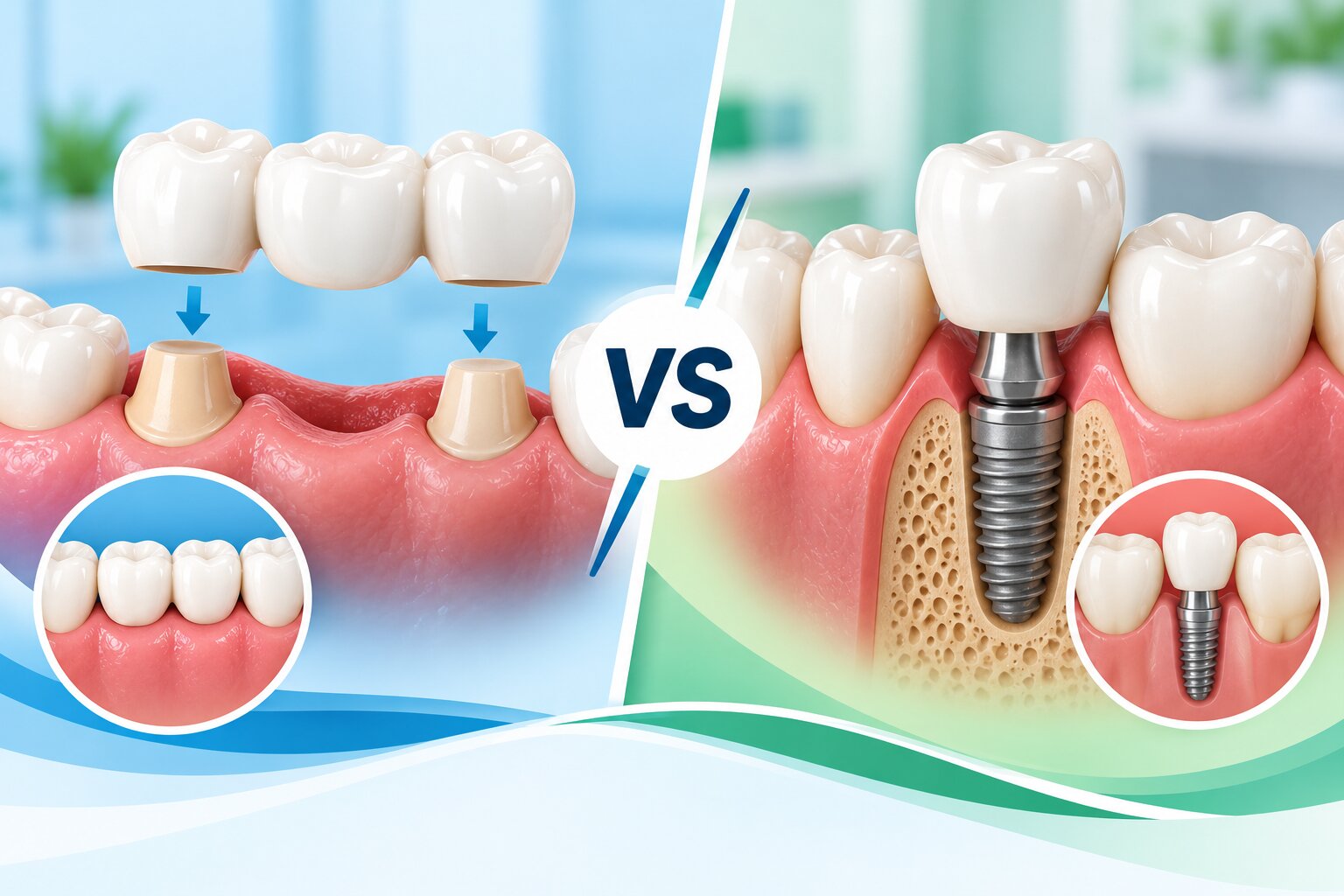
A dental bridge replaces a missing tooth using nearby teeth for support. It fills the empty space without requiring an artificial tooth root. This treatment can help restore normal chewing and speaking comfort.
A traditional bridge usually consists of three connected dental crowns. The middle section replaces the tooth that is missing. The two outer crowns fit over the neighboring natural teeth. These supporting teeth hold the bridge firmly in place.
Before placing the bridge, your dentist examines the surrounding teeth. They check for decay, gum problems, and signs of weakness. The supporting teeth must provide enough strength for the bridge. Your dentist then reshapes these teeth to fit the crowns.
Next, impressions or digital scans help create your custom bridge. The replacement tooth is designed to match your natural teeth. Once ready, the dentist checks its fit and bite alignment. The completed bridge is then secured over the supporting teeth.
Patients considering dental bridges in North Raleigh should understand their long-term care needs. A traditional bridge stays firmly attached to its supporting teeth. Unlike removable dentures, patients cannot take it out themselves. Regular dental examinations help check the bridge and surrounding teeth.
A dental bridge may suit patients wanting treatment without implant surgery. However, preparing healthy neighboring teeth is an important consideration. Your dentist can explain whether this option fits your needs.
Learn more about restorative dentistry in North Raleigh and the available options for replacing missing teeth.
How Does a Single Dental Implant Work?
A dental implant replaces one missing tooth with a fixed replacement. Unlike a traditional bridge, it does not need neighboring teeth for support. This makes it another option for patients with healthy nearby teeth.
The process begins with a careful examination of your mouth. Your dentist checks your gums, jawbone, and overall oral health. Dental X-rays or scans help determine whether your bone provides enough support.
During treatment, a small titanium post is placed inside your jawbone. This post serves as an artificial root for your replacement tooth. Over several months, the surrounding bone gradually bonds with the post. This healing process helps keep the implant stable during chewing.
Once healing is complete, a connector is attached to the implant. A custom dental crown is then fitted over this connector. The crown matches your natural teeth in shape and appearance.
Patients considering dental implants North Raleigh NC should understand the healing process. Some patients may require bone grafting before getting an implant. Your dentist will explain whether additional treatment is needed.
One important difference between a dental bridge vs implant involves support. An implant replaces the missing tooth root inside the jawbone. This allows the replacement tooth to stand independently without support from neighboring teeth.
You can explore available options through restorative dentistry in North Raleigh to better understand missing tooth replacement treatments.
Dental Bridge vs Implant: What Changes in Your Daily Life?
When comparing a dental bridge vs implant, daily comfort matters. Both treatments help replace missing teeth and restore chewing function. However, eating habits, cleaning needs, and nearby teeth may be affected differently. Understanding these differences helps you choose an option suited to your needs.
Eating and Chewing Comfort
A dental bridge helps you chew using nearby supporting teeth. You may need softer foods while adjusting to your bridge. Once comfortable, you can usually enjoy many of your favorite meals.
A dental implant supports chewing through a post inside your jawbone. You must avoid placing pressure on the implant during early healing. After successful healing, most patients can chew comfortably with their replacement tooth.
Cleaning and Daily Maintenance
A dental bridge needs special care around the replacement tooth. Food particles and plaque can collect beneath the bridge. Floss threaders or small dental brushes help clean these spaces. Regular cleaning protects the supporting teeth from cavities and gum disease.
Dental implants also require daily brushing and careful cleaning between teeth. Plaque buildup around implants can cause gum inflammation and bone loss. Regular dental visits help maintain healthy gums and check implant stability.
Effects on Nearby Natural Teeth
A traditional dental bridge requires support from the neighboring natural teeth. These teeth are usually reshaped to hold the bridge crowns. Removing healthy enamel is permanent and cannot be reversed. Supporting teeth may also face additional problems if decay develops.
A single dental implant usually does not require preparing neighboring teeth. This helps preserve their natural enamel and original structure. However, the implant still requires healthy gums and adequate bone support. Your dentist must examine these areas before recommending treatment.
Speaking and Smile Appearance
Both treatments can improve speech affected by a missing tooth. A properly fitted replacement may help you pronounce certain sounds clearly. However, your tongue may need time to adjust after placement.
Bridges and implant crowns can also match your natural tooth color. Their final appearance depends on tooth shape, gum position, and placement.
Dental Bridge vs Implant Cost: What Are You Paying For?
Understanding the dental bridge vs implant cost helps patients plan treatment. Both options replace missing teeth, but their expenses can differ. The final price depends on materials, procedures, and dental health.
In the United States, a traditional three-unit dental bridge generally costs 2,000–5,000. This usually includes two supporting crowns and one replacement tooth. Prices may increase when nearby teeth need additional treatment. The materials used can also affect the total cost.
A single dental implant generally costs around 3,000–6,000 in the United States. This estimate typically covers the implant post, connector, and crown. However, some patients need additional procedures before implant placement. Bone grafting or tooth removal may increase treatment expenses.
Dental insurance also affects how much patients pay out of pocket. Many plans provide partial coverage for bridges and certain implant treatments. However, coverage limits, waiting periods, and deductibles can affect benefits. Patients should review their insurance details before scheduling treatment.
Initial costs are only one part of this decision. A dental bridge may need repairs or replacement over time. Dental implants can last for decades with proper maintenance. However, implant crowns may still require replacement or repairs.
Patients comparing dental bridges North Raleigh with implants should request detailed estimates. Ask whether the price includes examinations, imaging, temporary teeth, and follow-up visits.
A complete treatment estimate makes comparing both options much easier. The lowest initial price may not mean the lowest lifetime cost. Consider your dental health, future maintenance, and long-term treatment needs.
Which Option Lasts Longer: A Bridge or an Implant?
When comparing a dental bridge vs implant, lifespan matters greatly. Both treatments can replace missing teeth for many years. However, their durability depends on materials, oral health, and daily care.
A traditional dental bridge typically lasts between 5 and 15 years. Some bridges remain functional longer with proper care and maintenance. Their lifespan also depends on the health of supporting teeth. Tooth decay or gum disease can weaken these natural supports. If a supporting tooth becomes damaged, bridge replacement may become necessary.
Dental implants generally offer greater long-term durability than traditional bridges. The implant post may last a lifetime with proper care. However, the attached dental crown does not always last forever. Many implant crowns last around 15 years before needing replacement. Regular wear, grinding, or accidental damage can shorten their lifespan.
Daily habits play an important role in restoration durability. Patients who maintain healthy gums may reduce certain treatment complications. However, untreated gum disease can threaten both bridges and implants. Changes in bite pressure may also affect replacement teeth over time. Regular dental examinations help identify early signs of wear or damage.
Patients who grind their teeth may experience faster crown wear. A dentist may recommend a nightguard to protect dental restorations. Regular dental checkups also help identify problems before they worsen.
Signs that your dental restoration needs attention include unusual movement, cracks, or discomfort while chewing. Bleeding gums, swelling, or persistent pain also require professional evaluation.
When choosing a dental bridge vs implant, consider future maintenance needs. An implant may provide longer-lasting support for a replacement tooth. However, neither option guarantees a lifetime without repairs or complications.
The best long-term choice depends on your overall oral health. A dental examination can help determine which treatment suits your needs.
When Might a Dental Bridge Be the Better Choice?
A dental bridge may be appropriate for patients with specific treatment needs. The decision often depends on neighboring teeth and overall oral health. Your dentist also considers your treatment preferences and existing dental work. These factors help determine whether a bridge offers suitable support.
A bridge can make sense when neighboring teeth already need crowns. These teeth may have large fillings, cracks, or other damage. Since crowns are already needed, they can also support a bridge.
Patients considering dental bridges North Raleigh may prefer shorter treatment times. Traditional bridges generally require fewer appointments than most implant treatments. They also avoid the surgery needed for dental implant placement.
A bridge may also help patients with limited jawbone support. However, the supporting teeth must remain strong and healthy. Your dentist must check their condition before planning treatment.
For some patients, initial treatment expenses also influence their decision. A bridge often costs less upfront than an implant. However, future repairs and replacement costs should also be considered.
When Might a Dental Implant Be the Better Choice?
Dental implants may suit patients seeking an independent tooth replacement. They can be particularly useful when neighboring teeth remain healthy. However, implant treatment also requires careful assessment of gum health. Your dentist will consider bone support and general health before recommending surgery.
Unlike traditional bridges, implants do not require reshaping neighboring teeth. The replacement receives support directly from the surrounding jawbone. This helps preserve healthy tooth structure beside the missing space.
Patients exploring dental implants North Raleigh NC need adequate bone support. Healthy gums and good overall health also support successful treatment. Some patients may require bone grafting before implant placement.
Dental implants also help maintain bone around the missing tooth. However, successful healing depends on several individual health factors.
Patients should also consider the longer treatment and recovery period. An implant may require several months before final crown placement. A dentist can explain whether this option suits your situation.
What Should You Ask Your Dentist Before Deciding?
Choosing a dental bridge vs implant requires more than comparing prices. Your oral health, nearby teeth, and treatment goals all matter. Asking the right questions helps you understand both treatment options. Discuss these important points with your dentist before making a decision.
1. Are My Neighboring Teeth Healthy Enough for a Bridge?
A traditional dental bridge needs strong neighboring teeth for support. Your dentist should examine these teeth for decay and damage. Ask whether healthy teeth must be reshaped to support crowns. If nearby teeth already need crowns, a bridge may help. Understanding their condition can prevent unexpected problems during treatment.
2. Do I Have Enough Jawbone for a Dental Implant?
Dental implants need healthy bone to remain stable after placement. Your dentist may use X-rays or scans to assess bone support. Ask whether bone loss could affect your treatment plan. Some patients need bone grafting before receiving dental implants. This additional procedure may increase healing time and treatment costs.
3. How Long Will Each Treatment Take?
A traditional dental bridge often takes several weeks to complete. Dental implants usually require more time for bone healing. Ask how many appointments each treatment will involve. Also, discuss whether you will need a temporary replacement tooth. Understanding the timeline helps you plan work and daily activities.
4. What Will My Total Treatment Cost Include?
The dental bridge vs implant cost depends on individual treatment needs. Ask for a written estimate covering every planned procedure. Implant estimates should include the post, connector, crown, and imaging. Bridge estimates should explain crown costs and any supporting tooth treatment. Also, ask about insurance coverage, deductibles, and possible additional expenses.
5. Which Treatment Is Better for My Bite and Daily Habits?
Your bite affects how replacement teeth handle everyday chewing pressure. Tell your dentist about teeth grinding or jaw discomfort. Ask whether either treatment needs extra protection during sleep. Your dentist can also assess how neighboring teeth meet together. This helps identify a suitable replacement for your missing tooth.
6. What Long-Term Care Will Each Option Require?
Both dental bridges and implants need regular cleaning and examinations. Ask how to clean beneath a bridge without damaging it. Dental implants also need careful cleaning around surrounding gum tissue. Discuss possible repairs, replacement needs, and future maintenance expenses. Your dentist should explain warning signs that require professional attention.
7. What Are the Risks and Success Factors for My Situation?
Every dental procedure carries possible risks and treatment limitations. Ask about infection, healing problems, and the health of supporting teeth. Smoking, gum disease, and certain medical conditions may affect outcomes. Your dentist should explain which risks apply specifically to you.
A detailed discussion helps you choose treatment with greater confidence. Patients can explore restorative dentistry in North Raleigh to understand available tooth replacement options. The best decision should support your health and long-term comfort.
Conclusion:
Choosing a dental bridge vs implant depends on your dental health, budget, and long-term needs. Both treatments can restore your smile and improve chewing comfort. Dental bridges often provide faster results with fewer treatment visits. Implants offer independent support without changing healthy neighboring teeth.
Understanding the dental bridge vs implant cost, durability, and maintenance helps you decide confidently. A dental examination can identify the most suitable treatment for you.
At North Raleigh Dental Studio, patients can explore personalized tooth replacement options. Call (919) 847-3899 or Book an Appointment to discuss your dental needs with the team.